PS6 Controller: What We Know in Late 2026 – Patents, Fan Dreams, and Realistic Next-Gen Features
Sony has yet to officially reveal the PlayStation 6, but the conversation around its controller is already heating up. While the console itself remains shrouded in speculation (expected around 2028), two major Sony patents filed and granted in 2025–2026 have given us the clearest hints yet about the next DualSense successor. These aren’t just incremental tweaks—they point to a radical evolution in how we interact with games.
Unlike the console hardware leaks (which have focused on SSD size, disc drive, and cost-cutting), controller details remain firmly in the patent stage. No insider reports from Kepler_L2 or Tom Henderson have dropped concrete specs on battery, sticks, or final design. But the patents suggest Sony is doubling down on immersion, accessibility, and haptic innovation. Here’s everything we know so far, plus what fans are realistically hoping for—and what dream features could actually make the cut.
What We Know: The Two Big Patents Shaping PS6 Controller Rumors
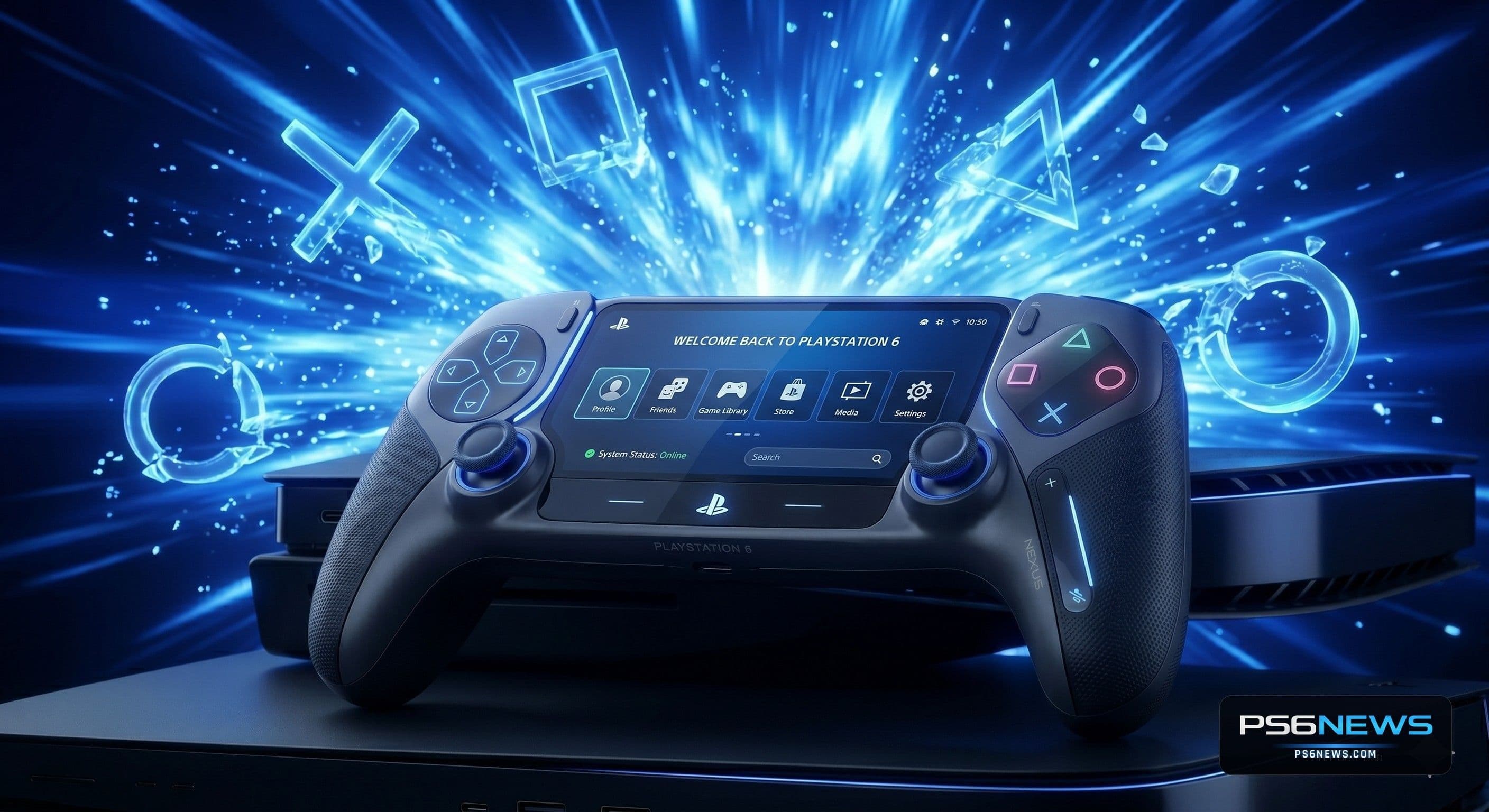
The most talked-about development is Sony’s buttonless touchscreen controller patent, granted in late January 2026. Titled “Devices and methods for a game controller,” it describes a DualSense-shaped pad where the entire top surface is a large capacitive touchscreen. Instead of fixed physical buttons, D-pad, or even traditional analog sticks, virtual controls appear dynamically. You can resize, reposition, or remove buttons entirely based on the game, your hand size, or accessibility needs. As Video Games Chronicle reported on January 31, 2026, sensors detect touch, tap, swipe, press, pinch—and even “pretouch” (your finger hovering just above the surface). Crucially, the surface uses advanced haptics and deformable elements so you can feel where the virtual buttons are. No more hunting for the right button; the controller physically pushes back or changes texture to guide your thumbs.
The second patent, uncovered in April 2026 and still generating buzz, takes things even further with a deformable “pinch-and-twist” grid. It features a 5x5 array of 25 individual nodes covered in flexible material. Each node can be pinched, pulled, pushed, twisted, or squeezed. One patent example: pull a node upward to form a volcano in-game, then twist it to make the volcano erupt. Mirror.co.uk highlighted on May 21, 2026 how this design, combined with next-level DualSense-style haptics, could deliver unprecedented tactile feedback.
These aren’t guaranteed for the PS6 launch model—Sony files hundreds of patents that never ship. But together they signal a clear direction: move beyond buttons toward adaptive, immersive, physical-digital hybrid input.
The Current Benchmark: What the PS5 DualSense Already Delivers
To understand how ambitious these patents are, look at where we are today. The original DualSense wowed players with adaptive triggers and precise haptics, but battery life has always been a talking point. A real-world stat puts it in perspective: independent tests on the revised DualSense model (CFI-ZCT2W, which began shipping with newer PS5 units in 2025) show it lasting over 15 hours of continuous play with heavy haptic and trigger use—a solid upgrade from the original’s typical 6–12 hours. This improvement came from removing a secondary microphone and optimizing internals, according to modder teardowns widely reported in late 2025 and early 2026.
That endurance matters because next-gen haptics and deformable surfaces could be power-hungry. Sony will almost certainly need to improve efficiency if the PS6 controller goes all-in on these ideas.
Features Fans Want: Realistic and Achievable Upgrades
Scroll through Reddit’s r/ps6 or r/PlayStation forums in 2026 and you’ll see recurring demands that feel very achievable:
- Hall Effect or TMR analog sticks to finally kill stick drift once and for all. Third-party controllers already do this successfully; fans expect Sony to follow suit.
- Longer battery life—ideally 20+ hours. With the V2 revision already hitting 15 hours, this feels like a low-hanging fruit.
- Improved ergonomics and accessibility. The touchscreen patent already hints at this, but fans want official remapping, larger grips for bigger hands, and easier trigger stops.
- Stronger, more precise haptics. Everyone loved the DualSense’s “next-gen” feel in Astro Bot or Gran Turismo 7; the next version could make every surface vibrate independently.
- Backward compatibility. Most expect the PS6 controller to work wirelessly with PS5 games, letting you keep using your existing DualSense library.
These aren’t wild dreams—they’re logical evolutions of what Sony has already proven works.
Exploring Realistic Dream Features: Where Patents Meet Fan Wishlists
The patents open the door to truly exciting (and plausible) possibilities. Imagine a controller that starts with a traditional DualSense layout but lets you switch to a fully customizable touchscreen mode mid-game for accessibility. Or a hybrid design where the face has the deformable 5x5 grid for immersion-heavy titles while retaining physical sticks and triggers for competitive play.
Fans are already dreaming of modular elements—perhaps swappable node panels or magnetic attachments—so one controller adapts to shooters, racing games, or platformers. Pair that with the pressure/heat sensors from the touchscreen patent and you get smarter input detection that ignores accidental thumb rests. As detailed in recent patent coverage by GamesHub, the focus on gesture-based input could make the controller far more intuitive.
Another realistic dream: AI-assisted customization. The controller could analyze your grip in real time and suggest optimal button layouts, or even let game developers dynamically reconfigure controls per scene. Combine the pinch-twist nodes with next-level haptics and you could feel textures—rough stone, soft fabric, or the tension of a bowstring—in a way that makes current rumble feel primitive.
Wireless charging docks, built-in mics with better noise cancellation, and even a slightly slimmer profile for easier travel round out the wishlist. All of this feels grounded because Sony has already shipped modular ideas (detachable PS5 Slim drive) and advanced haptics.
Battery Life, Practical Concerns, and the Big Picture
Any radical redesign must balance innovation with practicality. A fully touchscreen or deformable controller could increase weight or cost, so expect Sony to offer a standard model alongside a premium “Pro” version. Pricing will matter—current DualSense Edge sits at a premium; fans won’t tolerate another huge jump.
The good news? Sony appears focused on consumer choice rather than forcing a complete overhaul. The patents emphasize accessibility and immersion without abandoning what millions already love about the DualSense.
Verdict: Revolutionary Potential, But Still Early Days
As of late May 2026, the PS6 controller remains a collection of forward-thinking patents rather than confirmed hardware. The buttonless adaptive touchscreen and deformable node designs show Sony isn’t content with small upgrades—they want the controller to feel like part of the game world. Whether these ideas ship in full, in part, or as optional accessories remains to be seen.
One thing is certain: if even half the concepts make it, the PS6 controller could redefine how we play. Fans aren’t just hoping for longer battery and no drift—they’re dreaming of controllers that respond to every pinch, twist, and swipe with genuine physical feedback. Sony has the patents. Now the world waits to see if they have the courage to build them.