Xbox Series X|S Price Rise Hits as Flagship Reaches $800
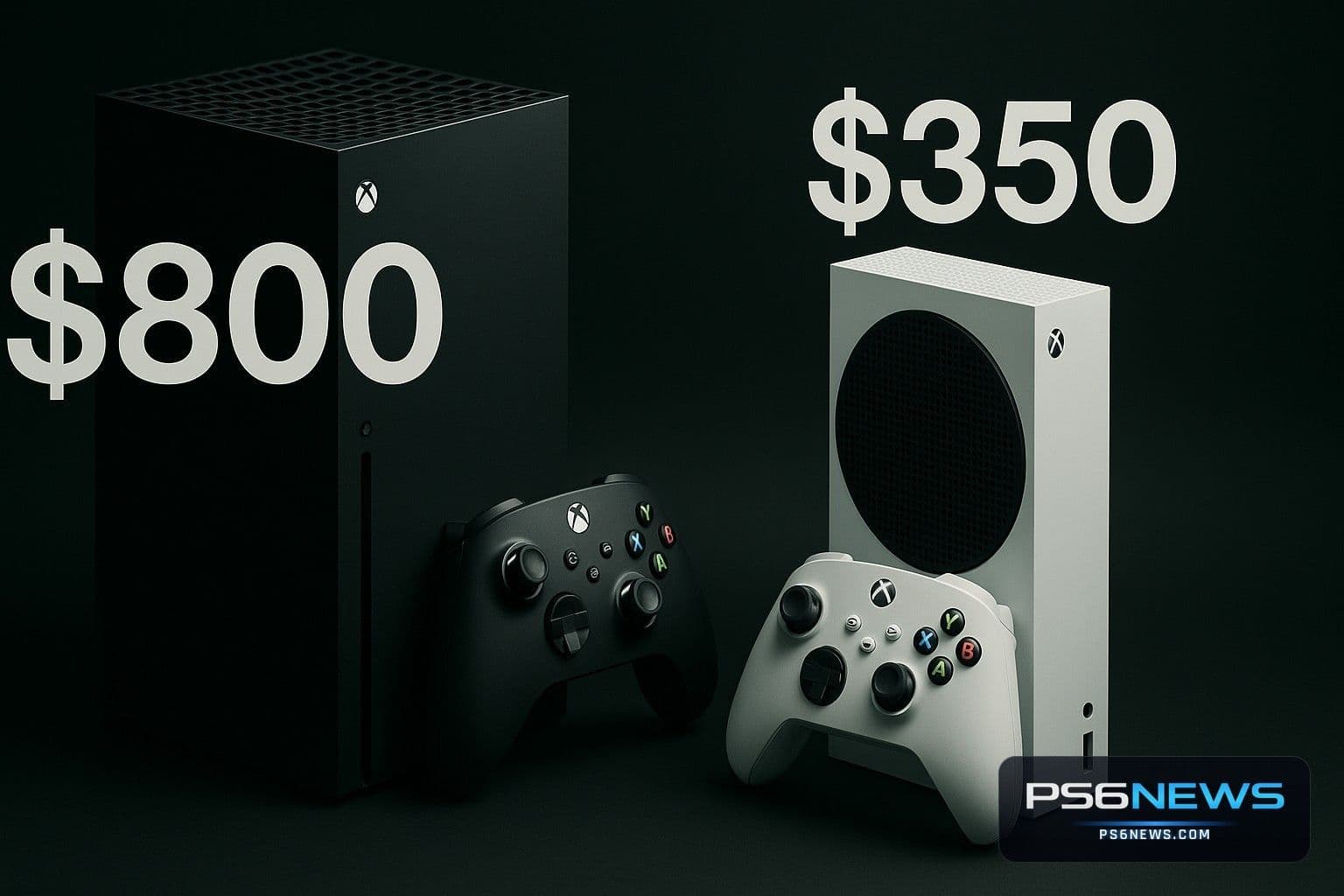
According to Windows Central, xbox’s latest hardware price increase is no longer a warning for prospective buyers: it is now in force. Microsoft confirmed through Xbox Wire that it raised Xbox console prices worldwide on August 1, 2026, citing a steep climb in storage and memory costs. In the United States, the disc-equipped Xbox Series X now carries a $799.99 recommended price, while the entry-level Series S is $499.99. That is a dramatic late-generation reversal for a market where consoles have traditionally become cheaper over time.
The new figures also correct a misleadingly modest reading of the increase. This is not a standard Series X moving from $499 to $599. The original disc-based Series X launched at $499.99 in 2020, but its US price had already risen before this latest adjustment. Windows Central’s post-change tracker shows the 1TB disc model moving from $649.99 to $799.99, meaning the flagship is now $300 above its launch price despite being six years into the generation.
The New Xbox Price Reality
Microsoft says 512GB Xbox models have increased by $100, while 1TB models have gone up by $150. The company has also sunset its 2TB console model. In practical terms, the lower-cost Series S remains the least expensive route into the Xbox ecosystem, but its $499.99 starting price now matches what the full-fat Series X cost at launch. The gap between an entry machine and a premium console has become much harder to explain through raw performance alone.
The price ladder is particularly striking because storage capacity is now directly shaping the cost of entry. The 512GB Series S costs $499.99, its 1TB sibling costs $599.99, the 1TB all-digital Series X is $749.99, and the disc-equipped 1TB Series X sits at $799.99. Buyers who value physical games are therefore paying a $50 premium over the digital flagship, before accounting for games, subscriptions, extra storage or accessories.
Component Costs Have Become the Story
Microsoft’s stated explanation is unusually blunt: it says console storage and memory prices have risen by more than two-and-a-half times, and expects another doubling by autumn 2027. It also says it explored options with suppliers before deciding on the change. That matters because SSD capacity and fast system memory are not luxuries in modern consoles. They are foundational parts of the machine’s architecture, affecting game installation sizes, streaming systems, loading performance and the cost of every unit manufactured.
Xbox is not operating in isolation. Nintendo has already confirmed that the Switch 2’s US price will rise from $449.99 to $499.99 on September 1, 2026. These moves do not prove that every hardware maker will follow the same path, but they do show that the old console rhythm of launch high, then cut price is under serious pressure. Hardware manufacturers are being forced to weigh affordability against absorbing significantly more expensive components.
What This Means for PS6
For PlayStation fans, the Xbox increase is a meaningful warning sign rather than a PS6 forecast. Sony has not announced a PlayStation 6 price, release date or final hardware specification, and there is no basis for treating any proposed figure as confirmed. Still, a next-generation PlayStation will inevitably require substantial memory bandwidth, fast solid-state storage and a powerful custom processor. If component inflation remains severe, Sony’s usual ability to deliver premium hardware at an aggressive mass-market price could be tested.
The bigger strategic question is how Sony protects value without simply stripping features away. A lower-priced digital model, optional storage expansion, a disc-drive split and strong backwards compatibility could all become more important if a next-generation machine launches into a costly parts market. The lesson from Xbox is not that PS6 must cost $800. It is that players should prepare for the possibility that the next console cycle will be defined less by headline teraflops and more by compromises over price, storage and format.
A Tougher Sell for Late-Generation Buyers
For Xbox, the immediate challenge is perception. At $799.99, the standard Series X is competing not only with rival consoles but with discounted gaming PCs, handhelds and refurbished hardware. Microsoft continues to push flexible ways to access its games across console, PC and cloud streaming, yet a price rise of this size makes the traditional living-room box a much more considered purchase. It also increases the importance of retailer promotions, trade-in schemes and certified refurbished stock for budget-conscious players.
Developers may feel the effects indirectly. A higher upfront hardware barrier can slow late-cycle upgrades, leaving studios with more reason to keep supporting older systems and scalable PC settings for longer. That does not make ambitious games impossible, but it could complicate the clean generational handover platform holders prefer. Microsoft’s increase is confirmed and immediate; its longer-term impact on sales, software strategy and competitor pricing will take much longer to become clear.
What We Know
- Microsoft confirmed that Xbox console prices increased worldwide on August 1, 2026.
- Microsoft stated that 512GB Xbox models rose by $100 in the US, while 1TB models rose by $150.
- The US Xbox Series X 1TB model with a disc drive now has an MSRP of $799.99.
- Microsoft attributes the move to console storage and memory prices rising by more than two-and-a-half times.
- Microsoft has sunset its 2TB Xbox console model as part of the pricing update.
- Nintendo has confirmed that Switch 2 will rise from $449.99 to $499.99 in the US on September 1, 2026.
What Remains Unclear
- Microsoft has not provided a complete public breakdown of every new recommended price in every territory.
- It is unknown how long the revised Xbox prices will remain in place or whether further increases will follow.
- Sony has not announced a PS6 price, launch date or final specifications, so any numerical comparison remains speculative.
- The eventual impact on Xbox hardware sales, developer platform support and retailer discounts is not yet known.