PS6-Era Sony Patent Links PlayStation, Xbox and PC
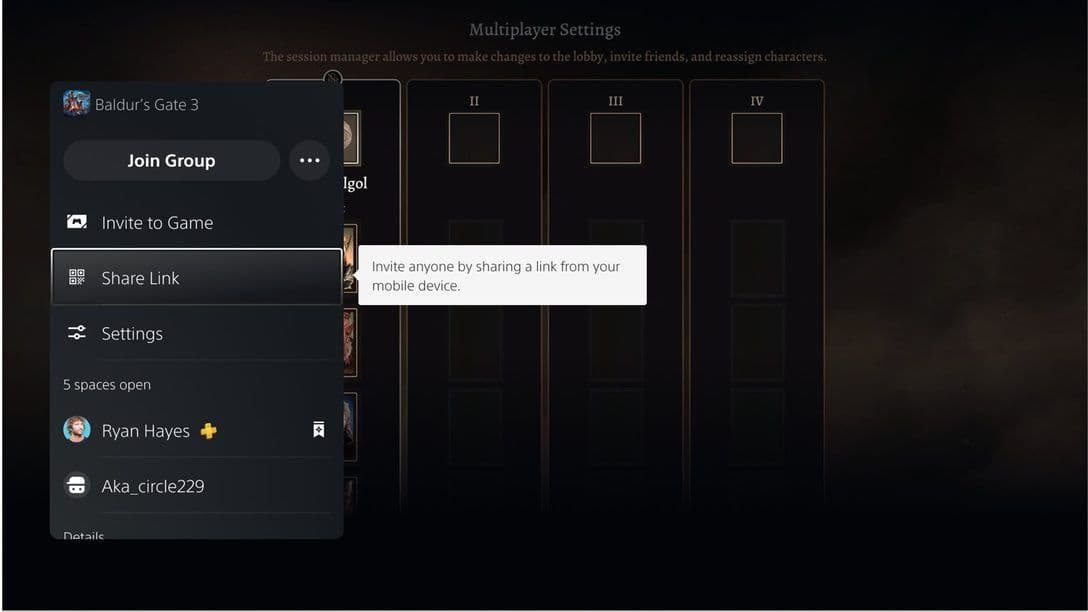
Sony Interactive Entertainment has published a fresh continuation patent application for a game-invite system that can bridge PlayStation, Xbox and PC. Instead of sending a platform-specific invitation, the design creates one web link containing the game and session identifiers needed to direct another player into an active multiplayer session.
The significance is not a hidden PS6 specification. It is a platform-strategy clue: Sony is protecting a way to reduce one of cross-play’s most persistent points of friction, even when the sender and recipient use different hardware, different network accounts and are not already friends on the same service.
Application US 2026/0335772 A1 was filed on 7 July 2026 and published on 29 October. It continues an older Sony family whose parent application was filed in June 2023 and whose US patent was granted on 1 September 2026. That history makes this verified and timely legal activity around an established idea, not evidence that Sony invented the system this week or has approved it for PS6.
What Sony Filed — And Why the Dates Matter
The newly published application is titled “Methods and systems for cross-platform multiplayer session share”. Sony Interactive Entertainment is the applicant, and the filing lists 20 claims covering how a universal session link is generated, opened and converted into a platform-specific launch command.
This application is a continuation. In practical terms, Sony is pursuing further claims based on an earlier disclosure rather than revealing an unrelated invention. The parent, US application 18/343,327, became US patent 12,722,089 on 1 September 2026. The continuation preserves that technical family while allowing Sony to seek another set of claims.
That distinction prevents two common mistakes. The 29 October publication date does not mean the underlying concept began in October, and the existence of a granted parent patent does not mean the continuation has already been allowed. Patent records establish ownership and technical intent; they do not establish a product name, release date or implementation plan.
How One Cross-Platform Invite Would Work
The flow begins when a player chooses to share an active multiplayer session. Sony’s system generates a web address with metadata identifying both the game and the particular session. Because the first link is platform-neutral, the sender could distribute it through an ordinary message, social network or QR code without first choosing the recipient’s hardware.
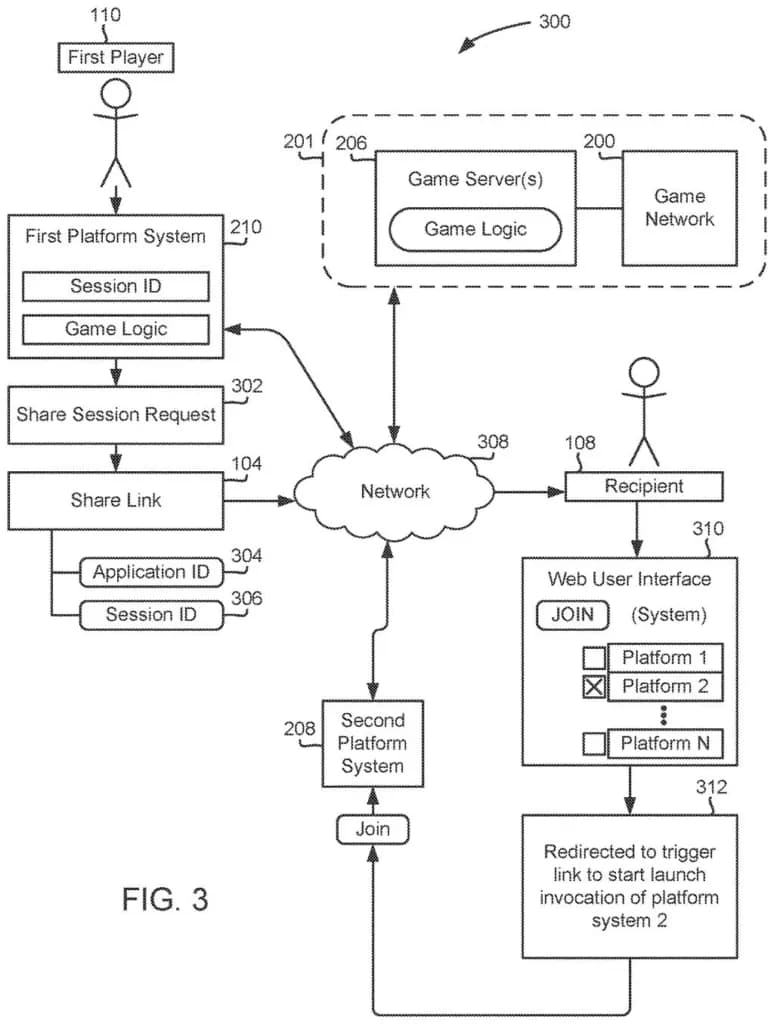
Opening the link would present a web interface where the recipient selects a system type. The service then redirects to a platform-specific trigger link, passing the game and session data needed to launch the correct application and request entry to the match. The claims also describe credentials, signed links and links that can expire or be restricted to one use.
The description goes further than a simple URL shortcut. It allows the landing page to show session information before the player joins, including participants or available places, and it contemplates links that can be shared again with other recipients. A game and its online services would still need to support the hand-off; the patent cannot force an incompatible title to become cross-play capable.
Why the Xbox and PC Examples Are Important
The document does not merely use generic language about different devices. Its examples describe a PlayStation player inviting somebody registered with Microsoft’s Xbox network or a PC service such as Steam. That makes the intended scope much broader than moving an invitation between two PlayStation consoles.
This does not mean Microsoft or Valve has agreed to adopt Sony’s system. A working commercial version would depend on platform launch commands, identity checks, game-server support and each title’s cross-play rules. Competitive policies could also determine how much information an external link is allowed to pass into an Xbox, PC client or future console.
Even with those limits, the direction is notable beside Microsoft’s plan to unite console and PC software around Project Helix. Our Xbox Helix DirectX and PC games guide explains why the next Xbox is being designed as a wider software platform. Sony’s patent approaches the same fragmented market from another angle: let a PlayStation-originated invitation reach players wherever a compatible game runs.
How It Differs From PS5 Session Share
Sony already has a narrower product that proves part of this experience is practical. PS5 Session Share began rolling out in July 2024, allowing a player to create a link on PS5 or PlayStation App and send it through a messaging or social service. The recipient can join without first becoming a PlayStation Network friend.
Today’s implementation remains a PS5-to-PS5 feature. Sony’s official guidance says the joining player must have the game installed, most online multiplayer still requires PlayStation Plus, and PS4 or other backward-compatible titles are not supported. A Discord widget can show whether a session remains active, but the link is not presented as a universal route into Xbox or PC versions.
The patent family therefore reads like a broader architectural version of a feature Sony has already shipped in limited form. That raises its credibility as a practical platform project, but it still does not prove that the cross-platform extension will be released. Sony may use only selected claims, require publishers to opt in, revise the interface or keep the technology defensive.
What It Could Mean for the PS6 Era
If Sony carries the idea into its next platform, the biggest benefit would be social continuity rather than extra processing power. Multiplayer communities increasingly span consoles and PC; making a session invitation independent of platform friend lists could reduce the effort needed to fill a party, recover lapsed players or organise a cross-play group.
That fits a wider PS6 challenge. A new console must preserve libraries, accounts, saves and relationships while giving players a reason to remain inside the PlayStation ecosystem. Our PS6 backward compatibility guide covers the software side of that transition. Universal invitations would address a different layer: keeping the social graph useful even when friends choose rival hardware.
There is also a strategic tension. Sony wants PlayStation hardware to feel distinctive, while cross-platform services make the boundaries between devices less visible. Microsoft is testing the opposite pressure through possible Helix exclusivity, as detailed in our Project Helix exclusivity survey report. The likely next-generation contest will mix both approaches—exclusive reasons to buy a device and lower barriers for games that depend on large shared communities.
What the Patent Does Not Confirm
The filing never confirms a console named PlayStation 6, a PS6 operating system feature, an Xbox partnership or a release window. It does not identify supported games, subscription requirements, whether publishers must pay for integration, or how moderation and parental controls would behave when a link crosses several networks.
It also does not make every multiplayer game cross-play compatible. A universal invite can carry identifiers and launch the correct client, but the underlying game still needs compatible versions, shared online services and permission to place those players in the same session. Where publishers maintain separate pools, the link could only route within the boundaries they support.
Finally, a patent is not a promise. Sony files and acquires many patents to protect research, create negotiating leverage or preserve options that never become consumer products. The relevant conclusion is that Sony has designed and is continuing to protect a detailed cross-platform invitation method—not that PS6 owners are guaranteed one-click access to every Xbox or PC lobby.
What to Watch Next
The clearest evidence would be an expansion of Session Share beyond PS5-only recipients, developer documentation for cross-platform trigger links, or a supported game that lets one universal invitation choose between PlayStation, Xbox and PC. Changes to PlayStation App, Discord integration or Sony account sign-in flows could provide earlier clues.
For PS6, the decisive signal would be official platform software guidance rather than another patent. Until Sony announces its next system and explains its network features, this filing should be treated as a credible direction for the PS6 era—not a confirmed launch feature.