Project Helix Survey Tests Fallout and Minecraft Exclusivity
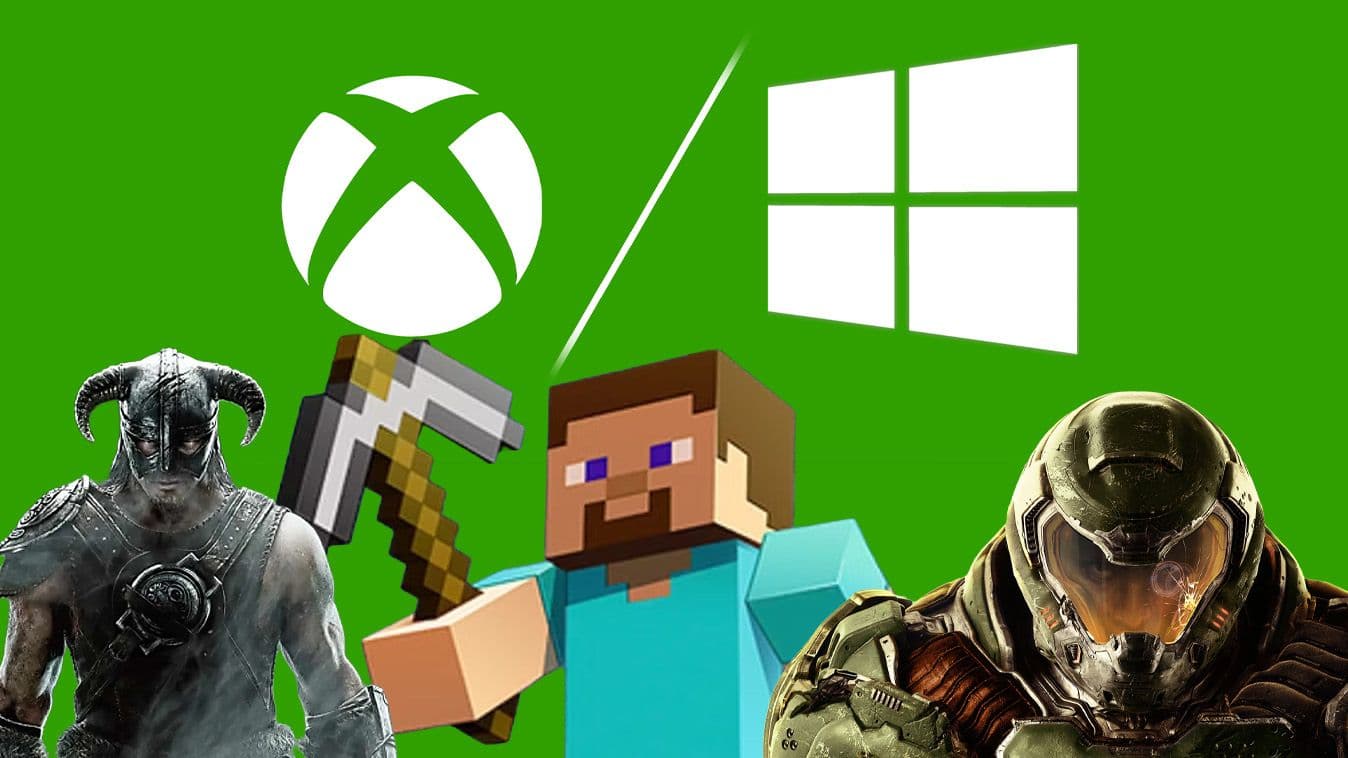
Microsoft is testing how players might react if some of its largest franchises became timed or permanent Xbox console exclusives. The research is especially important for Project Helix, because an expensive next-generation Xbox needs more than faster hardware: it needs a compelling reason for players to choose it over PS6, PC and cloud gaming.
Windows Central reports that it verified the Xbox Insider survey as genuine. The questions cover Fallout, The Elder Scrolls, Doom, Diablo, Hideo Kojima’s Physint and Minecraft, then ask whether different exclusivity arrangements would change a respondent’s buying or playing habits.
That does not mean any game has changed platforms. A survey is market research, not a product announcement or promise. However, it provides unusually direct evidence that Microsoft is measuring whether exclusives could strengthen its console business as Project Helix moves towards market.
What the Xbox Exclusivity Survey Actually Tests
The survey presents several hypothetical scenarios rather than one fixed proposal. Respondents are asked how likely they would be to invest in Xbox if individual games were timed exclusives or remained exclusive to Xbox consoles. This distinction matters: a game could launch first on Xbox and later reach PS6, or it could stay away from rival consoles entirely.
The named franchises make the exercise far more significant than a generic opinion poll. Fallout and The Elder Scrolls are cornerstone Bethesda series, Doom carries a long multi-platform history, Diablo is one of Blizzard’s largest properties, and Minecraft is among the broadest cross-platform games in the world. Physint is also notable because the project was previously associated with PlayStation before moving into Xbox’s next-generation plans.
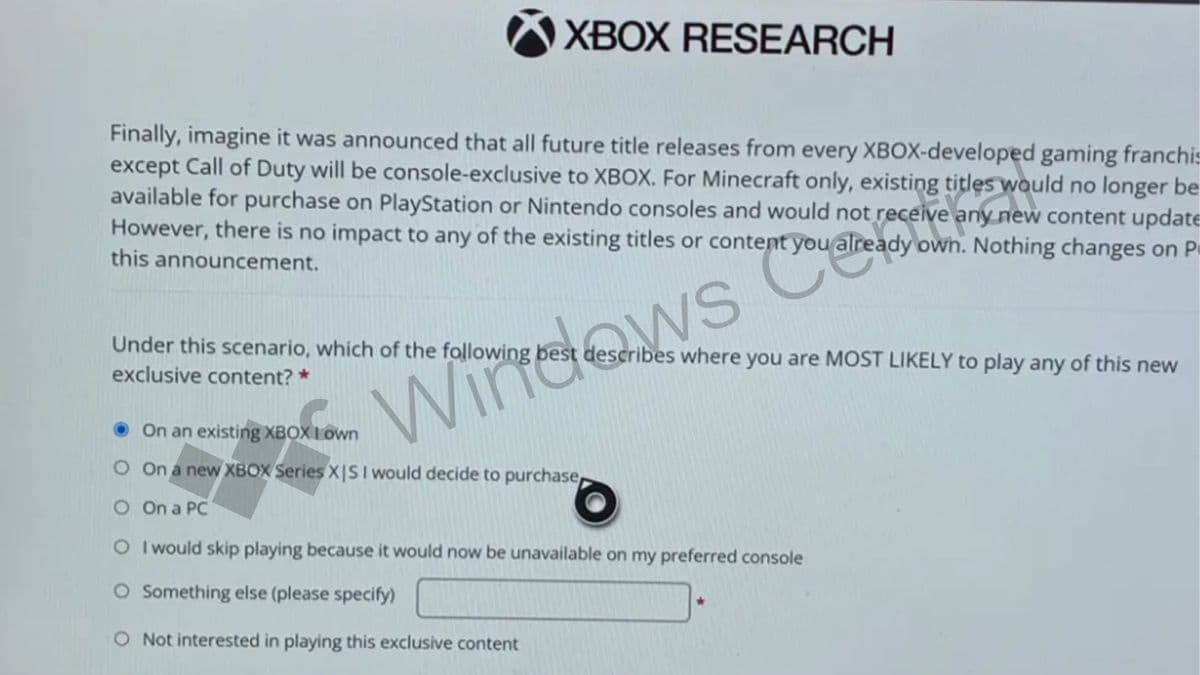
The questions focus on behaviour: whether people would use an Xbox they already own, buy a new console, move to PC or skip the game. That is exactly the data Microsoft would need when balancing lost sales on PlayStation and Nintendo against the value of attracting users to its own hardware, store and Game Pass ecosystem.
The Extreme Minecraft Scenario
The survey’s strongest hypothetical asks respondents to imagine that all future releases from Xbox-developed franchises, apart from Call of Duty, become Xbox-console exclusive. PC availability would remain unchanged. Call of Duty’s exception is presented in the survey rather than confirmed as a permanent rule for every future entry.
Minecraft receives special treatment in the scenario. Existing versions on PlayStation and Nintendo would no longer be offered for new purchases or receive new content updates, while content people already own would remain available. This is only a question posed to research participants; Microsoft has not announced that it will remove Minecraft from sale or stop supporting it on rival consoles.
Even as a hypothetical, Minecraft is a powerful test case. Its value comes partly from being available almost everywhere, so restricting future console support could damage reach and goodwill. Conversely, if respondents say Minecraft alone would make them buy an Xbox, Microsoft gains a clearer picture of how much platform leverage the franchise might have.
Why This Matters to Project Helix
Project Helix is Microsoft’s next-generation Xbox platform, and the company has described the console as the foundation of a broader ecosystem spanning console, PC, mobile and cloud. Helix is also intended to play both Xbox console and PC games, giving it a more open software identity than a traditional closed console. Our Project Helix family-of-devices guide explains how that strategy could extend beyond a single box.
Openness creates a marketing challenge. If nearly every major Xbox game is also available on PlayStation, a player who already intends to buy PS6 has less reason to add Helix. PC support complicates the picture further because the same customer may be able to access Xbox games through Windows without purchasing Microsoft’s console.
Major exclusives would make Helix easier to explain: buy this hardware to play these games on a television with a console-style experience. The new survey therefore addresses one of the platform’s central strategic questions. It is not just asking which games people prefer; it is testing whether exclusive content can convert interest into hardware use, purchases and ecosystem engagement.
Exclusivity Versus Xbox’s Open-Platform Promise
Microsoft’s public strategy still emphasises reach. In its official We Are Xbox roadmap, the company says players should keep games, progress, friends and identity across console, PC, mobile and cloud. It also describes Xbox as open to creators and confirms that Project Helix is designed to play console and PC games.
The same roadmap explicitly says Microsoft will reassess exclusivity and release windows. That makes the survey consistent with Xbox’s stated plan to test and learn, but it does not resolve the tension. An Xbox game can remain available across Microsoft-controlled devices while becoming unavailable on PlayStation or Nintendo, allowing Microsoft to call the ecosystem open even if its console competition becomes more restrictive.
A mixed model may be more plausible than the survey’s all-or-nothing scenario. Microsoft could keep multiplayer and community-led games widely available, use timed windows for selected blockbusters, and reserve a smaller number of flagship releases for Xbox and PC. That would preserve revenue and player populations while giving Helix some differentiated software.
What It Could Mean for PS6 Owners
For future PS6 buyers, the immediate answer is simple: nothing has changed. No release has been cancelled for PlayStation because of this survey, and there is no confirmed list of Helix exclusives. Treat any claim that Fallout, The Elder Scrolls or Minecraft has already become Xbox-only as speculation.
The longer-term implications could still be substantial. If Microsoft adopts timed exclusivity, PS6 players may receive major Xbox-owned games months or years later. Permanent console exclusivity would instead require a Helix console, a suitable PC or another supported Xbox endpoint. That could turn the PS6-versus-Helix decision into a software choice as much as a hardware comparison.
Sony would also face strategic pressure. Stronger Xbox exclusives could encourage PlayStation to protect more first-party releases, reduce PC launch overlap or secure additional partnerships. That would reverse part of the industry’s recent multi-platform trend and make platform libraries more important during the next-generation launch window.
The Commercial Trade-Off for Microsoft
Every exclusive has an opportunity cost. A PlayStation or Nintendo copy sold through another platform generates less revenue per transaction than a sale through Microsoft’s own store, but it is still a sale to a customer who may never buy Xbox hardware. Removing that option sacrifices immediate reach in the hope of creating longer-term platform value.
The potential upside is broader than console profit. A Helix owner can buy third-party games through the Xbox store, subscribe to Game Pass, purchase accessories and remain inside Microsoft’s services. One successful exclusive may therefore be worth more than its direct sales if it changes where a player spends money for several years.
Hardware price and availability remain important constraints. Even a desirable exclusive cannot convert customers if Helix is too expensive or difficult to buy. That makes the decision inseparable from Microsoft’s Project Helix strategic reset and the wider cost pressure facing next-generation consoles.
Why the Survey Is Evidence, Not a Decision
Companies routinely test deliberately extreme scenarios to measure sensitivity. Asking about a total exclusivity shift does not prove Microsoft prefers that option; the response pattern may instead show that players would move to PC, keep their current platform or abandon the affected game. Negative answers can be as valuable as positive ones.
The source also matters. Windows Central says the screens came from a subset of Xbox Insider users and that it verified them as real. Microsoft has not published the questionnaire through Xbox Wire or attached it to a formal policy announcement. The safest description is therefore a verified research exercise reported by a reputable Xbox-focused outlet.
Until Microsoft names a platform for a specific game, each franchise should be judged separately. Development schedules, online communities, contractual commitments and commercial targets can all produce different answers. The survey shows that exclusivity is under active consideration; it does not show which answer executives will choose.
What to Watch Next
The strongest next signal would be official release language. Terms such as “Xbox console exclusive”, “launch exclusive” and “Xbox and PC” have different meanings, while an omitted PlayStation logo is not always conclusive years before launch. Store listings, publisher FAQs and executive comments should take priority over social-media interpretations.
Microsoft’s treatment of its first large Helix-era releases will be especially revealing. A consistent pattern of Xbox-and-PC launches without PS6 versions would support a genuine strategic shift. Simultaneous multi-platform releases would indicate that reach and software revenue still outweigh the need to sell dedicated hardware.
For now, the survey should be read as a meaningful strategic clue rather than a leak of a finished plan. It confirms that Microsoft is testing how much exclusive software could improve Project Helix’s appeal, while the eventual balance between hardware differentiation and cross-platform scale remains unsettled.