PS6-Era Controller Patent Adds Motorised Thumbsticks
Sony Interactive Entertainment has published a US patent application for a motorised thumbstick system that can resist a player’s movement, remain where it is released or create programmable click-like zones across its travel. Instead of relying only on a spring that always pulls the stick back to dead centre, the design continually changes the position the stick is being driven towards.
The filing is relevant to future PlayStation hardware because it expands the same physical-feedback philosophy that produced DualSense haptics and adaptive triggers. Moving that idea into the analogue sticks could let a game alter steering, aiming or movement feel without changing the plastic stick cap or asking the player to swap a mechanical module.
Application US 2026/0339420 A1 was published on 29 October 2026. It does not mention PlayStation 6, DualSense 2 or a commercial product, and a patent application is not evidence that mass-produced hardware exists. What it does confirm is that Sony has developed and protected a detailed active-stick concept with motors, sensors and software-controlled target positions.
What Sony Filed
The application is titled “Operation device, method for controlling the same, information processing apparatus, and program”. Sony Interactive Entertainment Inc. is the applicant, and the named inventors are Makoto Wakabayashi, Keiji Togawa and Hirotomo Yunoki.
The US record was filed on 15 August 2025 and published on 29 October 2026. It is a national-stage entry based on an international application first filed on 22 February 2023. The current patent record lists the application as pending and contains 20 claims.
Those dates matter. The publication is new, but the underlying engineering work began years earlier. Sony may continue, narrow or abandon the claims as examination progresses, and publication alone does not reveal whether the mechanism has reached a prototype, developer test or product-planning stage.
How the Motorised Thumbstick Works
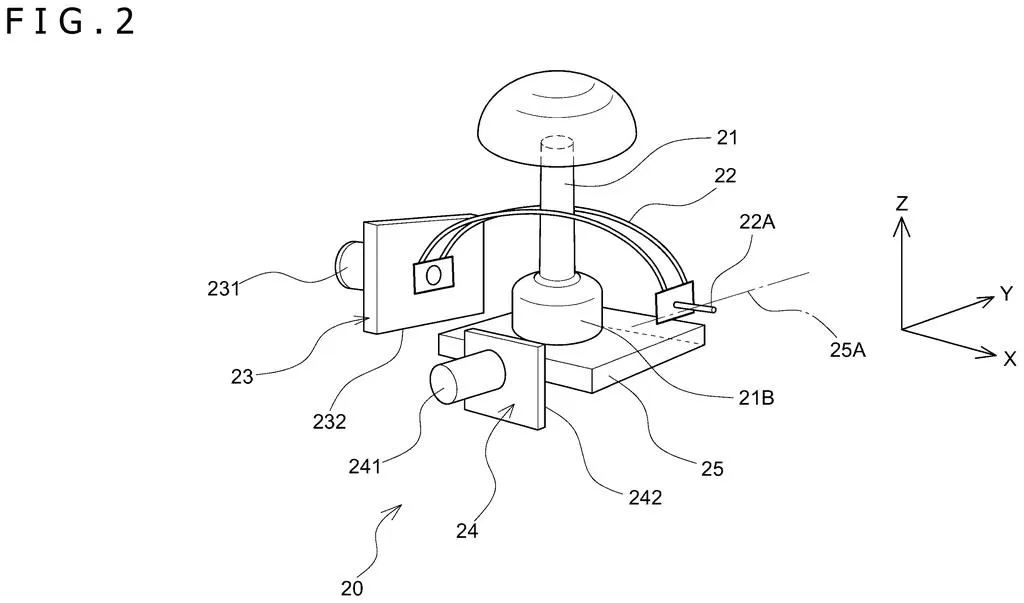
The design combines a tilting operation member—effectively an analogue stick—with position sensors and a drive unit. The illustrated version uses two motors to control movement across two axes, while angle sensors report the stick’s position back to the controller.
A control processor compares the detected position with a target position and drives the motors so that the stick moves towards that target. A conventional stick has an effectively fixed target at the centre, normally enforced by springs. Sony’s concept can change the target while the player is using the control.
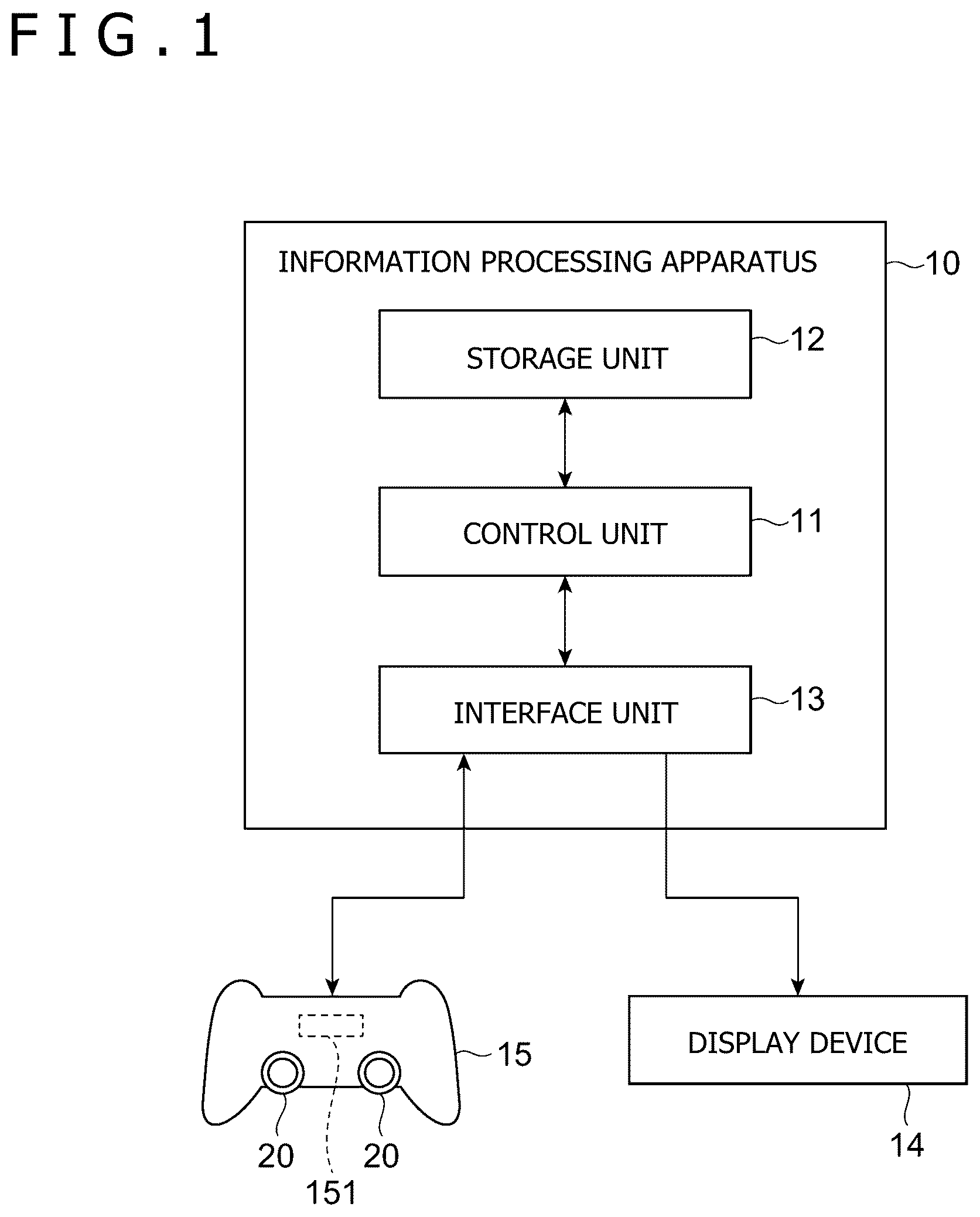
The console or another connected processing device can also participate in the control loop. That creates the possibility of software-defined responses that change during play, although the filing does not provide a commercial developer API or confirm that ordinary games would be allowed to program the mechanism directly.
Holding Position, Resistance and Click Zones
One documented behaviour changes the target to match the stick’s current position. If the player lets go, the motors can hold the control there instead of pulling it back to centre. Updating that target continuously can also oppose movement and create a friction-like or heavier feel.
A second example divides the stick’s movement range into bands, each with its own target. As the player crosses a boundary, the direction of the motor force changes. That reversal can create the sensation of passing through a mechanical notch or click even though no physical switch sits at that point.
Sony also describes adjusting the strength of the drive force and changing the number or width of those bands. The same principle can apply to a sliding control rather than only a thumbstick, broadening the claims beyond one familiar controller layout.
How This Differs From Sony’s Earlier Stick Patent
PS6News previously covered Sony’s adjustable stick-resistance patent. That design changes physical resistance by repositioning an elastic component around the stick mechanism. Its simplest versions can be adjusted mechanically, while other versions contemplate an actuator.
The newly published application is more actively controlled. Motors do not merely move an elastic part into a preset position; they drive the operation member itself towards a target that can change according to the stick’s detected position. That enables held positions and artificial click zones as well as resistance.
The two ideas could theoretically be alternatives or complementary layers, but Sony has not connected them. Treating them as a finished PS6 controller specification would go beyond the records. The meaningful pattern is that Sony is testing several ways to make analogue-stick feel configurable rather than permanently fixed.
What Games Could Do With It
A racing game could use force bands to make steering feel progressively heavier or create tactile stages as the wheel approaches full lock. A flight game could let a control remain in position after the player releases it. A mech or heavy vehicle could resist sudden movement more strongly than a light character.
Those examples are reasonable interpretations of the described behaviours, not promised software features. The filing explains force, position and control logic but does not name supported games, genres or accessibility profiles. Developers would also need predictable limits so a sudden force change did not damage precision or surprise the player.
Sony’s current DualSense controller already uses actuators for haptic feedback and motors in the adaptive-trigger assemblies. A motorised stick would extend physical feedback to the control players use continuously for movement and camera input, potentially making it more noticeable—and more technically demanding.
The Cost, Battery and Reliability Questions
Two motors, multiple position sensors and a continuously running control loop add more components than a conventional spring-centred stick. That could increase controller price, weight, power consumption and heat. The patent explains the mechanism but does not provide battery-life tests, dimensions, motor lifespan or manufacturing cost.
Stick drift remains another unanswered question. Position sensors could improve measurement and calibration, but motors introduce their own gears, bearings and control tolerances. Nothing in the publication proves that the design lasts longer than current controllers or makes a damaged stick easier to replace.
Those trade-offs may favour a premium controller before a standard pack-in device. DualSense Edge already demonstrates that Sony will sell more expensive, customisable hardware with replaceable stick modules. Whether an active stick is affordable enough for every PS6 controller is unknown.
What It Could Mean for PS6 and a Handheld
The broader PS6 controller guide tracks Sony’s modular, touchscreen and haptic research. A motorised thumbstick fits that direction by making the controller itself more programmable, but there is no official PS6 pad, feature list, price or release date.
A native PlayStation handheld could also benefit from richer stick feedback, helping portable controls preserve more of the DualSense identity. The problem is power and space: extra motors would compete with the display, processor and wireless system for battery capacity. Our PS6 portable guide explains why every handheld feature must be judged against heat, weight and runtime.
For now, the patent should be read as verified research rather than a leak. The decisive evidence would be a Sony hardware reveal, controller certification, production documentation or a developer interface describing active-stick feedback. Until then, motorised PS6 thumbsticks remain plausible—not confirmed.
What Is Confirmed — And What Is Not
Confirmed: Sony Interactive Entertainment is pursuing a US application for an operation device with position sensing, active drive motors and a target position that changes according to detected stick movement. The filing describes held positions, resistance-like behaviour and programmable force zones.
Not confirmed: PS6 support, a DualSense 2 name, integration with a handheld PlayStation, final ergonomics, production cost, battery life, drift resistance, supported games or a retail release. The application is pending, not a granted promise of future hardware.
The strongest conclusion is therefore about direction. Sony is exploring how analogue sticks could become active feedback devices rather than passive spring-loaded inputs. Whether that research reaches players will depend on cost, reliability and whether the sensation improves games enough to justify the added hardware.