PS6 Controller Patent Explores Adjustable Stick Resistance
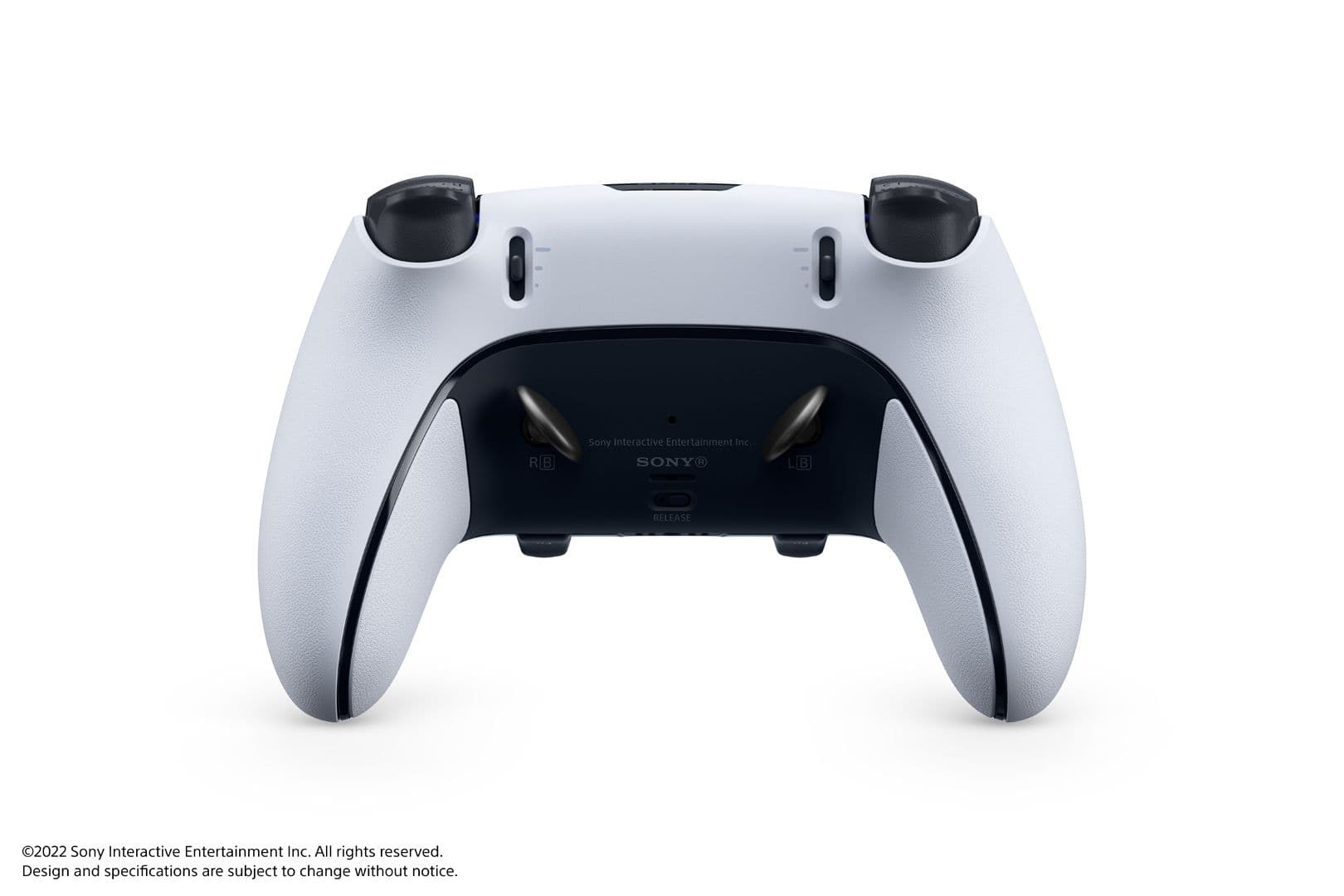
Sony has secured a controller patent that could let players change how much physical resistance an analogue stick provides. The design goes beyond altering a sensitivity curve in software: it changes the force felt while the stick is being moved.
Patent US12752183B2 was granted on 6 October 2026 to Sony Interactive Entertainment. Its drawings and claims describe several ways of repositioning an elastic component around the stick shaft, including a manual mechanism and versions that could be controlled electronically.
The filing does not mention PlayStation 6 or confirm a new DualSense controller. It is nevertheless relevant to Sony’s next generation because it targets one of the most important physical interfaces between a player and a game—and arrives while Sony is exploring several new controller concepts.
What Sony’s New Controller Patent Covers
The US12752183B2 patent record identifies Sony Interactive Entertainment as the owner and Yuta Koda as the inventor. The underlying application dates to July 2021, which is an important reminder that the idea was developed years before the patent was granted.
Sony describes an operating body—effectively an analogue stick—mounted inside a tubular structure. An elastic member sits between the stick shaft and that surrounding structure. Moving the elastic part changes when and how strongly it contacts the shaft or housing as the player tilts the stick.
In practical terms, that contact produces resistance. Repositioning the part can create a lighter or firmer feel without relying solely on the spring that normally recentres a controller stick.
How the Adjustable Resistance Mechanism Works
One version uses thread grooves on the stick shaft and a disk-shaped component. Rotating the shaft moves the disk and its elastic ring along the stick assembly. The player could therefore select a desired resistance position and use a securing mechanism to prevent it shifting accidentally during play.
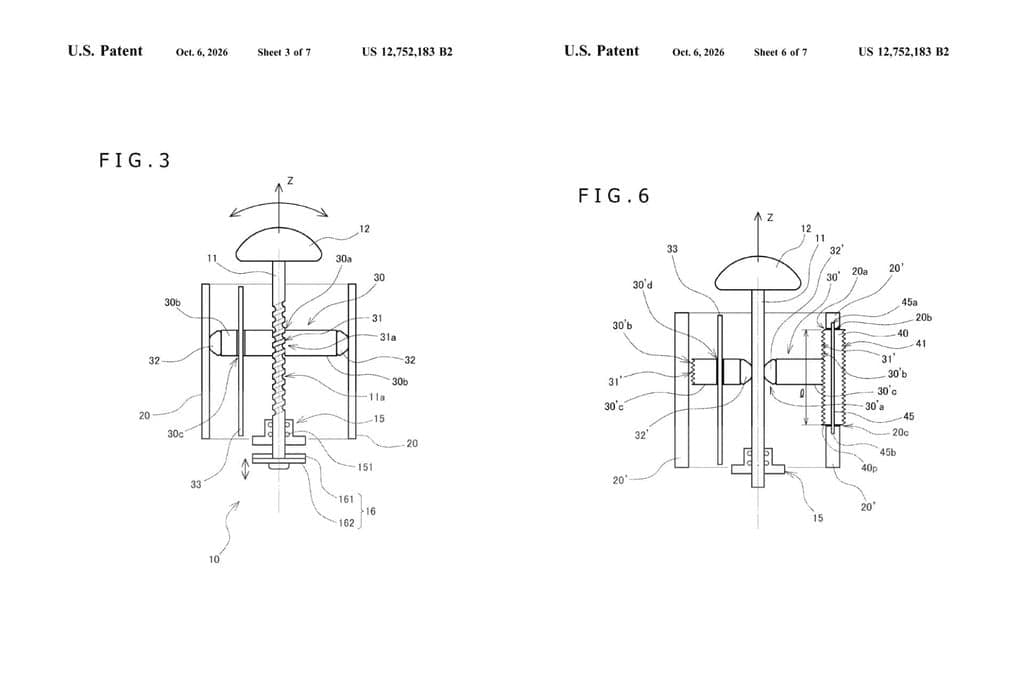
Other versions place the elastic member inside a movable ring or include a projecting control that can be shifted from outside the mechanism. The patent presents multiple engineering approaches rather than one final consumer-ready design.
The common principle is straightforward: changing the elastic member’s position changes the stick’s physical response when tilted. It is a mechanical adjustment to feel, not merely a change to how the console interprets the same movement.
Manual and Electronic Adjustment Are Both Possible
The simplest interpretation is user-controlled tension. A player might rotate or move part of the stick assembly to choose a lighter or heavier setting before starting a game, then lock that position in place.
Sony also describes a more ambitious implementation using a motor or linear actuator. A controller processor could adjust the mechanism in response to instructions from a connected system. That creates the theoretical possibility of automatic changes based on a profile, accessibility setting or software request.
The patent does not provide a finished gaming example, however. It does not promise that a racing game will stiffen the stick at high speed or that a shooter will change resistance between weapons. Those are plausible applications of the mechanism, not confirmed features.
Why Physical Stick Tension Matters
Different games reward different types of control. A lighter stick may feel faster when turning sharply in an action game, while stronger resistance can make small aiming or steering adjustments easier to judge. Competitive-controller makers already use interchangeable springs or modules to serve similar preferences.
Physical resistance can also support comfort and accessibility. Sony’s patent explicitly recognises that some users may find a fixed resistive feel uncomfortable and that delicate operations can benefit from greater resistance. A broader adjustment range could make one controller suitable for more hands and play styles.
The trade-off is complexity. Extra threaded parts, elastic components, motors or actuators can add cost, weight and more potential wear points. Sony would have to prove that the benefit justified those compromises before the technology reached a mass-market controller.
How It Differs From DualSense Edge
The current DualSense Edge customisation system lets players adjust stick sensitivity and dead zones, save control profiles, swap stick caps and replace complete stick modules. Those are valuable options, but they do not let the player change the physical tension of the installed stick.
Software sensitivity changes how quickly an input value responds as the stick moves. Dead-zone adjustment changes how far the stick must travel before movement is registered. Neither changes the force required by the player’s thumb.
Sony’s patent could therefore add a genuinely different layer of customisation. It may complement replaceable modules rather than replace them, potentially combining serviceability, software profiles and physical feel in one future premium controller.
What It Could Mean for the PS6 Controller
Sony has not announced a PS6 controller, so calling this a confirmed DualSense 2 feature would be inaccurate. Patents protect ideas and engineering methods; many never become commercial products, while others appear in substantially altered form.
The filing does fit a wider pattern documented in our PS6 controller guide. Sony has explored configurable touch surfaces, richer haptics, modular hardware and new methods of transferring information through a controller. The separate modular touchscreen controller patent shows that the company is considering both input layout and physical customisation.
Adjustable tension appears more immediately practical than replacing every physical control with a touchscreen. It builds on familiar analogue sticks and could be introduced first in a premium accessory before reaching a standard controller, although Sony has not indicated any such product plan.
What Is Confirmed and What Remains Speculation
Confirmed: Sony owns an active US patent for a controller mechanism that changes the resistive feel of a tilting control stick. The documented designs include manual movement of an elastic component and electronically driven alternatives using a motor or actuator.
Not confirmed: that Sony has manufactured a prototype, selected the design for PS6, named a DualSense successor or decided whether adjustable tension would be standard or premium hardware. The patent also does not address price, battery life, stick-drift resistance or a release date.
For now, the filing is best read as evidence of Sony’s controller research rather than a product leak. It reveals a credible route towards more personal and adaptive analogue controls, but only an official hardware announcement can tell us whether PS6 players will ever use it.