PlayStation 6 Release Date – Everything We Know
Updated August 23, 2026
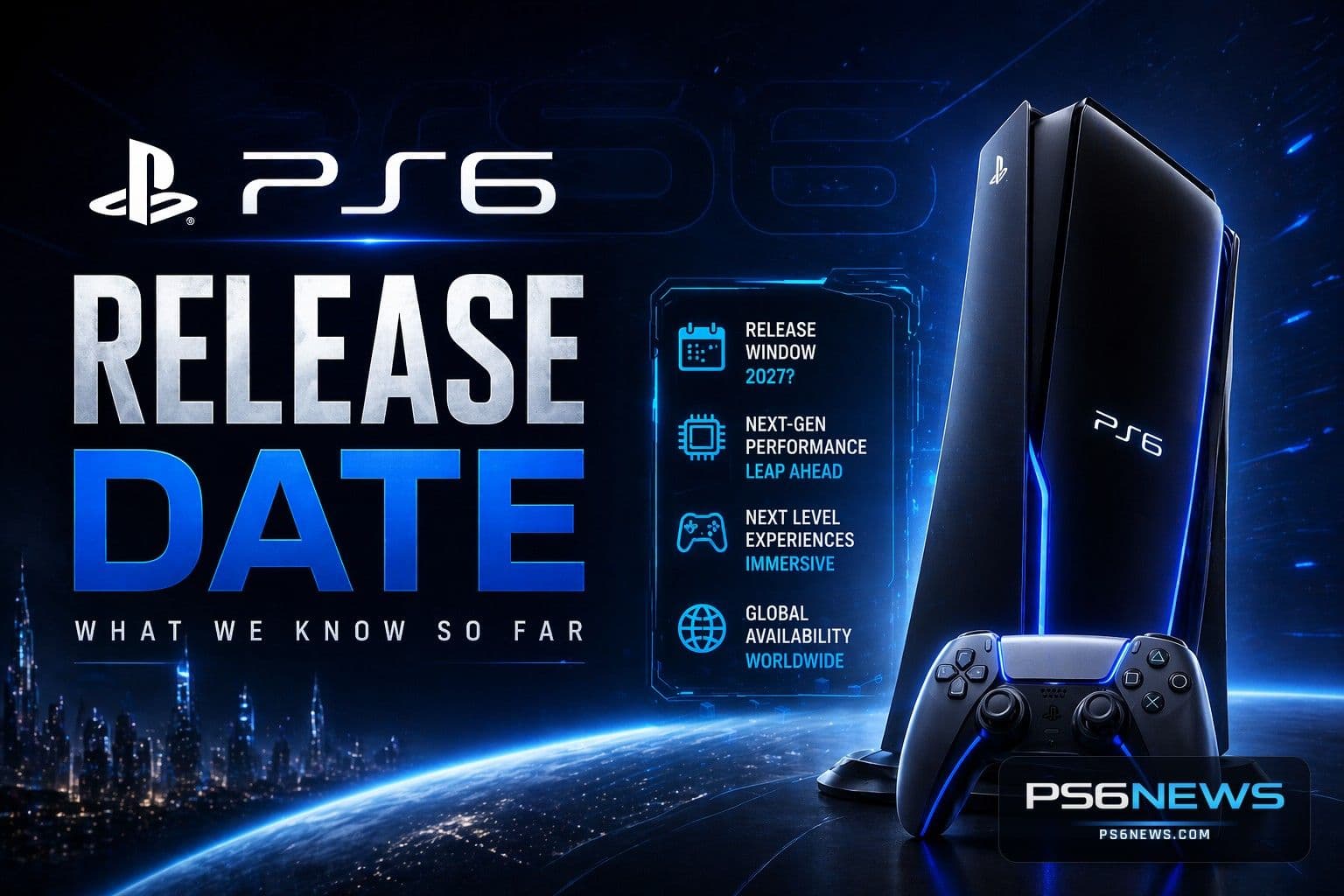
Sony has not officially announced the PlayStation 6 (PS6), but we now have the clearest indication yet of where things stand.
Sony Group President and CEO Hiroki Totoki confirmed in August 2026 that Sony still has not decided when its next-generation PlayStation will launch.
That is significant. A holiday 2027 release has been widely predicted for years, based on Sony's historical console cycle and numerous hardware leaks. However, continued pressure on memory supplies and component costs means 2028 is looking increasingly plausible.
Nothing has been delayed officially — because Sony never announced a PS6 release date in the first place.
Here's everything we currently know about the PS6 release date, including Sony's latest comments, the 2027 versus 2028 debate, hardware leaks and the factors that could determine when PlayStation's next generation actually begins.
PS6 Release Date: Latest Update
The short answer: Sony has not announced a PS6 release date. Late 2027 remains possible, but 2028 is increasingly plausible.
The biggest update arrived in August 2026.
Sony CEO Hiroki Totoki revealed that the company has not yet internally settled on a release date for its next-generation PlayStation hardware.
Speaking in an interview with The Wall Street Journal, Totoki discussed the difficult hardware environment facing Sony, particularly the availability and cost of components.
GamesRadar reports that AI-driven demand for components and continuing supply pressures are complicating Sony's next-generation planning.
This doesn't mean PS6 has officially been delayed.
There cannot technically be a delay until Sony announces a release window.
But it does mean the frequently rumoured 2027 PS6 release date remains far from guaranteed.
Current Expected PS6 Release Window
Sony's historical cadence for home consoles has been remarkably consistent:
- PlayStation 3: 2006
- PlayStation 4: November 2013
- PlayStation 5: November 2020
- PlayStation 6: 2027–2028?
Both the PS3-to-PS4 and PS4-to-PS5 transitions took approximately seven years.
Following exactly the same pattern would put the PS6 launch in holiday 2027.
That timeline has also been supported by hardware insiders.
Moore's Law Is Dead (MLID) has continued to argue that PS6 development is progressing toward a 2027 manufacturing and launch schedule. You can read our full report on why MLID believes the PS6 is still on track for 2027.
However, the situation has become considerably less certain during 2026.
Reports earlier this year suggested Sony could potentially push its next-generation console further into the future because of rising memory prices.
Sony's latest comments now confirm at least one important part of that story: the company itself has not committed to a launch date.
Our current assessment is therefore:
Earliest realistic release: Late 2027
Increasingly plausible release: 2028
Possible if supply problems continue: 2029
Official Sony release date: Not announced
For now, a 2027–2029 window remains the safest range, although 2028 is becoming an increasingly important possibility.
Why the PS6 Could Launch Later Than 2027
Global RAM and Component Shortages
This is currently one of the biggest uncertainties surrounding PS6.
AI data centres require enormous quantities of memory and other advanced components. The resulting demand has put pressure on supplies and pricing across the wider technology industry.
That matters enormously for a new games console.
Sony needs to manufacture millions of PS6 systems while keeping the retail price low enough for the console to reach a mass audience.
A powerful console using expensive next-generation memory becomes difficult to sell cheaply.
Totoki's latest comments show that Sony is paying close attention to these pressures before committing to its next hardware cycle.
This also has major implications for price. See our full analysis of how much the PS6 could cost.
PS6 Could Become Too Expensive
The release-date debate is now closely connected to the PS6 price debate.
If memory and manufacturing costs remain extremely high, Sony essentially has several options:
- Accept lower margins or subsidise the hardware.
- Increase the PS6 retail price.
- Reduce the specification or manufacturing cost.
- Introduce different PS6 models at different prices.
- Wait for component conditions to improve.
None is particularly simple.
Analysts have even begun discussing what would happen if next-generation consoles approached $1,000, illustrating just how unusual the current hardware market has become.
For Sony, waiting until the economics make more sense could ultimately prove preferable to launching a PS6 that is simply too expensive for mainstream PlayStation owners.
The PS5 Still Has Life Left
Sony also isn't under enormous pressure to replace the PS5 immediately.
The PS5 launched in November 2020, while the more powerful PS5 Pro arrived in 2024.
More importantly, some enormous games are still coming to the current generation.
Grand Theft Auto VI is scheduled for November 19, 2026 on PS5 and Xbox Series X|S.
That gives Sony another potential reason to extend the PS5 generation.
GTA 6 could generate another major wave of PS5 hardware and software activity rather than immediately pushing consumers toward another console.
We've looked more closely at the relationship between GTA 6 and the PS6 release timeline, including the possibility of Rockstar eventually releasing an enhanced PS6 edition.
A 2028 PS6 launch would give GTA 6 more than a year as a current-generation title before Sony moves fully into its next generation.
Is a 2027 PS6 Release Still Possible?
Absolutely.
It would be premature to declare 2027 dead.
Some of the strongest PS6 hardware leaks continue to point toward production plans that could support a late-2027 release.
Moore's Law Is Dead has repeatedly maintained that development remains on track, with the PS6's main APU reportedly expected to enter manufacturing in 2027.
You can see the detailed claims in our report on the PS6's rumoured 2027 launch and Orion hardware.
AMD insider KeplerL2 has also been associated with information supporting a similar timeframe.
So we currently have two competing pictures:
Hardware leaks: 2027 remains achievable.
Sony officially: No release date has been decided.
Sony's position obviously carries considerably more weight when determining what has actually been confirmed.
The hardware could theoretically be ready while Sony still chooses to wait for better market conditions.
Why 2028 Is Looking More Realistic
If Sony does miss 2027, 2028 is now the obvious alternative.
It would extend the PS5 generation to approximately eight years, but that's hardly unreasonable considering the unusual circumstances surrounding this console cycle.
The PS5's first years were heavily affected by pandemic-era supply shortages, and the PS5 Pro has subsequently extended the hardware family.
Waiting until 2028 would potentially give Sony:
- More time for memory supply conditions to improve.
- Lower manufacturing costs.
- Additional time to refine PS6 hardware and software.
- More time to sell PS5 and PS5 Pro systems.
- A larger PS5 installed base to transition to PS6.
- More time for developers to prepare next-generation games.
It could also make the generational jump feel considerably larger.
The important distinction is that 2028 has not been confirmed.
Some coverage has interpreted Totoki's latest comments as making 2028 more likely, but Sony itself has not announced 2027, 2028 or any other year.
Latest PS6 Release Date News and Leaks
Expectations have changed substantially throughout 2026.
August 2026 — Sony CEO Says No Date Has Been Decided
This is now the most important development.
Sony CEO Hiroki Totoki says Sony has not decided when its next-generation PlayStation will launch, while component availability and costs remain important considerations.
It is the strongest reason yet to stop treating 2027 as a certainty.
June 2026 — MLID Insists PS6 Is Still on Track
Hardware insider Moore's Law Is Dead pushed back against reports of a major PS6 delay.
The leaked roadmap reportedly continues to target PS6 APU manufacturing during 2027, potentially enabling a holiday 2027 release or an early-2028 launch.
Read more: PS6 Still on Track for 2027, According to Moore's Law Is Dead.
April 2026 — Hardware and Pricing Reports Intensify
Reports surrounding the PS6's AMD hardware, manufacturing costs and possible pricing accelerated during the first half of 2026.
Our regularly updated PS6 specifications guide tracks the major hardware claims separately from confirmed Sony information.
February 2026 — Reports Point Toward 2028–2029
Reports emerged suggesting Sony was considering extending the PS5 generation because of memory shortages and the changing economics of console manufacturing.
This was one of the first major signs that the traditional 2027 assumption might be too optimistic.
Late 2025 — Manufacturing Leaks Point to 2027
Earlier leaks suggested PS6 manufacturing could begin during 2027.
Those claims formed much of the basis for predictions that Sony would follow its traditional seven-year console cycle.
2024 — AMD Remains Central to PlayStation's Future
Sony's continuing relationship with AMD is one of the strongest foundations behind current PS6 hardware expectations.
Sony and AMD have also publicly discussed their work together on next-generation machine-learning and graphics technologies through Project Amethyst.
Historical Timeline of PS6 Rumours
The PS6 story has gradually moved from distant speculation toward increasingly detailed hardware reports.
2023–2024: Reports emerge around Sony's next-generation hardware plans and AMD's involvement.
2024–2025: Sony and AMD discuss Project Amethyst, focusing on machine learning, graphics and ray-tracing technology.
Mid-2025: Hardware leaks begin pointing toward future AMD CPU and GPU architectures.
Late 2025: Leaks suggest a potential 2027 manufacturing schedule.
Early 2026: Memory shortages raise serious questions about whether 2027 remains economically practical.
June 2026: MLID maintains that PS6 development remains on track for 2027.
August 2026: Sony CEO Hiroki Totoki confirms Sony has still not decided the launch date.
The August update is particularly important because it comes from Sony itself rather than a hardware leaker or analyst.
Comparison With Previous PlayStation Console Cycles
ConsoleReleaseGapPlayStation1994—PlayStation 22000~6 yearsPlayStation 32006~6 yearsPlayStation 42013~7 yearsPlayStation 52020~7 yearsPlayStation 62027–2029 rumoured~7–9 years
A 2027 PS6 would therefore fit Sony's recent pattern almost perfectly.
A 2028 release would represent an eight-year PS5 generation, while 2029 would stretch it to approximately nine years.
That sounds long historically, but the PS5 generation has already been unusual because of its initial supply constraints and changing hardware economics.
What Will the PS6 Specs Be?
Release timing isn't the only area generating leaks.
Reports have repeatedly connected PS6 with a custom AMD processor using future-generation CPU and GPU technology.
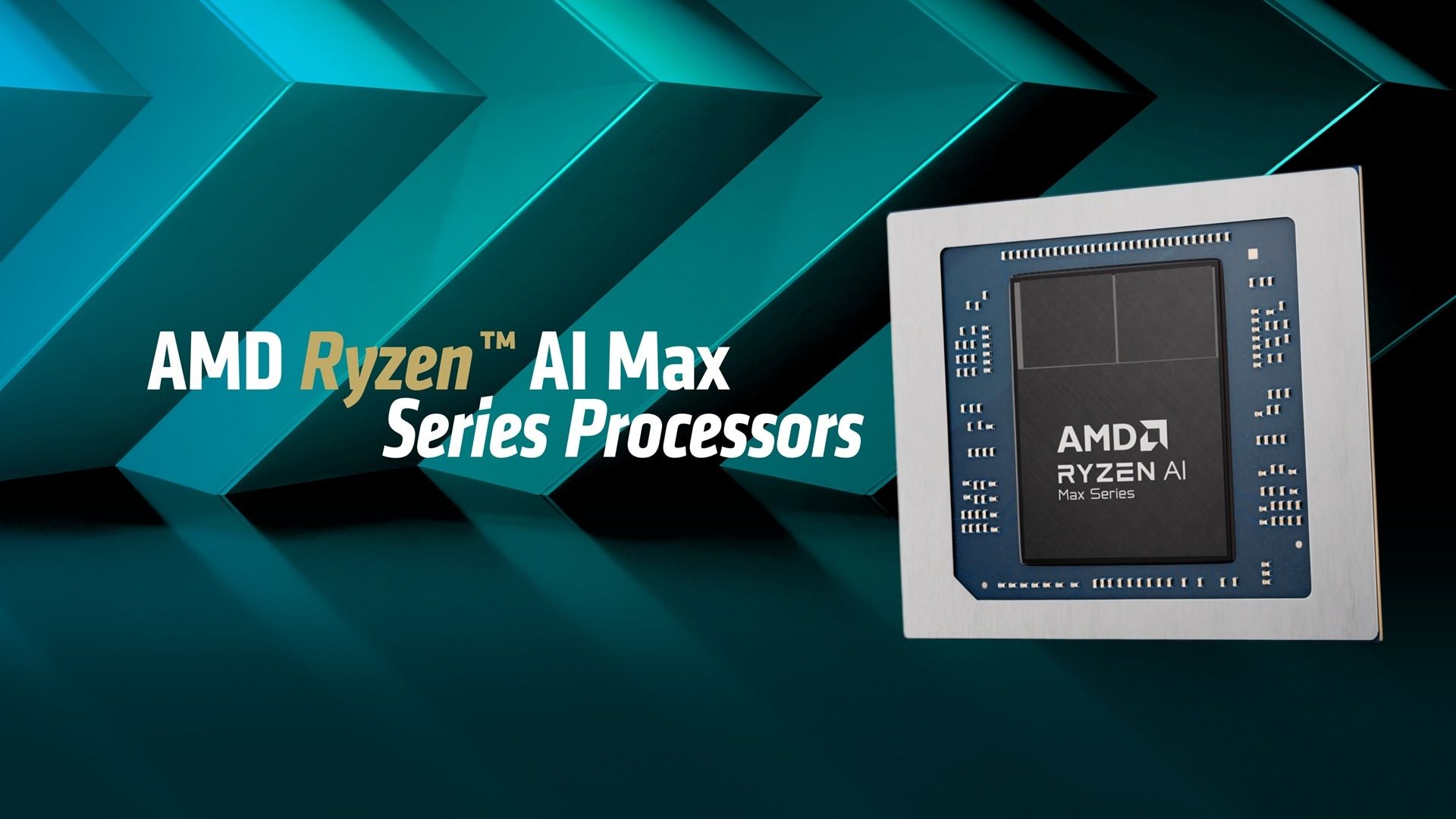
Rumoured specifications have included Zen 6 CPU technology, RDNA 5-class graphics, dramatically improved ray tracing and dedicated machine-learning capabilities.
Sony's work with AMD through Project Amethyst makes AI-assisted graphics particularly interesting.
Potential technologies could help Sony increase image quality and performance without relying entirely on brute-force GPU power.
For a detailed breakdown of the latest leaks, see our complete PS6 specs, rumours and hardware guide.
None of the leaked PS6 specifications should currently be treated as final.
Sony has not publicly revealed the console's hardware.
Could PS6 Have Multiple Models?
Possibly.
One increasingly interesting possibility is that Sony doesn't launch just one piece of next-generation hardware.
Leaks have suggested Sony is developing both a traditional home PS6 and a portable PlayStation system.
The home console has frequently been associated with the codename Orion, while the rumoured handheld has been referred to as Canis.
A multi-device strategy could allow Sony to target different price points instead of trying to build one console for every type of PlayStation customer.
Sony already uses a modular approach with the current PS5 generation, including digital models and a detachable disc drive.
That makes multiple next-generation configurations plausible, although Sony has announced none of them.
Will There Be a PS6 Handheld?
Persistent leaks suggest Sony is working on a portable PlayStation capable of running games locally rather than relying entirely on Remote Play like the PlayStation Portal.
The rumoured handheld is commonly referred to as Project Canis.
Reports have suggested an AMD-based design intended to complement the main PS6.
If both devices are real, Sony could potentially launch them during the same general generation — although there is no confirmed release date for either.
Until Sony reveals the hardware, Project Canis should still be considered a rumour rather than an announced PlayStation product.
Will PS6 Be Backward Compatible?
Backward compatibility is widely expected, but Sony has not officially confirmed it.
Sony's continued use of AMD-based hardware would make compatibility with PS5 software technically more straightforward than some previous PlayStation generational transitions.
The PS5 already supports the vast majority of PS4 games, making backward compatibility an important part of the modern PlayStation ecosystem.
It would therefore be surprising if Sony abandoned users' existing libraries with PS6.
However, claims that all PS4 and PS5 games are guaranteed to work on PS6 go beyond what Sony has announced.
Until we have official confirmation, backward compatibility should be described as likely rather than guaranteed.
Will the PS6 Have a Disc Drive?
This question has become considerably more interesting.
Sony has already moved toward a more flexible disc-drive strategy with PS5 hardware, while digital game purchases make up an increasingly important part of the console business.
Rising component costs have also led analysts to discuss whether removing a built-in optical drive could help Sony reduce the PS6's manufacturing and retail price.
That doesn't necessarily mean physical PlayStation games disappear immediately.
Sony could potentially offer:
- A digital PS6.
- A more expensive PS6 with a disc drive.
- A detachable external drive.
- Multiple PS6 models.
At this stage, Sony has not confirmed that PS6 will be digital-only.
Any claim that the PS6 definitely won't have a disc drive should therefore be treated cautiously.
How Much Will the PS6 Cost?
This may ultimately determine when Sony launches it.
The PS5 originally launched in the US at $499 for the disc model, but the console market has changed significantly since 2020.
Memory, storage and manufacturing costs are now major concerns.
Current PS6 estimates vary enormously, with figures ranging from roughly $599 to $799 appearing increasingly realistic and more extreme predictions reaching $999 or beyond.
However, these are predictions — not Sony prices.
Our dedicated PS6 price and cost analysis tracks the latest estimates, component-cost reports and analyst predictions.
The relationship between price and release date is crucial.
If Sony believes launching in 2027 would require an unacceptable retail price, delaying the system could become considerably more attractive.
Is Sony Already Sending PS6 Dev Kits to Developers?
There have been rumours about PS6 development hardware reaching studios, but Sony has not publicly confirmed a PS6 dev-kit programme.
Development kits also don't necessarily resemble final retail hardware.
Console manufacturers typically work with major developers years before releasing new hardware, allowing studios to prepare engines and games for the next generation.
If the PS6 launches in 2027 or 2028, developers will naturally need access to its target specifications well before consumers do.
For now, specific claims about PS6 dev-kit distribution remain unconfirmed.
When Will Sony Announce the PS6?
This may now be the most interesting question of all.
The PS5 was formally revealed in 2020, the same year it launched, although Sony had publicly discussed aspects of its next-generation hardware beforehand.
Sony could take a similar approach with PS6.
If the console is still targeting late 2027, we would expect substantially more official information during the coming year.
If Sony instead chooses 2028, the company has much more time and little reason to undermine PS5 and PS5 Pro sales by revealing its successor too early.
Totoki's August 2026 comments suggest Sony isn't ready to make that commitment yet.
Frequently Asked Questions
When will the PS6 be released?
Sony has not announced a PS6 release date. A holiday 2027 launch remains possible based on Sony's historical console cycle and hardware leaks, but Sony CEO Hiroki Totoki confirmed in August 2026 that the company has not yet decided the launch timing. 2028 is therefore looking increasingly plausible, while 2029 cannot be ruled out.
Is PS6 coming out in 2027?
Possibly, but it isn't confirmed.
Hardware leaks continue to support a potential 2027 timeline, and Moore's Law Is Dead maintains that development remains on track.
Sony itself, however, has not committed to 2027.
Has the PS6 been delayed?
No — at least not officially.
Sony cannot delay a publicly announced release date because it has never announced one.
Reports suggest internal plans may have changed or remain flexible, but Sony has not announced a PS6 delay.
Could PS6 come out in 2028?
Yes.
Given Sony's latest comments, component pressures and the continued commercial life of PS5, 2028 is arguably the strongest alternative to the long-rumoured 2027 launch.
It remains speculation until Sony confirms a date.
What factors could delay the PS6?
Memory availability, component prices, tariffs, manufacturing costs and Sony's desired retail price could all influence the launch.
The continued strength of PS5 and major upcoming software could also reduce the need for Sony to rush into another generation.
Will PS6 break the seven-year PlayStation cycle?
It will if it launches after 2027.
PS3 launched in 2006, PS4 in 2013 and PS5 in 2020.
A 2027 PS6 would continue that seven-year pattern exactly. A 2028 or 2029 release would create an eight- or nine-year PS5 generation.
Will the PS6 have multiple models?
Possibly.
Rumours point toward a flagship home console and a separate handheld, while Sony could also continue offering digital and disc-drive configurations.
None has been officially announced.
Will PS6 be backward compatible?
Backward compatibility with PS5 — and potentially PS4 — is widely expected because Sony is expected to remain with AMD-based architecture.
However, Sony has not confirmed PS6 backward compatibility.
What hardware improvements can we expect?
Leaks point toward future AMD CPU and GPU technology, significantly improved ray tracing and dedicated machine-learning hardware.
See our complete PS6 specifications guide for the latest reported specifications.
Are there rumours of a PS6 handheld?
Yes.
A rumoured handheld codenamed Canis has appeared repeatedly in hardware leaks and is reportedly designed to run games locally rather than functioning solely as a streaming device.
Sony has not officially announced it.
How much will the PS6 cost?
Nobody knows yet.
Current estimates generally put a mainstream PS6 somewhere around $599–$799, although component costs have led some analysts to discuss considerably higher prices.
See our updated PS6 price predictions for a detailed breakdown.
Is Sony already sending PS6 dev kits to developers?
Sony hasn't confirmed this.
Developers will need access to target hardware and specifications before launch, but reports about specific PS6 development kits remain unofficial.
Conclusion: When Should We Expect the PS6?
As of August 23, 2026, the PlayStation 6 remains unannounced and Sony has not decided publicly — or, according to CEO Hiroki Totoki, internally — on a release date.
That changes the picture considerably from earlier in the year.
A late-2027 PS6 launch remains possible. It fits Sony's recent seven-year console cycle and continues to be supported by some hardware insiders.
But it should no longer be presented as the expected outcome with any certainty.
Continued pressure on memory supply and manufacturing costs makes 2028 increasingly plausible, while a further extension into 2029 remains possible if market conditions make an earlier launch unattractive.
For now, our realistic PS6 release window is:
Late 2027 at the earliest, 2028 increasingly plausible, with 2029 still possible.
The most important thing to remember is that Sony hasn't announced the PS6 yet, let alone given it a date.
We'll continue updating this page whenever Sony, AMD or reliable industry sources provide new information.
For more on Sony's next-generation console, see our PS6 specifications and hardware guide, PS6 price predictions, and our report on why some hardware leaks still point to a 2027 PS6 launch.