PS6-Era Patent Turns Gameplay Video Into One Test Image
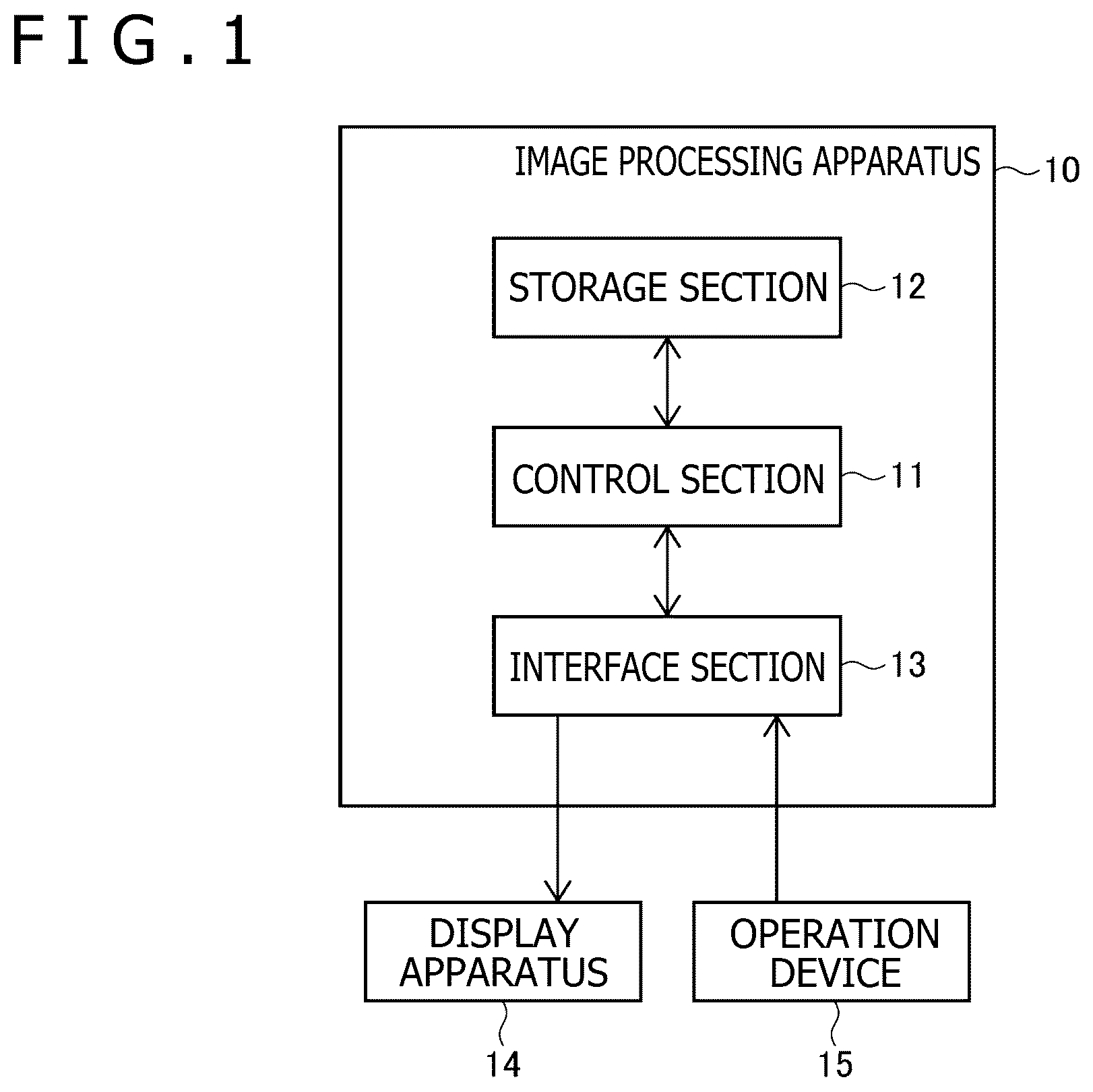
Sony Interactive Entertainment has published a patent application for checking a stretch of gameplay video through one specially constructed still image. The proposed system records what buttons or controls were used, captures the resulting video and extracts a different thin slice from each frame. Those slices are then stacked into what the filing calls a “digest image”.
The result is not a screenshot intended for players. It is a testing aid designed to make events spread across several seconds visible at once. A tester—or software inspecting the image—could potentially recognise whether a menu appeared, a camera scrolled correctly or a character failed to follow the supplied input without replaying every frame.
That makes the application relevant to PS6-era development even though it never names PlayStation 6. Larger games, frequent updates and multiple console or handheld configurations increase the number of repeatable tests a studio must run. The document shows one method Sony has investigated for making that work faster; it does not announce a PS6 feature.
What Sony’s Newly Published Application Covers
US application 2026/0350870 A1 was filed in the United States on 26 March 2025 and published on 5 November 2026. Sony Interactive Entertainment Inc. is the applicant, while Tomokazu Kake, Akio Ohba and Daichi Ono are named as inventors. The US filing is a national-stage entry tied to an international application filed in November 2022, so the publication represents fresh public paperwork around an older research project—not an idea invented this week.
The application contains eight claims. Its broad first claim covers acquiring information describing an operation input, obtaining video displayed in response, creating at least one digest image from partial pictures taken at different positions across multiple frames and using that image to check the video against the input.
Readers can inspect the official USPTO publication PDF. A plain-English technical breakdown from Patentlyze provides useful context on the drawings, prosecution status and the distinction between the broad first claim and the more specific later claims.
How One Image Can Summarise Seconds of Gameplay
The clearest example in the filing starts with a video running at 60 frames per second and measuring 720 pixels from top to bottom. Twelve seconds produces 720 frames. The system can take the top pixel row from the first frame, the next row from the second frame and continue until one row has been collected from each of the 720 frames.
Stacking those rows produces one 720-pixel-high image that represents change across the full twelve-second sequence. It resembles slit-scan photography, where a narrow slice is recorded repeatedly over time. Instead of preserving a conventional view of one moment, the digest image turns time into a spatial pattern.
Sony’s approach is therefore different from the company’s controller-assisted frame-generation research. Frame generation tries to create additional pictures for the player to see. This application compresses already displayed pictures into test evidence so a developer can judge whether the correct sequence occurred.
What Lines and Shapes Could Reveal
The later claims and drawings describe looking for lines in the digest image. A sharp line running along the stacking direction can mark a scene transition, such as a menu appearing after a button press. A slanted line can represent scrolling, with its direction and angle offering information about how the screen moved.
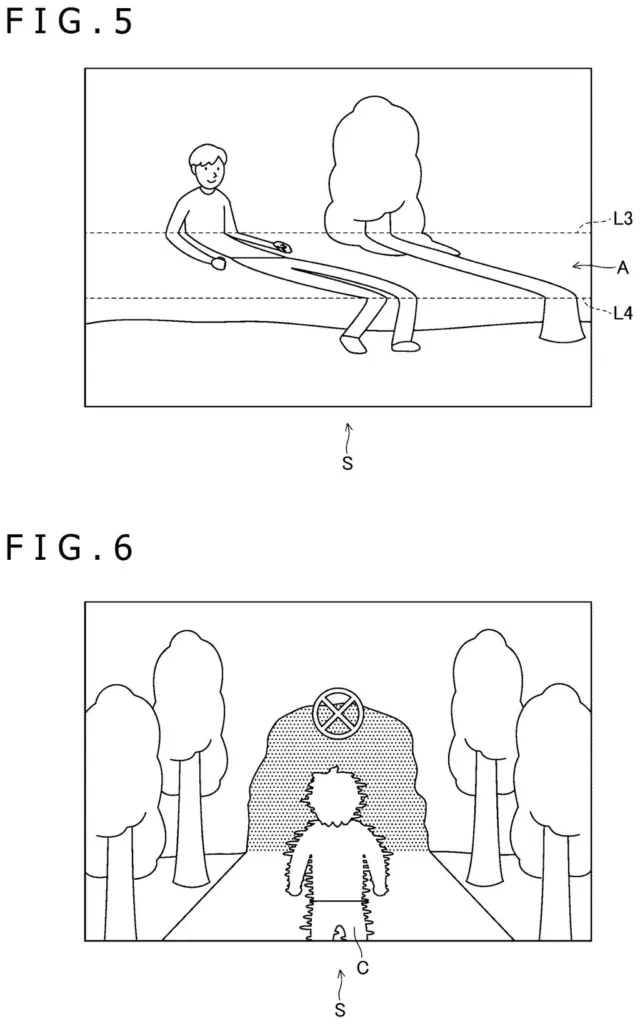
Other patterns could expose a character becoming stuck. If the background does not move as expected while the player-character changes position or animation, the image may reveal that the supplied movement input failed to produce the intended journey. A tester could see the mismatch without watching the complete recording in real time.
The method is not presented as a universal bug detector that understands every game automatically. It needs the recorded input, the resulting video and rules capable of interpreting the digest. Its attraction is that common visual patterns may require less game-specific checking than a separate bespoke detector for every menu, camera move or traversal sequence.
Automated Tests Could Respond to the Result
The filing goes beyond creating a summary picture. It describes feeding the checking result back into the source of the operation input. An automated test could retry an action, stop pressing a control or issue an opposite input after detecting that the game moved somewhere unexpected.
That creates a basic feedback loop: perform an input, record the visible result, compress the sequence, evaluate the image and choose what to do next. In a controlled test environment, the loop could help a machine move through repeatable checks without requiring a person to watch each replay from beginning to end.
Sony also describes feedback for a human operator. A controller could change its vibration or a light near the display could flash when the measured path diverges from the intended one. That does not establish a new DualSense model, although it illustrates how existing feedback hardware could surface a diagnostic result. Sony’s separate motorised-thumbstick patent covers a different, more physical approach to controller feedback.
Why This Matters for PS6-Era Development
Sony has now told investors that next-generation platform development is progressing on schedule. Preparing a new platform requires much more than finishing a processor. Operating-system changes, graphics drivers, compatibility layers, controller firmware, store functions and games all need repeated testing as software and hardware evolve.
A digest-image tool could be useful when the same action must be checked across multiple builds or performance modes. It could also help studios compare behaviour after patches, detect regressions and review tests conducted on different hardware targets. Applying it to PS6, a companion handheld or backward compatibility is an inference; the patent does not identify any of those products.
The wider pattern is still relevant. Sony’s recent PS6 graphics texture-compression filing explored efficiency in storing visual data, while this application targets efficiency in verifying what appears on screen. Neither supplies a retail specification, but both show engineers working on practical constraints surrounding increasingly complex games.
What the Patent Does Not Confirm
The application does not confirm that PS6 will generate digest images, run automated gameplay tests locally or expose a new diagnostic mode to players. It contains no PS6 processor, memory, graphics, storage, controller or release-date information. It also does not say that the method will become a mandatory part of PlayStation certification.
It should not be described as artificial intelligence unless a particular implementation uses AI. The core examples focus on extracting image slices, stacking them and detecting visual edges or lines. Those operations can be performed with conventional image-processing techniques.
The document also provides no public benchmark showing how many hours it saves, how reliably it identifies faults or how well it works across different game genres. A technique that cleanly exposes scrolling in a controlled test may need more rules for a fast-cut action game, a procedurally generated world or an interface filled with animated elements.
Patent Status and What Comes Next
Patentlyze reports that the US examiner raised objections on 15 October 2026. That does not mean the technical idea is false or that Sony has abandoned it. Patent prosecution commonly involves amending claims, arguing over prior art or narrowing the legal protection before a patent is granted—or the application is ultimately refused.
The most meaningful next evidence would be an amended claim set, a granted patent, a Sony developer presentation or documentation showing digest-image analysis inside a real testing workflow. A PlayStation job listing or engineering paper could also establish whether the method has moved beyond legal protection into practical use.
For now, the responsible conclusion is narrow. Sony has published a detailed method for turning a sequence of gameplay into one diagnostic image and comparing it with the controls that produced it. The idea could help future PlayStation development, but it remains verified research—not a promised PS6 capability.