Steam Deck 2 Chip Clue Raises the PS6 Handheld Bar
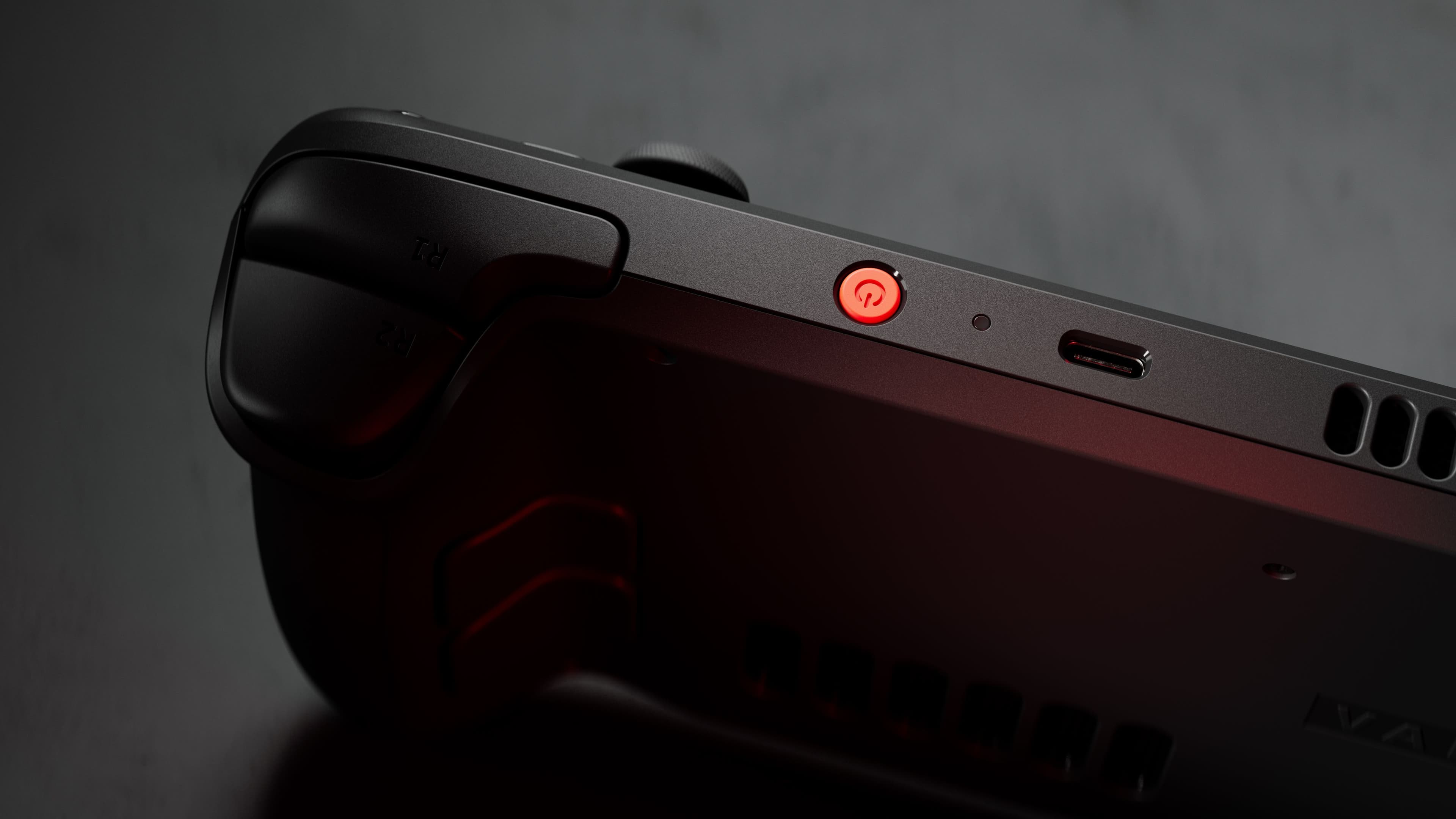
A mysterious AMD engineering sample has appeared in public benchmark records with a configuration that looks unusually well suited to a future gaming handheld: six CPU cores, 12 threads and 24GB of fast LPDDR5 memory. The listing is real, but the popular conclusion that it reveals the Steam Deck 2 is not confirmed.
The device has been linked in hardware reporting to an unreleased APU known as Gainsborough. That matters beyond Valve because its broad shape overlaps with the kind of low-power AMD design discussed in rumours surrounding Sony’s possible PS6 portable. It offers a useful engineering clue, not proof of either company’s final hardware.
PS6News has therefore treated the benchmark as a development signal. AMD has not named the customer, Valve has not announced Steam Deck 2 specifications, and Sony has not announced a PS6 handheld.
What the AMD Engineering Sample Actually Shows
The original OpenBenchmarking record identifies an AMD engineering sample with the part number 100-000001930-12_Y on an AMD GBR-FF6-SKT validation board. It reports six CPU cores and 12 threads at 2.4GHz, alongside an integrated GPU listed at 2.4GHz.
The test system contains four 6GB SK Hynix memory packages, producing 24GB in total, with the memory operating at 9,600 MT/s. It was running Ubuntu 24.04 with development-stage Mesa graphics software rather than a finished consumer driver stack.
Those are the strongest facts in the story. The record does not identify Valve, Steam Deck 2, PlayStation, a retail product name, the final power limit, GPU architecture, compute-unit count or launch date. Any connection to a shipping handheld begins as an inference.
Why Gainsborough Is Being Linked to Steam Deck 2
Hardware reporters have connected the board and graphics firmware identifiers to the rumoured Gainsborough APU. The codename attracts attention because the original Steam Deck’s custom AMD chip is commonly associated with Aerith, while the OLED revision uses Sephiroth; Gainsborough is Aerith’s surname in Final Fantasy VII.
That naming pattern is suggestive, but it is not ownership paperwork. AMD can use internal names before a customer product is final, and an engineering board can validate silicon, memory layouts, firmware and drivers without representing the exact specification a partner eventually buys.
The sample has also been described as Zen 6-class because of processor-family identifiers and Linux kernel work associated with newer AMD designs. That remains an interpretation rather than an AMD announcement. The listing does not establish whether the cores are full Zen 6, denser Zen 6c variants, a mixed layout or something else.
The Early GPU Scores Do Not Reveal Final Performance
The benchmark run includes GpuTest workloads such as FurMark, GiMark and TessMark. Some reports have placed the resulting numbers beside Steam Deck OLED results, but the comparison is not controlled: the Gainsborough-associated sample ran at 1024×768 in a window, while the cited Deck run used 1280×800 fullscreen settings.
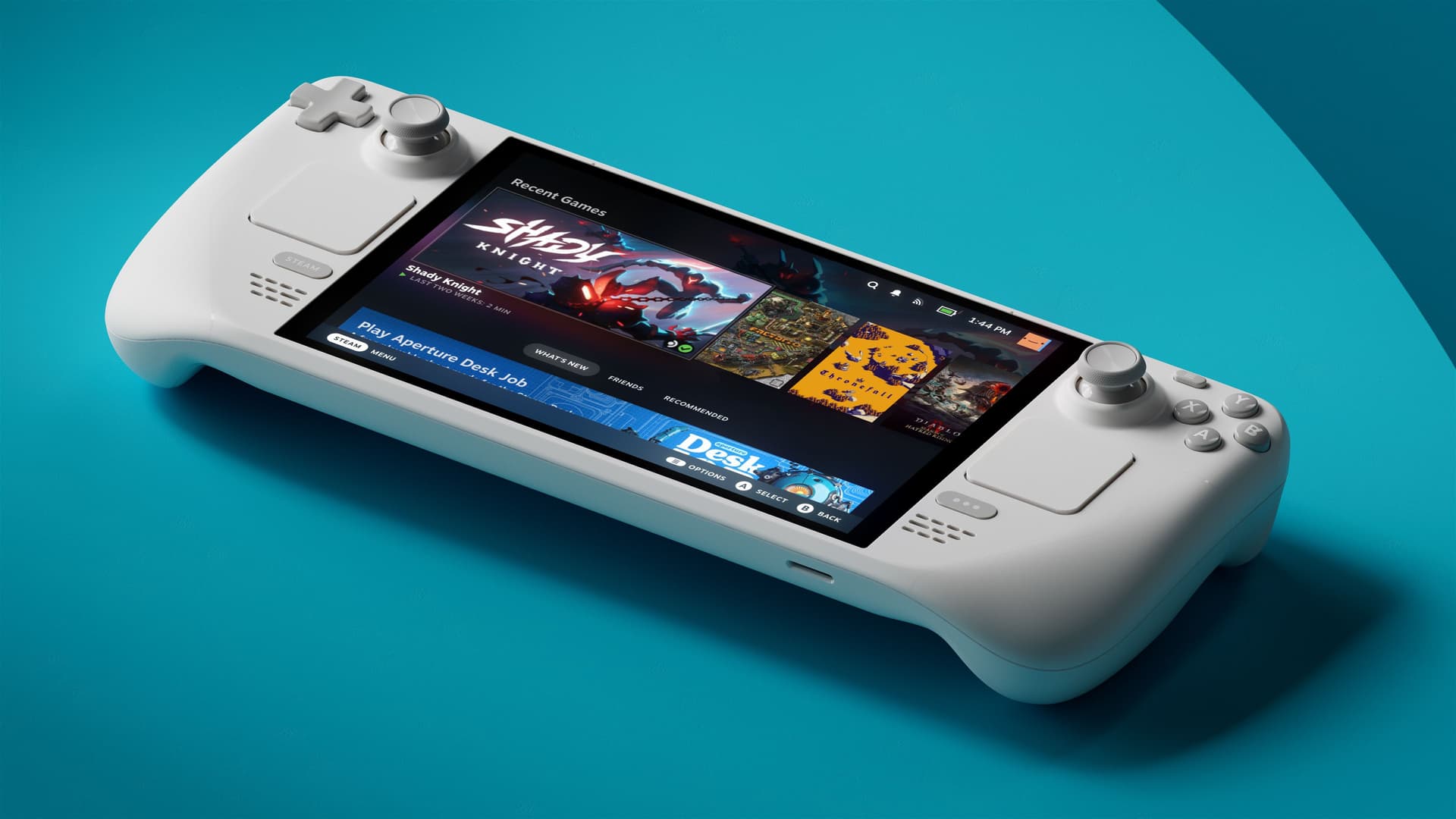
An engineering platform also carries unfinished firmware, immature power management and development drivers. Its cooling, memory timings and configured power limit may bear little resemblance to a handheld enclosure. A low score could reflect incomplete software; a high score could come from an unrealistic laboratory power budget.
For that reason, the results cannot establish a generational performance gain. They show that working silicon or a functioning prototype platform is being exercised under Linux. That is important progress, but game frame rates, battery life and sustained clocks remain unknown.
How It Compares With Today’s Steam Deck
Valve’s official Steam Deck specifications describe the OLED model as using a four-core, eight-thread Zen 2 CPU, eight RDNA 2 compute units and 16GB of LPDDR5 memory rated at 6,400 MT/s. Its custom AMD APU operates within a 4–15W power range.
The prototype’s six cores and 24GB of faster memory would therefore represent meaningful increases in CPU resources, capacity and raw memory transfer rate if they survived into a retail product. More memory could give modern game engines additional room for textures, shaders and shared CPU/GPU workloads, while faster LPDDR can feed an integrated GPU more effectively.
Yet the missing details are decisive. Without a confirmed memory bus width, GPU configuration and sustainable handheld power limit, the listing cannot tell us total bandwidth or graphics capability. Valve has repeatedly framed a successor around a genuine performance-per-watt leap, a requirement explored in our earlier Steam Deck 2 and PS6 handheld analysis.
What It Means for PS6 Jupiter Handheld Console Rumours
Against that background, the PS6 Jupiter handheld console rumours deserve a stricter comparison. Reports around Sony’s possible portable repeatedly describe six CPU cores, a large shared LPDDR memory pool and next-generation AMD graphics. The new benchmark proves that AMD is testing at least one six-core platform with 24GB of fast low-power memory; it does not prove that Sony’s reported specification is accurate.
The more useful takeaway is competitive. If Valve can eventually ship a device in this class, Sony would need its rumoured portable to deliver a similarly convincing balance of CPU performance, memory bandwidth, reconstruction quality and battery life. Our full PS6 portable guide explains why reported Canis or Jupiter details remain unconfirmed even when individual components appear technically plausible.
A shared direction across future handhelds would also help developers. Six modern cores, a larger unified memory pool and advanced upscaling could create a more predictable lower-power target for PC and console games. It would not make the devices identical: operating systems, APIs, fixed hardware profiles and Sony’s certification requirements would still produce very different platforms.
Why 24GB Could Matter—and Still Be Too Expensive
Twenty-four gigabytes is an attractive middle ground for a high-end portable. It offers more headroom than today’s 16GB Deck while avoiding the cost and power burden of a 32GB configuration. Because CPU and GPU share the pool, capacity must cover the operating system, game code, textures, geometry, render targets and background services at the same time.
Capacity alone is not the breakthrough. The memory must deliver enough bandwidth without consuming too much energy, and the APU must avoid wasting that bandwidth on unnecessarily high native resolutions. Machine-learning reconstruction can help by allowing games to render internally at a lower resolution and rebuild a cleaner image for the display.
That is why AMD’s work on lighter neural upscaling is relevant to both Valve and Sony. Our report on the handheld-focused FSR 4 model explains how better reconstruction could convert limited portable power into sharper output, while also noting that no evidence ties that software directly to Sony’s rumoured chip.
What Would Turn This Clue Into Real Evidence
The next meaningful step would be a second benchmark identifying the same APU with clearer GPU data, a driver entry that exposes its architecture, shipping documentation that ties the package to a customer, or an official statement from AMD or Valve. Controlled tests at matched resolutions and disclosed power limits would be far more useful than the current mixed prototype results.
For PlayStation, only Sony documentation, development guidance or a formal product reveal can confirm a portable. Similar-looking specifications across rumours and an AMD laboratory board may show where handheld engineering is heading, but they do not establish a shared chip or a final PS6 design.
For now, the sample raises the bar without settling the race. It suggests that six modern CPU cores and 24GB of fast LPDDR memory are being tested in a compact AMD platform, while leaving the two questions that matter most—who it is for and how efficiently it performs—unanswered.