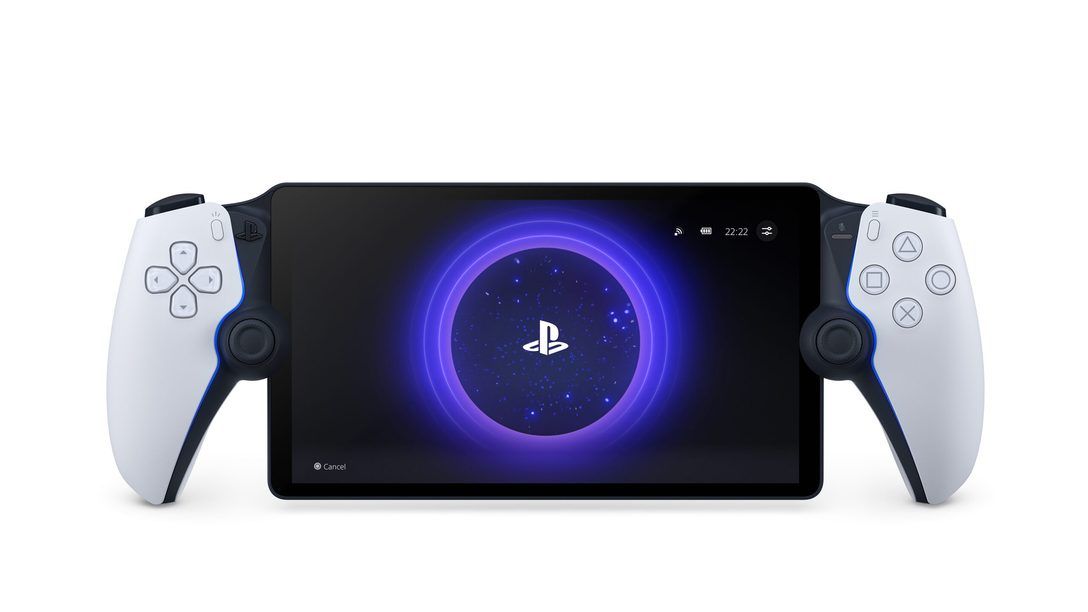
PS6 Handheld Could Benefit From AMD’s New FSR 4 Model

AMD is preparing a lightweight version of its machine-learning FSR 4 upscaler for APUs and handheld devices before the end of 2026. The announcement is directly relevant to the next wave of portable gaming hardware, including the rumoured PS6 handheld, because compact systems need to deliver convincing image quality within much tighter power and cooling limits than a home console.
Jack Huynh, AMD’s senior vice president and general manager of Computing and Graphics, said the company will expand FSR 4 across APUs, gaming laptops and handheld devices. AMD plans to support both existing APUs and new products, although it has not named the first compatible handhelds or specified whether every feature will arrive on each device.
This does not confirm anything about Sony’s unannounced hardware. The PS6 Portable remains a credible but unconfirmed project, and no final processor, graphics architecture or upscaling technology has been published by Sony. AMD’s announcement instead shows that the underlying graphics ecosystem is being adapted for the exact low-power environment a future PlayStation portable would occupy.
What AMD Has Actually Confirmed
Huynh disclosed the plan during a meeting with Korean media in Seoul on 7 October. The Verge’s report says AMD intends to extend its machine-learning FSR 4 technology to the wider product range by the end of this year, including APUs and handheld devices.
The most important technical detail is the dedicated lightweight model. Huynh said AMD has developed a version tailored to APU environments, with a focus on strong game image quality and low latency. An APU combines CPU and graphics functions in one package and is the standard approach for modern gaming handhelds because it saves space and can be more power-efficient than separate desktop-style chips.
AMD also described a two-track rollout involving existing APUs and new products. That wording suggests some current hardware may receive support, while future chips could be designed around the technology more directly. It does not guarantee compatibility for Steam Deck, ROG Ally, Legion Go or any other individual product.
How FSR 4 Helps a Gaming Handheld
A handheld rarely has enough sustained power to render demanding games at the screen’s full resolution with desktop-level settings. FSR addresses that constraint by rendering the game at a lower internal resolution and reconstructing a higher-resolution final image. The GPU performs less conventional rendering work, potentially creating room for a steadier frame rate, higher visual settings or lower power consumption.
FSR 4 replaced the purely analytical approach used by earlier versions with machine-learning reconstruction. AMD’s official FSR technology guide says the current upscaler is designed to improve detail preservation, temporal stability and ghosting compared with FSR 3.1. AMD now calls the technology FSR Upscaling as part of the wider FSR Redstone suite, although FSR 4 remains the familiar name used in the new handheld reporting.
Upscaling does not create free performance. The machine-learning model still consumes processing time and memory bandwidth, while the source frame rate must remain stable enough for reconstruction to look convincing. Fine text, particles, transparent effects and fast motion can expose artefacts, especially when the internal resolution is pushed too low.
Why the Lightweight Model Matters
The desktop version of FSR 4 was initially associated with dedicated Radeon graphics hardware that has substantially more compute and power available than a portable APU. Simply transferring the same model to a handheld could consume too much of the performance gained by rendering at a lower resolution.
AMD’s lightweight model is intended to reduce that burden. The practical goal is not necessarily to match a high-end desktop GPU pixel for pixel, but to find a better balance between reconstruction quality, execution time and energy use. On a battery-powered system, an extra watt spent on image reconstruction is a watt that cannot be spent elsewhere—or saved to extend play time.
Latency is equally important. Reconstruction must finish inside the frame budget, and any accompanying frame-generation feature must avoid making controls feel disconnected. AMD specifically highlighting low latency suggests it understands that a visually sharper image has limited value if the handheld becomes less responsive.
What It Could Mean for the PS6 Handheld
Reports have linked Sony’s possible next-generation portable to a custom AMD chip, but Sony has not confirmed the device, its codename, its architecture or its performance target. The safest conclusion is therefore about capability rather than product specification: AMD is building a more suitable machine-learning upscaling path for future portable APUs.
That could allow a PS6 handheld to render internally at a manageable resolution while presenting a cleaner image on its built-in screen or a higher-resolution television when docked. The advantage may be particularly noticeable in games designed for a much stronger PS6 home console, where native portable rendering would otherwise require substantial reductions to resolution, lighting, geometry and effects.
Our guide to the PS6 handheld and Steam Deck 2 chip challenge explains why Sony must balance compatibility against battery life. A lightweight upscaler helps with that trade-off, but it cannot solve differences in CPU speed, memory capacity or GPU features. Developers would still need scalable game settings and a realistic minimum hardware target.
The Difference Between FSR 4 and PlayStation’s Own Research
Sony and AMD are also collaborating through Project Amethyst on machine-learning graphics and future ray-tracing technology. That work includes Neural Arrays and other architecture research that could influence a future PlayStation reconstruction system. It should not be treated as the same product as the newly announced lightweight FSR 4 model.
Sony could adopt AMD’s standard technology, build a PlayStation-specific implementation, combine shared research with its own training and developer tools, or use different solutions across home and portable hardware. PS5 Pro already uses Sony’s PlayStation Spectral Super Resolution rather than branding its reconstruction system as FSR.
The broader direction is nevertheless consistent. Both AMD’s handheld plan and Sony’s PS6 graphics research point towards machine-learning reconstruction becoming a core part of console performance rather than an optional visual setting. The next generation is likely to depend on rendering smarter, not merely adding more raw compute.
Xbox Helix and the Wider Portable Race
Microsoft has now described its Gen-10 Xbox strategy as a family of devices, with a powerful console first and options for players on the go. It has not announced a first-party Helix handheld, but the company’s wording leaves room for Microsoft-built and partner hardware across different form factors.
A portable Xbox device using an AMD APU would face the same thermal and battery constraints as Sony’s rumoured handheld. AMD’s lighter FSR model could therefore become relevant across several competing products rather than giving one platform an exclusive advantage. The Project Helix family-of-devices strategy may ultimately depend on software that scales efficiently between living-room and mobile hardware.
Valve, Asus, Lenovo and other PC-handheld makers also stand to benefit if their chips qualify. Wider support would encourage developers to integrate a common reconstruction path, which in turn could make it easier for future console handhelds to receive well-optimised versions of multiplatform games.
What Remains Unknown
AMD has not published the compatible APU list, performance cost, image-quality targets or exact release date. It is also unclear whether the first handheld implementation will support only machine-learning upscaling or additional Redstone features such as frame generation and ray regeneration.
No evidence currently ties the lightweight model to a specific PS6 handheld chip. The reported Canis or Jupiter specifications remain unverified, and AMD’s announcement should not be used to confirm an RDNA generation, memory configuration, display resolution or launch window for Sony’s portable.
The next useful evidence will be AMD driver documentation, named hardware partners and independent image-quality testing on a low-power APU. For PlayStation, only Sony documentation, development guidance or a formal hardware reveal can establish whether this technology appears in a PS6 handheld. Until then, the new model is an important enabling technology—not a confirmed PlayStation feature.