PS6 Graphics: Ray Tracing, AI and What to Expect
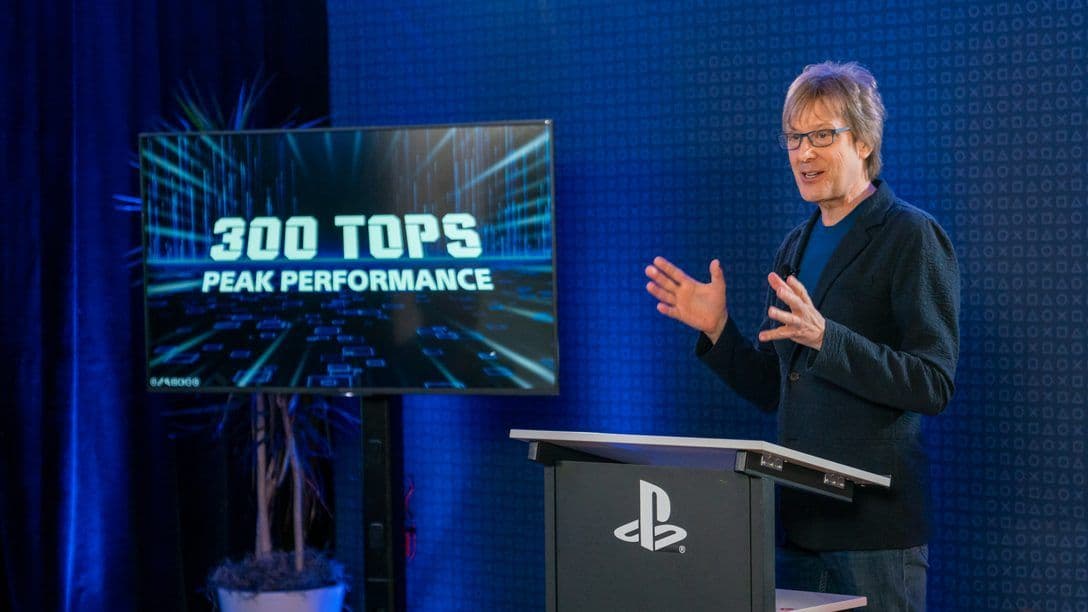
PS6 graphics rumours are moving beyond vague teraflop predictions. Sony and AMD have publicly discussed a technology partnership built around machine learning, ray tracing and data efficiency, giving us a more credible starting point for understanding what the next PlayStation generation could deliver.
The project is called Project Amethyst. It is not the official name of the PlayStation 6, and Sony has not announced a PS6 specification sheet. However, PlayStation architect Mark Cerny has described work aimed at a future console, while AMD has shown related research around the same graphics pipeline.
That makes Amethyst the most useful PS6 graphics clue available today. This guide separates what Sony and AMD have actually shown from the likely-but-unconfirmed ways those technologies could be used in a future PlayStation.
PS6 graphics at a glance
| Question | Best verified answer | Confidence |
|---|---|---|
| --- | --- | --- |
| What is Project Amethyst? | A Sony and AMD engineering collaboration focused on machine learning and graphics | Confirmed |
| Is Amethyst the PS6 codename? | No; Sony has not called it the PS6 | Confirmed |
| Which technologies matter most? | Neural Arrays, Radiance Cores and Universal Compression | Demonstrated research |
| What could PS6 use them for? | AI reconstruction, denoising, frame generation, ray tracing and lower-bandwidth rendering | Reasoned possibility |
| Has Sony announced the PS6? | No public name, design, specifications, price or release date | Confirmed |
| Is the technology only for PlayStation? | No; AMD can apply parts of the work to its wider graphics roadmap | Confirmed direction |
The table is deliberately conservative. A technology can be real without being guaranteed for a retail console, and a demonstration can show a direction without proving the final number of compute units, memory or frames per second.
Sony’s official PS5 Pro technical seminar is the primary source for the collaboration. Our existing Project Amethyst guide covers the partnership’s background, while this article focuses on what the work could mean for PS6-era rendering.
Project Amethyst is the clearest PS6 graphics clue
Sony and AMD have worked together on PlayStation processors since the PS4. Project Amethyst represents a deeper relationship: Sony brings fixed-console design experience and knowledge of game development, while AMD brings its CPU, GPU and machine-learning architecture work.
The goal is not simply to make a bigger conventional GPU. The research is aimed at getting more useful work from each part of the graphics pipeline, especially when games are reconstructing images, tracing light or moving large quantities of scene data through memory.
That matters because a next-generation console will still have a power, heat and price envelope. A smarter rendering pipeline could allow Sony to spend performance on lighting, geometry, simulation and frame rate instead of using every available resource to draw a native high-resolution image pixel by pixel.
The public demonstrations also explain why it is too early to publish leaked numbers as settled PS6 facts. The named technologies have been discussed as development work and, in some cases, as simulations of future hardware rather than final consumer components.
Neural Arrays could make AI rendering practical
Neural Arrays are intended to let multiple GPU compute units cooperate on machine-learning workloads as a larger, more unified engine. The important idea is efficiency: future graphics hardware may not need a huge separate AI processor if its existing units can be arranged to run a model effectively.
In a game, that could support image reconstruction. The engine might render internally at a lower resolution, feed motion, depth and colour data into a trained model, and output a sharper image while leaving some conventional GPU time available for effects that players can see.
Potential workloads include upscaling, ray-tracing denoising, texture reconstruction, animation assistance and frame generation. None of those is automatic or guaranteed; each requires a suitable algorithm, training data, engine integration and developer testing.
The practical PS6 question is therefore not simply “how many AI cores does it have?” It is whether Sony can offer a stable toolchain that developers trust across a wide range of games, including fast-moving scenes, transparent effects, foliage, particles and image-heavy UI elements.
Radiance Cores target ray tracing and path tracing
Ray tracing follows rays through a scene to calculate reflections, shadows and illumination. It can make a game look dramatically more convincing, but it also asks the GPU to search scene data and calculate many possible light paths at a cost that traditional rasterisation avoids.
Radiance Cores are specialised hardware blocks discussed for accelerating that workload. The aim is to handle more of the ray-tracing process while freeing general compute units for shading, geometry, post-processing and other game work.
That could make ray-traced reflections less likely to force a choice between image quality and frame rate. Developers might have room for more rays per pixel, cleaner denoising, more dynamic lights or a wider use of path-traced effects.
The important limit is that better ray-tracing hardware does not make path tracing free. A technically ambitious game can still overwhelm a console GPU, and the final result will depend on the PS6’s full processor, memory system, cooling design and the game engine.
Universal Compression tackles the memory bottleneck
Universal Compression is less visually exciting than ray tracing, but it could be just as important. Modern games constantly move textures, geometry, lighting data and other resources between storage, memory and the GPU. As assets become larger, bandwidth and power become limiting factors.
The proposed approach is to compress more of the information moving through the graphics pipeline. If the GPU can transport the same useful scene data in a smaller form, the system may reduce memory traffic, improve efficiency and create room for more detailed assets or more complex effects.
This is not the same as shrinking a 200GB game download. Universal Compression would primarily affect real-time rendering and data movement, not necessarily the amount of storage a game occupies on an SSD.
For a future handheld, the efficiency angle could be especially valuable. Less memory traffic can mean lower power use and less heat, although Project Amethyst itself does not confirm that Sony is launching a particular portable PlayStation.
PSSR, FSR and the AI graphics pipeline
PS5 Pro already shows Sony’s interest in machine-learning image reconstruction through PlayStation Spectral Super Resolution, or PSSR. The system can reconstruct a sharper output from a lower internal render, potentially allowing a game to use saved GPU time for higher-quality lighting or a faster performance mode.
PSSR is not flawless. Depending on the game, reconstruction can struggle with fine foliage, shimmering detail, particles and transparencies. Those visible limits are useful evidence: better models and better acceleration matter just as much as the marketing label attached to the feature.
Sony and AMD have also discussed a shared foundation for newer PlayStation and FidelityFX upscaling work, alongside machine-learning frame-generation research. Frame generation can create intermediate images for smoother perceived motion, but it does not remove simulation latency and can produce artefacts when motion is difficult to predict.
A plausible PS6 pipeline would combine a stronger conventional GPU with Radiance Cores for lighting, Universal Compression for bandwidth efficiency and Neural Arrays for reconstruction or denoising. That is an informed interpretation of the public technology direction, not a confirmed PS6 feature list.
Confirmed facts versus PS6 speculation
| Claim | Status | What we can safely say |
|---|---|---|
| --- | --- | --- |
| Sony and AMD are collaborating under Project Amethyst | Confirmed | The partnership was publicly discussed by Sony and AMD |
| Neural Arrays, Radiance Cores and Universal Compression exist as research concepts | Confirmed | They have been presented as technologies under development |
| The work is intended to influence a future console | Confirmed direction | Sony has discussed future-console ambitions, without naming PS6 |
| Every Amethyst feature will ship in PS6 | Unconfirmed | Final hardware choices have not been announced |
| Amethyst is the PS6 codename | Unsupported | It is the name of the Sony–AMD collaboration |
| PS6 will guarantee native 4K/120fps or 8K | Unsupported | No such performance promise exists |
| PS6 release date, price and memory are known | False at present | Sony has not officially disclosed them |
The latest technical reporting from The Verge is useful for understanding the demonstrations, but it should not be read as a final PS6 announcement. The same caution applies to leaked CPU, GPU and memory figures repeated across social media.
The best way to follow PS6 graphics is to watch for three kinds of evidence: Sony naming a consumer product, AMD publishing a shipping architecture, and developers receiving tools or hardware that expose the feature. Until then, “could power PS6” is accurate; “PS6 has Radiance Cores” is not.
Sony’s next machine may be more impressive because of how it spends performance than because of one headline teraflop number. Project Amethyst points towards cleaner reconstruction, more convincing lighting and a more efficient data path, but the finished console remains unannounced.