Project Helix Graphics Get an FSR 4.1 Preview on Xbox
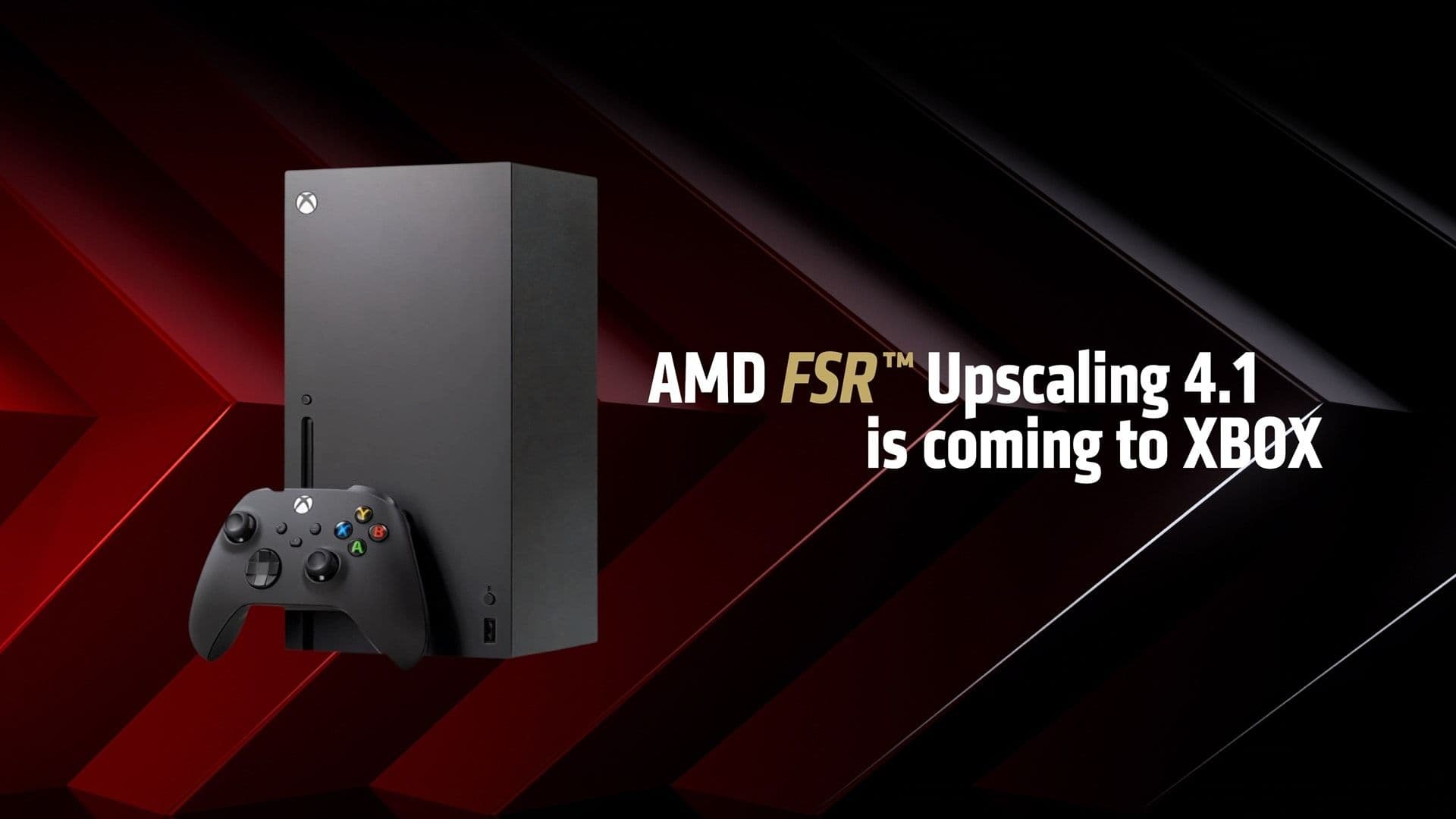
AMD is bringing its FSR Upscaling 4.1 technology to Xbox Series X|S and a wider range of handheld processors, creating a useful real-world preview of the graphics strategy Microsoft is building towards with Project Helix.
The announcement is about current Xbox consoles, Radeon hardware and portable PCs—not a Project Helix software reveal. Its next-generation relevance comes from the architecture of the rollout: one machine-learning upscaler is being tuned across living-room consoles, desktop graphics cards, laptops and lower-power handheld chips.
That scalable approach closely matches Microsoft’s confirmed Helix plan, which brings Xbox console and PC games together across a family of devices. The important lesson is therefore not that Helix will ship with FSR 4.1. It is that AMD and Xbox are already exercising the cross-device graphics pipeline their next platform will need.
What AMD Has Announced
In an official announcement published on 20 October 2026, AMD said FSR Upscaling 4.1 is expanding to Radeon RX 6000 graphics cards, Ryzen AI Max systems, Ryzen AI 9 laptops, selected Ryzen Z2 handheld processors and Xbox Series X|S.
PC support arrives through AMD Software: Adrenalin Edition 26.10.1. The Xbox console version is described as “coming soon”, without a public consumer date or list of patched games. Xbox CTO Scott Van Vliet confirmed the console work in AMD’s announcement video.
AMD says 4.1 delivers a significant image-quality improvement over FSR 3.1. For RX 6000 hardware, it has optimised an INT8 model previously used on RX 7000 cards, allowing GPUs released in 2020 to run the newer machine-learning reconstruction system.
Why This Matters to Project Helix
Project Helix has a difficult graphics target. Microsoft wants its next-generation first-party console to play Xbox console and PC games while supporting a wider device ecosystem. That means developers need technology that can scale across different power limits, memory budgets, resolutions and screen sizes.
FSR 4.1 now spans old desktop GPUs, newer integrated processors, mainstream laptops, handheld APUs and fixed Xbox consoles. Each platform requires different optimisation, but the common reconstruction layer can help studios preserve a consistent visual target without rendering every frame at the display’s full resolution.
Microsoft’s official Project Helix roadmap goes further. Helix uses a custom AMD system-on-chip co-designed for the next generation of DirectX and FSR, with machine intelligence integrated into its graphics and compute pipeline. Our Project Helix guide tracks those confirmed features separately from leaked Magnus specifications.
FSR 4.1 Is Not Helix’s FSR Next
FSR 4.1 should not be mistaken for the final reconstruction system inside Project Helix. It is a shipping AMD technology being extended to existing hardware. Microsoft describes the future console’s graphics stack as the next generation of FSR, sometimes discussed as FSR Next or FSR Diamond, but has not published the final model, hardware requirements or feature list.
The distinction matters because a future custom chip can include acceleration designed around a new model from the beginning. Current Xbox Series consoles were built years before machine-learning upscaling became central to AMD’s graphics roadmap, so FSR 4.1 must work within fixed compute, memory and bandwidth limits.
Helix could combine a more advanced upscaler with dedicated neural hardware, stronger ray-tracing acceleration and deeper DirectX integration. Those are reasonable conclusions from Microsoft’s direction, not confirmed performance specifications. The FSR Next versus PSSR comparison explains why the next console contest will depend on the complete rendering pipeline.
What FSR Upscaling Actually Changes
Upscaling lets a game render internally at a lower resolution and reconstruct a sharper output image. The GPU can spend the saved work on higher frame rates, denser geometry, more advanced lighting or a steadier performance target. The result depends on the quality of the model and the motion data supplied by each game.
The difficult cases include fine foliage, hair, particles, transparencies, reflections and objects revealed at the edge of the screen. A weak reconstruction pass can introduce shimmer, ghosting or unstable detail. AMD’s claim of a major improvement over FSR 3.1 will therefore need to be judged game by game once Xbox implementations arrive.
FSR Upscaling 4.1 is also not frame generation. Upscaling reconstructs one rendered frame at a higher output resolution; frame generation predicts additional images between rendered frames. AMD announced separate frame-pacing improvements for FSR Frame Generation, but those do not turn every FSR 4.1 game into a frame-generated title.
Handheld Support Is the Bigger Next-Gen Clue
AMD has created a more efficient FSR 4.1 version for the hardware class covering Ryzen AI 9, Ryzen AI Z2 Extreme, Ryzen Z2 Extreme and Ryzen Z2 A processors. The company says the streamlined model is designed for handhelds and mainstream laptops, where battery life and thermal limits make rendering efficiency especially important.
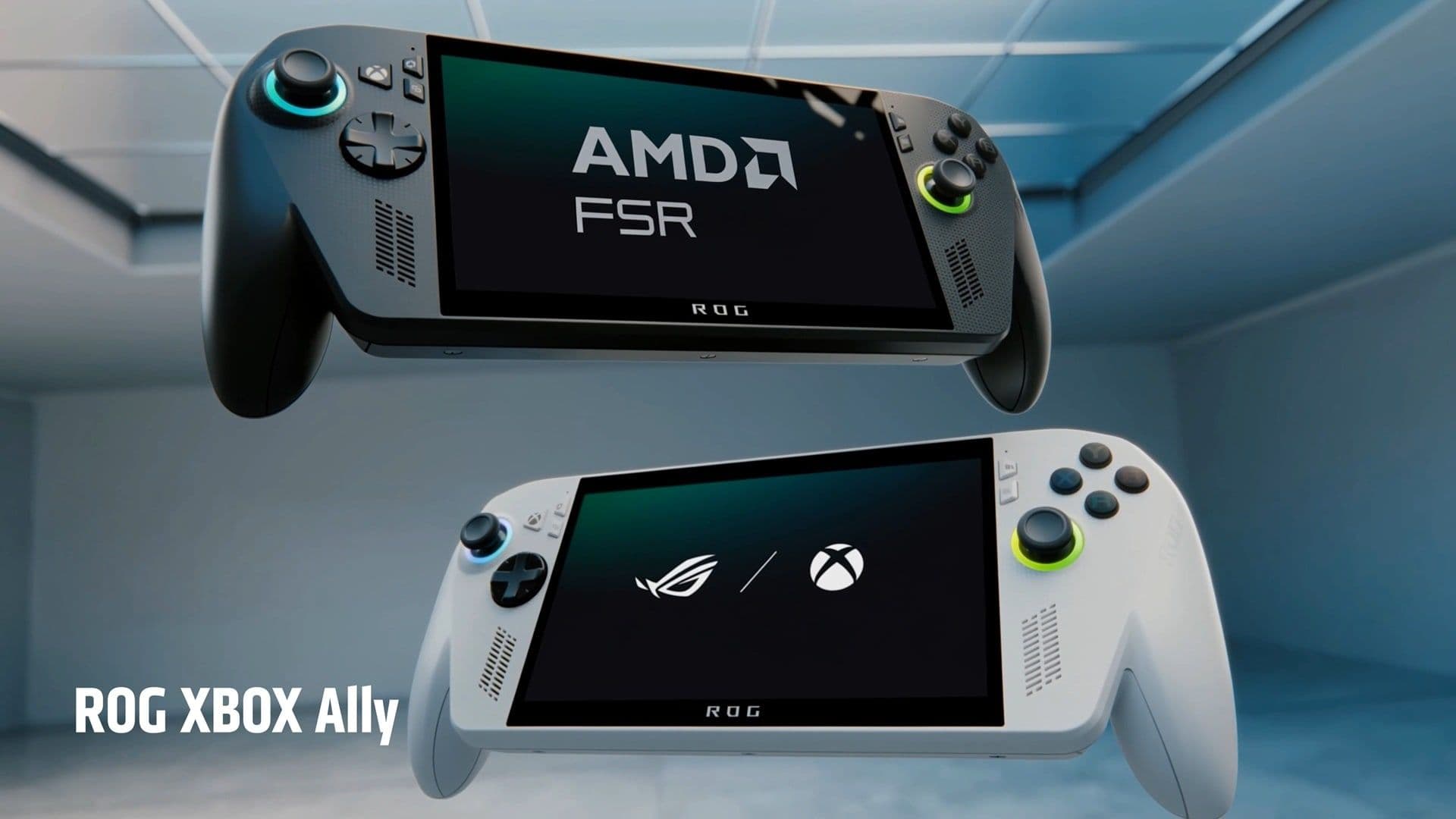
That work is relevant to the reported 2027 Xbox handheld, although its processor, manufacturer and software model remain unconfirmed. A future device could use newer silicon and a later FSR version; the present rollout only demonstrates that AMD can scale its machine-learning model down to portable power envelopes.
It is also relevant to Sony’s rumoured portable plans. Our PS6 Jupiter handheld console rumours guide separates the credible reporting from unsupported specifications. Sony may use technology derived from Project Amethyst rather than branding its solution as standard FSR, just as PS5 Pro uses PSSR.
The PS6 Graphics Comparison
Sony and Microsoft are taking different public routes towards the same broad problem. Xbox is extending AMD’s FSR technology across its current ecosystem before moving to a custom next-generation stack. Sony has used PS5 Pro to develop PSSR and has now brought the lighter QSSR reconstruction library to the standard PS5 through Project Amethyst.
Both approaches give developers valuable integration time. Studios can learn how reconstruction interacts with dynamic resolution, motion vectors, post-processing and ray tracing before PS6 and Project Helix demand more ambitious implementations. That software experience may prove as important as the neural hardware eventually placed in each console.
The wider PS6 graphics guide explains Sony’s confirmed machine-learning, compression and ray-tracing research. Neither company has demonstrated final next-generation games, so FSR 4.1’s arrival on Xbox should be treated as evidence of direction rather than proof that Helix will outperform PS6.
What to Watch Next
The first test is deployment. AMD and Xbox need to identify compatible Series X|S games, explain whether developers can add 4.1 through straightforward updates and show how image quality compares with existing FSR 2 and FSR 3 implementations.
The second test is portability. Feature timing varies by device and AMD directs owners to their handheld manufacturers for release schedules. Performance on Ryzen Z2 A and Z2 Extreme systems will reveal how well the efficient model holds fine detail while operating within compact power budgets.
For Project Helix, the meaningful milestones remain 2027 alpha developer hardware and a fuller explanation of FSR Next, DirectX and the custom AMD chip. FSR 4.1 does not reveal the final console, but it gives Microsoft a live, cross-device proving ground for the graphics strategy that Helix will need.