PS6 Jupiter Handheld Console Rumours Explained
The PS6 Jupiter handheld console rumour is attracting attention because it promises something PlayStation fans have wanted for years: a portable system that runs console games locally instead of relying only on Remote Play. The problem is that “Jupiter” is not a name Sony has announced, and the detailed specification lists circulating online are not official.
There is a real foundation beneath the speculation. Sony was reported to be exploring a native handheld capable of playing PS5 games, and PlayStation’s partnership with AMD is clearly focused on graphics efficiency, machine learning and future hardware.
This guide separates those verified signals from the Jupiter label, reported Canis hardware figures and the features that remain pure possibility. The short version is simple: a future PlayStation handheld is plausible, but no Jupiter product has been confirmed.
PS6 Jupiter rumours at a glance
| Question | Current answer | Status |
|---|---|---|
| Has Sony announced a “Jupiter” handheld? | No | Not confirmed |
| What is Canis? | A codename used in reporting about a possible PlayStation handheld design | Unconfirmed reporting |
| Could it play PS5 games locally? | That is the reported ambition | Not announced by Sony |
| Reported CPU | Four Zen 6c cores plus two Zen 6 low-power cores | Unverified leak |
| Reported GPU | 16 RDNA 5-class compute units | Unverified leak |
| Reported memory | Possible 24GB LPDDR5X on a 192-bit interface | Unverified leak |
| Screen, storage and dock | Touchscreen, microSD and docking have been reported or speculated | Unconfirmed |
| Price and release date | No reliable official figure | Unknown |
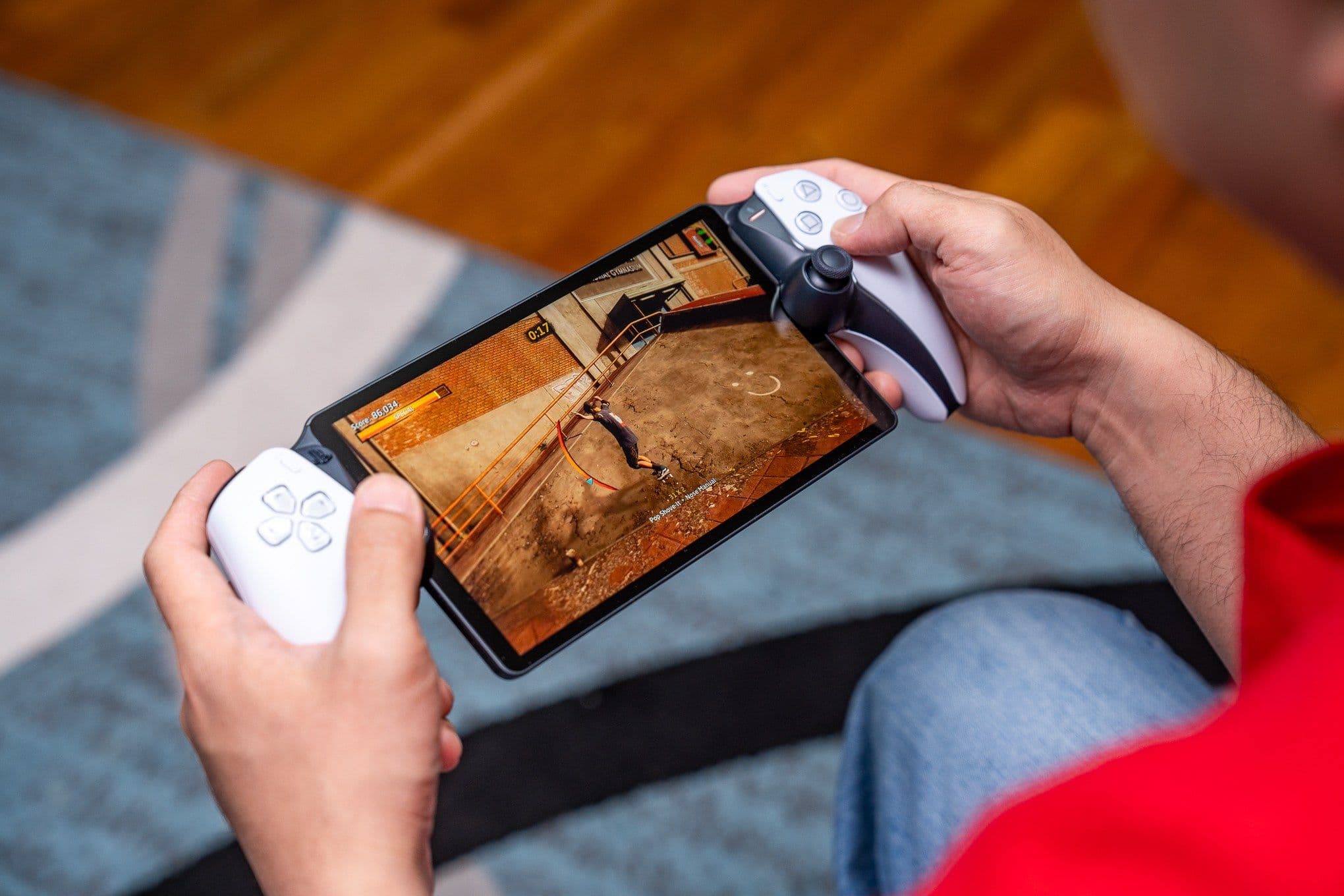
The featured image is a representative PlayStation Portal image, not a photograph or render of Jupiter. Sony has not shown the rumoured device, so using an existing PlayStation portable product as if it were the next console would be misleading.
For the longer-running reporting and the distinction between a possible native handheld and PlayStation Portal, see our PS6 Portable guide.
Jupiter, Canis and the naming problem
Jupiter appears in online discussions as a possible codename for a next-generation PlayStation handheld. The more substantial reporting around Sony’s portable project has used the name Canis, which is why the two labels should not be casually treated as the same confirmed product.
Codenames can refer to a chip, a development kit, a product family or an internal project. A leak can also merge information from more than one prototype. Until Sony identifies the product publicly, Jupiter and Canis are search terms for tracking rumours rather than established PlayStation branding.
That distinction protects readers from one of the most common next-gen reporting errors: presenting an internal name as proof that a finished console exists. It also means an apparent change from Canis to Jupiter does not necessarily represent a new product launch or cancellation.
What Sony has actually said about a native handheld
Sony has not announced a new native PlayStation handheld, but reporting in 2024 said the company was exploring a device able to play PS5 games locally. The report also stressed that the project was years away and might never reach the market.
That is meaningful because it describes a different proposition from PlayStation Portal. Portal streams games from a PS5 or cloud service; a native handheld would need its own processor, memory, storage, operating system and game compatibility strategy.
The original reporting from The Verge is the key public source for that distinction. It does not confirm Jupiter, Canis, a launch date or the leaked specification table.
Sony and AMD’s graphics research could make a portable system more practical. AI reconstruction and data compression can reduce the amount of work needed per frame, but the existence of Project Amethyst does not prove a handheld is in production.
Reported handheld hardware, explained
| Component | Reported Jupiter/Canis direction | What it would need to achieve |
|---|---|---|
| CPU | Four Zen 6c cores plus two Zen 6 low-power cores | Run game logic, operating-system tasks and background workloads within a handheld power limit |
| GPU | 16 RDNA 5-class compute units | Produce console-style graphics at a lower portable resolution |
| Memory | Up to 24GB LPDDR5X, with a 192-bit interface reported | Share bandwidth between CPU, GPU and system services |
| Display | Touchscreen, with an OLED possibility mentioned in speculation | Balance sharpness, battery life, weight and cost |
| Storage | Expandable storage such as microSD has been suggested | Reduce the pressure created by large modern game installs |
| Docking | A docked mode has been rumoured | Allow higher power limits and external-screen output |
| Compatibility | Local PS4 and PS5 play has been suggested | Requires software support, testing and a clear licensing plan |
The most important point is the power budget. A handheld cannot simply run a living-room console chip at the same clocks because battery life, heat and fan noise would become unacceptable. It would need aggressive power management, reconstruction and probably game-specific performance targets.
The reported memory figure also needs caution. System memory is not the same as dedicated graphics memory, and capacity alone does not reveal bandwidth, cache behaviour or how much is available to games. A real product could use a different configuration by the time it ships.
How PS6 graphics could help a handheld
A portable PlayStation would benefit from exactly the technologies Sony and AMD are researching for future graphics. Neural-style acceleration could reconstruct a sharper image from a lower internal resolution, while better ray-tracing hardware could make selected lighting effects less expensive.
Universal Compression could reduce the amount of data travelling through the memory system, which may help both performance and battery efficiency. Those are logical technical benefits, not evidence that the rumoured handheld contains any named Amethyst component.
Our PS6 graphics guide explains the technology in more detail. The central trade-off remains unavoidable: every improvement in image quality, frame rate or compatibility consumes power, silicon area or money.
Sony could also choose a more conservative target. A device might support selected PS5 games through patches, run PS4 titles more broadly, or use cloud and Remote Play features alongside native software. “PS5-capable” does not automatically mean every PS5 game will run at console-equivalent settings.
Price, launch date and game support are unknown
There is no official Jupiter or PS6 handheld price. The eventual figure would depend on the display, storage, memory, controls, battery, cooling system, dock and whether Sony sells the device at a profit or subsidises it to grow the PlayStation ecosystem.
There is also no confirmed release window. A working prototype can be years away from a retail launch, and a project can be cancelled when its cost or battery life does not meet the target. Sony’s earlier native-handheld reporting explicitly left room for that outcome.
Game support is just as important as the silicon. Sony would need to decide whether compatibility is automatic, patch-based or tied to a separate handheld version. Developers would also need tools for resolution scaling, controls, suspend-and-resume, storage management and performance profiles.
Claims about a sub-£600 price, a specific launch year or a full PS5 library should therefore remain labelled as speculation until Sony or an authorised retail listing provides evidence.
The Jupiter rumour checklist
| Rumour | How to report it responsibly |
|---|---|
| Jupiter is Sony’s next handheld name | Say it is an unconfirmed label used in reports |
| Canis is the confirmed hardware codename | Say it is a reported codename, not a Sony announcement |
| The handheld will play every PS5 game | Say local PS5 compatibility is a reported ambition, not a guarantee |
| It will launch beside the PS6 | No evidence currently confirms a simultaneous launch |
| It will cost under £600 | Treat any price as a leak estimate until Sony announces one |
| It will include a dock and microSD | Present them as reported features, not final specifications |
| Project Amethyst proves the handheld exists | False; the partnership covers future graphics research |
A good update should change this table only when a stronger source appears. Sony product pages, official PlayStation Blog posts, regulatory filings, developer hardware documentation and a real retail listing would all carry more weight than anonymous social posts.
The next genuinely important development would be Sony confirming that a native handheld is in active development, explaining whether it is part of the PS6 generation, or revealing how local compatibility works. Until then, the story is about a credible possibility surrounded by uncertain names and specifications.
The honest verdict on PS6 Jupiter
The PS6 Jupiter handheld rumour is worth tracking because the market has changed. Nintendo has shown the demand for a console-quality portable, PC handhelds are improving quickly, and Sony already owns a large library of PS4 and PS5 games that could make a native device attractive.
But the evidence does not support a confident product announcement. Sony has not revealed Jupiter, Canis, the hardware, the controls, the display, the price, the launch date or the final compatibility list.
For now, the safest conclusion is that Sony has explored a native handheld concept and that its AMD graphics research could support an efficient portable design. Everything beyond that belongs in the rumour column until Sony puts hardware in front of the public.