PS6 Backward Compatibility: Will PS5 and PS4 Games Work?
PS6 backward compatibility could decide whether millions of players upgrade early or keep their PS5 beside the television. A new console is easier to justify when an existing digital and physical library moves forward, especially after a generation packed with expensive games, expansions and live-service purchases.
Sony has not announced PlayStation 6 or guaranteed that PS5 and PS4 games will work on it. However, credible reporting around Sony’s processor decision strongly suggests that compatibility is an important design goal rather than an afterthought.
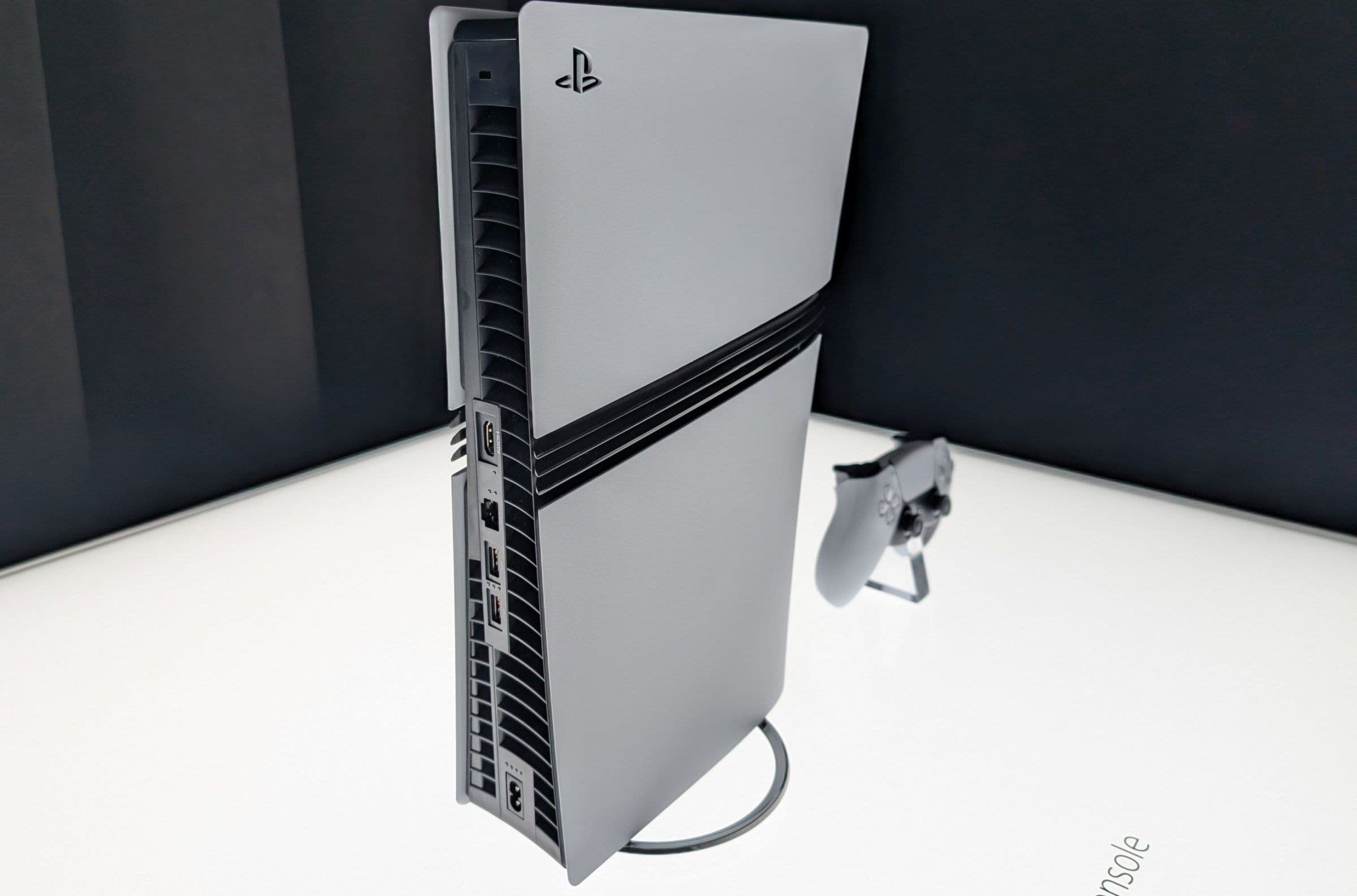
The featured image shows a PS5 Pro, not an unannounced PS6. This guide separates the current PlayStation compatibility rules, the strongest PS6 reporting and the questions Sony still needs to answer.
PS6 backward compatibility at a glance
| Question | Best current answer | Confidence |
|---|---|---|
| --- | --- | --- |
| Will PS6 play PS5 games? | Highly likely, but not officially confirmed | Strong expectation |
| Will PS6 play PS4 games? | Plausible if Sony preserves the existing PS5 compatibility layer | Unconfirmed |
| Will PS6 play PS3 discs? | Unlikely without a major new emulation solution | Low expectation |
| Will PS1 and PS2 games work? | Selected digital classics may continue, but full disc support is not confirmed | Unknown |
| Will PS5 game discs work? | Only possible if PS6 supports an internal or detachable compatible drive | Unknown |
| Will digital purchases transfer? | Likely through the same PlayStation account and Store ecosystem | Unconfirmed for PS6 |
| Will saves and trophies transfer? | Likely in some form, but individual game and upgrade rules may still apply | Unknown |
| Will older games run better? | Some could benefit automatically; others would need patches or PS6 upgrades | Likely mixed result |
The safest answer is that PS5 compatibility looks like a core objective, while PS4 compatibility remains a reasonable extension of the same software chain. Anything involving PS3, original discs, accessories or automatic visual upgrades is much less certain.
A reported design priority is not the same as a finished feature. Sony can still change the operating system, security model, disc policy and supported-game list before the PS6 reaches consumers.
Why Sony choosing AMD matters
The strongest evidence comes from reporting about the PS6 processor contract. Reuters reported that Sony considered Intel and AMD for the next PlayStation chip, with AMD ultimately winning the work after discussions that took place in 2022.
According to the Reuters report syndicated by The Star, switching from AMD to Intel risked complicating backward compatibility with earlier PlayStation hardware. Maintaining compatibility was discussed by Sony and Intel engineers and executives because solving it after a processor change could consume substantial engineering resources.
That is important evidence of intent. PS4, PS5 and PS5 Pro all use custom AMD-based processors with an x86 CPU foundation, so continuing with AMD gives Sony a more familiar route for running software designed around the existing architecture.
It still does not confirm that every PS5 or PS4 game will work. Compatibility also depends on graphics behaviour, operating-system services, security, storage access, timing-sensitive code and thousands of game-specific edge cases—not simply whether the chip carries an AMD logo.
What the PS5 compatibility model tells us
Sony entered the PS5 generation with broad PS4 support. Its official launch guidance said more than 99 per cent of the 4,000-plus PS4 catalogue would be playable, while the current support documentation describes the overwhelming majority of PS4 games as compatible.
The official PlayStation backward-compatibility guide also shows the limits of that promise. Some functions do not carry over, a small group of games is excluded, and accessories or applications can require older hardware.
PS5 Game Boost demonstrates another important distinction. A compatible game may gain faster loading, a steadier frame rate or a higher dynamic resolution because the new console has more performance available, but it does not automatically become a native PS5 version.
Sony could repeat that model on PS6: broad compatibility first, automatic improvements where the original game already allows them, and separate developer patches or upgrades for larger changes.
Will PS5 games work on PS6?
PS5 games are the strongest candidate for PS6 support. Sony is reportedly staying with AMD partly because compatibility mattered during the chip-selection process, and abandoning the current library would weaken the value of years of PlayStation Store purchases and PlayStation Plus engagement.
The likely route is a PS5 compatibility environment built into the PS6 system software. It could reproduce the hardware and operating-system behaviour expected by a PS5 game while allowing the newer console to provide faster storage, additional memory and a more capable processor.
That does not mean every title would instantly use PS6 graphics features. A game capped at 30fps may remain capped unless the developer or Sony changes it. Fixed internal resolutions, ray-tracing settings and texture packages may also stay untouched without a patch.
Online games create additional complications. Compatibility can keep the software executable, but servers, publisher accounts, anti-cheat systems and expired licences determine whether an older title remains usable years later.
Will PS4, PS3, PS2 and PS1 games work?
PS4 support is plausible because Sony already built an extensive PS4 compatibility layer for PS5. If that layer can be carried forward inside the PS6 operating system, Sony could potentially support two earlier generations without recreating every solution from zero.
However, an extra generation increases testing. Sony would need to check whether PS4 games behave correctly through the PS5 compatibility layer and the new PS6 hardware environment. Some titles, peripherals and unusual software functions could still be excluded.
PS3 is the difficult break in the chain. Its Cell processor is radically different from the x86-based PS4 and PS5 architecture, and PS5 does not play PS3 game discs natively. Selected PS3 games can currently be offered through streaming or later re-releases, but that is not equivalent to universal local disc compatibility.
PS1 and PS2 games are technically less demanding, yet licensing and catalogue work remain obstacles. Sony may continue selected Classics releases and emulated downloads, but there is no evidence that PS6 will accept every original PlayStation disc.
Discs, digital games, saves and accessories
A compatibility promise is only useful if players can access the copy they own. Digital PS5 and PS4 purchases would most naturally remain attached to the player’s PlayStation Network account, but Sony has not published PS6 Store, licence or game-sharing rules.
Physical games depend on the hardware. A digital-only PS6 could not authenticate PS5 or PS4 discs unless Sony offered a compatible detachable drive or another conversion system. Our PS6 disc-drive guide explains the current evidence around Sony’s possible drive strategy.
Save data is a separate issue from running the game. Sony could support cloud transfers, local network migration or USB storage, but cross-generation upgrades have historically depended on the publisher. Trophies, add-ons, region restrictions and delisted content may also require individual handling.
Controllers, headsets, racing wheels, PlayStation VR equipment and cameras should not be assumed compatible merely because the game runs. Sony supported several PS4 accessories on PS5, but some functions required older controllers, cameras or adapters.
Could PS6 automatically improve older games?
The easiest automatic gains would be shorter loading times and more stable performance. A PS5 game with an unlocked frame rate or dynamic resolution could use extra PS6 headroom without needing a complete remaster.
Larger improvements would require more work. Doubling a fixed 30fps cap, adding ray tracing, replacing textures or changing the internal resolution can affect animation, physics, UI and visual effects. Developers usually need to test and patch those changes.
Sony may eventually use machine-learning reconstruction to enhance compatible software, but no system-wide PS6 remastering feature has been announced. The PlayStation PlayGo guide examines how targeted assets and platform-specific downloads could help games scale across future PlayStation hardware.
The most realistic expectation is a mixture: automatic stability improvements, optional PS6 patches for major releases, paid or free native upgrades, and unchanged behaviour for games whose developers no longer support them.
Confirmed facts versus expectations
| Claim | Status |
|---|---|
| --- | --- |
| Sony has officially announced PS6 backward compatibility | False |
| Reuters reported that compatibility influenced the PS6 chip discussions | Reported by a major news agency |
| AMD reportedly won the PS6 processor contract | Credibly reported, not detailed by Sony |
| PS5 plays the overwhelming majority of PS4 games | Confirmed by Sony |
| Every PS5 game will run on PS6 | Unconfirmed |
| PS4 discs will work on PS6 | Unconfirmed and dependent on drive support |
| PS3 discs will work locally | Unsupported |
| PS6 will automatically remaster old games | Unsupported |
The evidence makes PS5 support a strong expectation, not a certainty. Sony’s processor choice, existing AMD architecture and account-based ecosystem all point in the same direction, but only a formal PlayStation announcement can establish the supported catalogue and restrictions.
PS4 support would be an excellent second step and appears technically achievable through Sony’s existing work. Full PS3-disc compatibility remains far less likely, while PS1 and PS2 access will probably continue as a curated digital catalogue unless Sony reveals a much broader preservation plan.
For now, players should keep original hardware, retain account access and avoid selling a disc console based on rumours. PS6 backward compatibility looks likely to be a major feature, but the details that matter—discs, saves, upgrades and exclusions—are still waiting for Sony.