Project Helix Disc Drive: What Xbox’s Survey Means
Project Helix may not be digital-only after all — but Xbox has not confirmed a disc drive either. A reported Xbox Insider Hub survey is asking players how important it is for Microsoft’s next-generation Xbox to install games from physical discs, putting physical ownership back into the conversation around the 2027-and-beyond platform.
That is significant because Microsoft has already described Helix as a family of devices designed to play Xbox console and PC games. The survey is not a product announcement, and it does not prove that a final machine will ship with an optical drive. It does show that physical-media support is still being considered publicly enough to test with Xbox users.
What the Reported Survey Asks
PowerUp Gaming reports that images from a recently deleted social-media post show an Xbox Insider Hub survey about the next-generation Xbox. According to the report, participants are asked to rate potential features as “Not Necessary”, “Nice to Have” or “Must Have”.
One of the listed features reportedly asks whether the console should let players install games from a physical disc. Other reported questions cover features such as reactive console lighting and automatically identifying and saving gameplay highlights, but the disc question is the part with the clearest long-term ownership implications.
The survey has not been published by Microsoft as a formal Project Helix specification sheet. Until Xbox confirms the questionnaire or comments on it, the wording and context should be treated as a report rather than settled hardware information.
Microsoft Has Not Confirmed a Disc Drive
Microsoft’s official Project Helix announcement confirms a custom AMD SoC, next-generation DirectX and FSR technologies, an order-of-magnitude ray-tracing goal and alpha hardware for developers beginning in 2027. It also says the platform is designed to play Xbox console and PC games, with support for four generations of Xbox games continuing for years to come.
That announcement does not mention an optical drive, physical game releases, a detachable drive or a digital-only model. Xbox’s official Helix announcement therefore remains the baseline: the platform direction is clear, but the retail hardware configuration is not.
A Survey Does Not Equal a Final Feature
Companies use surveys to measure demand, test language and understand which features might influence a purchase. A “Must Have” response can tell Microsoft that physical installation matters to part of its audience, but it cannot tell us whether the final answer will be a built-in drive, an optional accessory, USB-based support or a software solution tied to older hardware.
There is also an important distinction between installing a game from a disc and launching every future release from a disc. A drive could be included mainly for backward compatibility, while new Xbox games could remain download-first. Conversely, Microsoft could offer several Helix devices with different storage and media options.
Disc-to-Digital Changes the Calculation
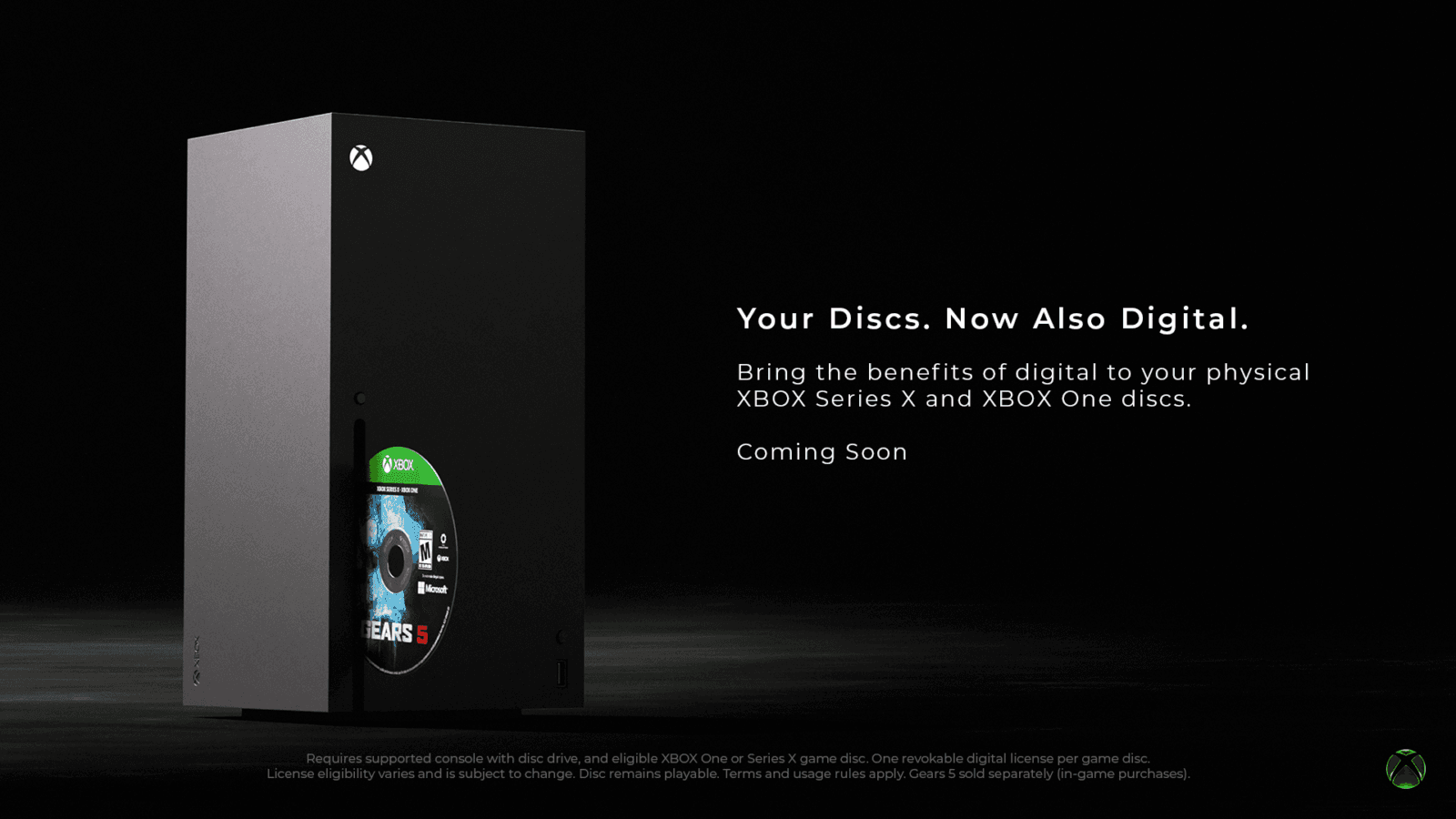
Microsoft has already taken a step towards making physical libraries more portable. In August, Xbox announced a feature allowing supported Xbox One and Xbox Series X disc-based games to receive a digital entitlement after the disc is inserted into a compatible console. The original disc continues to work, while the digital entitlement can unlock features such as Xbox Play Anywhere and Xbox Cloud Gaming where supported.
Xbox’s official disc-to-digital announcement says the programme begins with thousands of supported titles and is part of Microsoft’s wider game-preservation effort. That could reduce the pressure to put a disc drive in every Helix model, but it does not remove the need for some form of authentication or access to physical discs in the first place.
For collectors, the unresolved issue is ownership. A disc reader offers a direct way to use boxed games and second-hand purchases; a disc-to-digital system may be more convenient, but its usefulness depends on supported titles, account rules and the hardware available to redeem them.
Why This Matters for Xbox’s Next Generation
Physical media sits at the intersection of affordability, preservation and platform control. A digital-only Helix could be smaller and cheaper to manufacture, while a disc-equipped version would give Xbox a stronger answer for players with large libraries and those who still buy, lend or resell games.
The decision also fits into Microsoft’s wider strategy of treating Xbox as an ecosystem rather than one box. PS6News’ Project Helix family-of-devices guide covers the broader hardware direction, while the company’s stated support for console and PC games makes library portability more important than it was in earlier generations.
What to Watch Before Helix Launches
The next meaningful evidence will be an official Xbox statement about retail models, backward compatibility, disc authentication and whether physical games remain part of the first-party release plan. Developer alpha hardware arriving from 2027 should also reveal whether physical-media support is being treated as a core platform requirement or an optional layer.
For now, the responsible conclusion is narrower: the reported survey suggests Microsoft has not closed the door on physical-disc installation. It does not confirm a disc drive, a launch price, a release date or a future catalogue of boxed games. PS6News’ existing Helix and Magnus comparison remains useful for the wider hardware rumours, but this new survey adds a separate consumer-facing question that Microsoft still needs to answer.