PS6 Handheld Could Stretch Sony Too Thin, Shawn Layden Warns
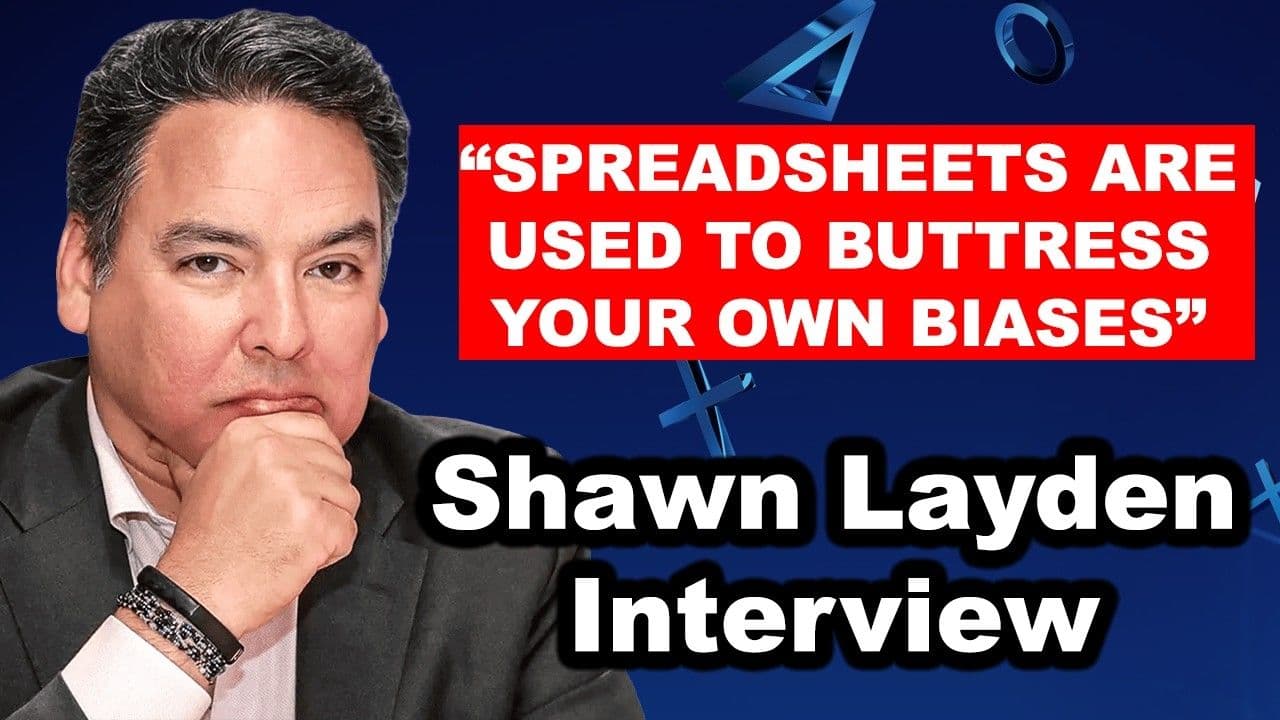
Former PlayStation executive Shawn Layden has raised a sharp strategic question over Sony’s rumoured next generation: can the company successfully support a PlayStation 6 home console and a native handheld at the same time?
Speaking with Reece “Kiwi Talkz” Reilly, Layden said Sony has historically found it difficult to sell two separate pieces of hardware simultaneously. His comments do not confirm the PS6 handheld, but they put the spotlight on the software, marketing and management challenge Sony would face if the reports are accurate.
That makes this more than another specifications rumour. A portable PlayStation only works if Sony can give it enough games and attention without weakening the flagship PS6.
Layden’s Warning Is About Focus, Not Power
Layden’s central point is simple: “The company really struggles to sell two different pieces of hardware at the same time.” He argues that the strain extends beyond engineers and game studios to marketing budgets, product positioning and senior management attention.
When one organisation controls two distinct platforms, resources can move towards whichever product or game appears more likely to succeed. Over time, that can leave the weaker device with fewer exclusives, less promotion and a less convincing reason to exist.
The full Kiwi Talkz interview with Shawn Layden provides the primary context. Layden is a former PlayStation executive speaking from experience; he is not revealing Sony’s current product roadmap.
The PSP and PS3 Era Is the Warning
Layden uses the PSP and PS3 generation as his example. The PSP was a genuine commercial success, yet he recalls that Sony was simultaneously struggling to establish the more expensive and initially difficult PS3.
His argument is not that PSP caused the PS3’s problems. It is that running two hardware businesses forced Sony to divide development, marketing and organisational focus at a moment when its home console needed sustained support.
The Vita era sharpened that lesson. Sony’s home-console business accelerated around PS4 while the portable platform received less first-party attention, making it harder for Vita to build the long-term software identity that Nintendo’s handhelds enjoyed.
PS6 Handheld Fact Check
Product status | Unconfirmed. Sony has not announced PlayStation 6 or a new handheld that runs games locally. Names such as Canis and Jupiter come from reporting and leaks, not official branding.
Layden’s role | Former executive. He previously led major parts of PlayStation, but he is no longer speaking for Sony and his comments are strategic analysis rather than confirmation.
Reported concept | Native portable hardware. Reporting has pointed to a device capable of running PlayStation software itself, unlike PlayStation Portal’s original reliance on Remote Play.
Specifications and launch | Unconfirmed. Reported AMD architecture, performance targets, price and release timing remain subject to change. Our PS6 Jupiter handheld console rumours guide separates the stronger reporting from the more speculative claims.
A Shared PS6 Platform Could Change the Equation
A PS6 handheld would not necessarily repeat the PSP or Vita model. Those systems often needed dedicated versions of games, separate development decisions and their own release calendars. A modern portable built around compatible AMD technology could instead target the same broad software family as the home console.
That is the most important possible answer to Layden’s concern. If developers can scale one game across PS6 and the handheld—adjusting resolution, frame rate and visual settings—the portable would need fewer bespoke projects to remain useful.
This remains an inference, not a confirmed Sony plan. Hardware compatibility alone does not guarantee effortless development: studios would still need to test two performance profiles, optimise memory use and decide whether every feature can scale down cleanly.
Sony and AMD’s Project Amethyst graphics work could matter here because machine-learning reconstruction may allow lower-power hardware to produce a sharper final image without matching the home console’s raw GPU output.
Sony Would Still Need a Clear Reason to Buy Both
Shared games solve only part of the problem. Sony would need to explain whether the handheld is a companion to PS6, a cheaper entry point to the same generation or a complete alternative for players who prefer portable gaming.
Those positions create different pressures. A companion device risks feeling optional and expensive, while a cheaper alternative could reduce demand for the more powerful home console. A premium portable could also collide with PC handhelds and whatever Microsoft includes in the Project Helix family.
The cleanest strategy would be one PlayStation account, one digital library and broadly compatible games across two performance tiers. Even then, pricing, battery life, storage, controls and physical-media support would determine whether the devices complement or compete with each other.
What Sony Has Actually Signalled
Sony has publicly discussed future gaming experiences that can adapt to different forms and locations, but it has not tied that language to a named handheld. GamesRadar’s report on Layden’s comments also stresses that the hardware remains unannounced.
That distinction matters. Reports of early development indicate that Sony has explored a portable capable of local play, but hardware projects can change or be cancelled before launch. Current specifications, codenames and performance comparisons should therefore be treated as provisional.
Layden goes further as a thought experiment, suggesting Sony might consolidate its gaming activity around a mid-sized portable platform if it chose that direction. He does not claim Sony has decided to replace the traditional PS6 home console.
What This Means for the PS6 Generation
Layden’s warning identifies the real test for a PS6 handheld: software support. Impressive silicon will not matter if the device receives inconsistent ports, delayed releases or only a fraction of PlayStation’s first-party attention.
The encouraging possibility is that Sony no longer needs to operate two completely separate ecosystems. Compatible AMD hardware, scalable engines, cloud saves and a shared PlayStation Store could make a dual-device generation more manageable than PSP and Vita were.
Until Sony announces its plans, the correct conclusion sits between excitement and certainty. A PS6 handheld is credible enough to take seriously, but the strongest argument against it may be organisational rather than technical—and it comes from an executive who has seen PlayStation manage that trade-off before.