PS6 VR Outlook Changes After Sony Transfers Patents to Meta
Sony Group has transferred a substantial portfolio of extended-reality patents to Meta, creating a new question around the role of virtual reality in the PlayStation 6 era. The public record is important, but it is narrower—and more complicated—than headlines claiming that PlayStation has simply abandoned VR.
Five assignments recorded at the United States Patent and Trademark Office cover 43 listed US properties. The schedule attached to the wider agreement contains 419 patent and application entries across multiple countries, including technology associated with head-mounted displays, XR glasses, image processing and display control.
There is no announced PS6 headset, no confirmed PS VR3 and no statement from Sony or Meta explaining the commercial purpose of the deal. The safest reading is therefore that Sony’s parent company has monetised a sizeable block of XR intellectual property, while the future of PlayStation-specific VR hardware remains unconfirmed.
What Sony Actually Transferred to Meta
The most detailed public-record review comes from VR.org’s examination of the USPTO assignments. It found five recordations filed between June and September 2026 and counted 43 properties listed in those US records.
Each filing attaches the same confirmatory assignment, effective from 17 December 2025. Meta signed the document on 29 April 2026 and Sony signed it the following day, before the first public recordation appeared on 30 June.
The attached schedule runs to 419 international rows: 180 US patents or applications and 239 related entries across Japan, China, Germany, the UK, France, South Korea, the Netherlands, India, Italy and the European patent system. That worldwide number describes the agreement’s schedule, not 419 separate PlayStation VR inventions already moved into a Meta product.
No purchase price is disclosed. The assignment transfers the scheduled rights and related applications, but it does not explain why Sony sold them, how Meta plans to use them or whether the companies have any continuing licensing arrangement.
Why the Seller’s Identity Matters
Every recorded transfer names Sony Group Corporation as the conveying party. Sony Interactive Entertainment—the subsidiary responsible for PlayStation and PS VR2—is not named as the seller in these records.
That distinction materially changes what can be concluded. The transferred portfolio originated with Sony’s corporate parent and includes work associated with the company’s wider history in personal viewers, smart glasses, cameras and display technology. It is not evidence that SIE has transferred the entire PlayStation VR patent estate.
A future record naming Sony Interactive Entertainment, a formal product cancellation or a clear management statement would be much stronger evidence about PlayStation’s VR direction. None of those things has happened in the material currently available.
It would therefore be inaccurate to describe the transaction as proof that PS VR2 is dead. It is fair to treat it as a warning sign that Sony Group is reassessing which XR technologies it wants to own and commercialise directly.
What the XR Patent Portfolio Covers
The scheduled inventions span more than conventional console VR. Patent titles refer to head-mounted displays, glasses, virtual-object image processing, display control, content distribution, imaging devices and a heat-conduction mechanism.
The underlying filings date from 2010 to 2022, so this is largely an established technology portfolio rather than a bundle of newly developed PS6 components. Many of the US rights remain valuable for years: the reviewed schedule includes patents expiring from 2028 into the early 2040s.
Transferring patent ownership does not transfer a retail product, its software platform, engineering team or customer support obligations. It also does not necessarily prevent Sony from using related technology if licences, retained patents or independently developed systems cover what it needs.
Meta gains control of the scheduled rights and the ability to use them within its own XR work. Whether that leads to visible features in future Quest or glasses hardware is unknown.
What This Means for a PS6 VR Headset
Sony has not announced PS VR3 or confirmed that PlayStation 6 will support a new headset. The patent transfer cannot cancel a product that the company has never publicly revealed, but it makes the absence of a PS6 VR roadmap more noticeable.
One possibility is that Sony no longer wants to fund another dedicated console headset. A second is that it could use partners, licensed technology or a more platform-neutral device instead of building every component and service itself. A third is that PlayStation VR continues later in the PS6 cycle after the main console has established a larger audience.
Those are strategic scenarios, not reported plans. The same caution applies to claims that a future PlayStation headset must be wireless, standalone or compatible with Sony’s rumoured handheld. Our PS6 Portable guide explains why even the native handheld remains unannounced.
The transfer does not alter the core PS6 specifications picture: Sony has confirmed future platform work and an AMD graphics partnership, but it has not published a retail design, release date, price or accessory roadmap.
PS VR2 Still Shows the Technical Baseline
The current official PlayStation VR2 specification remains a useful baseline. PS VR2 combines two 2000 × 2040 OLED displays, 90Hz and 120Hz refresh modes, eye tracking, inside-out controller tracking, headset vibration and PS VR2 Sense controllers with haptics and adaptive triggers.
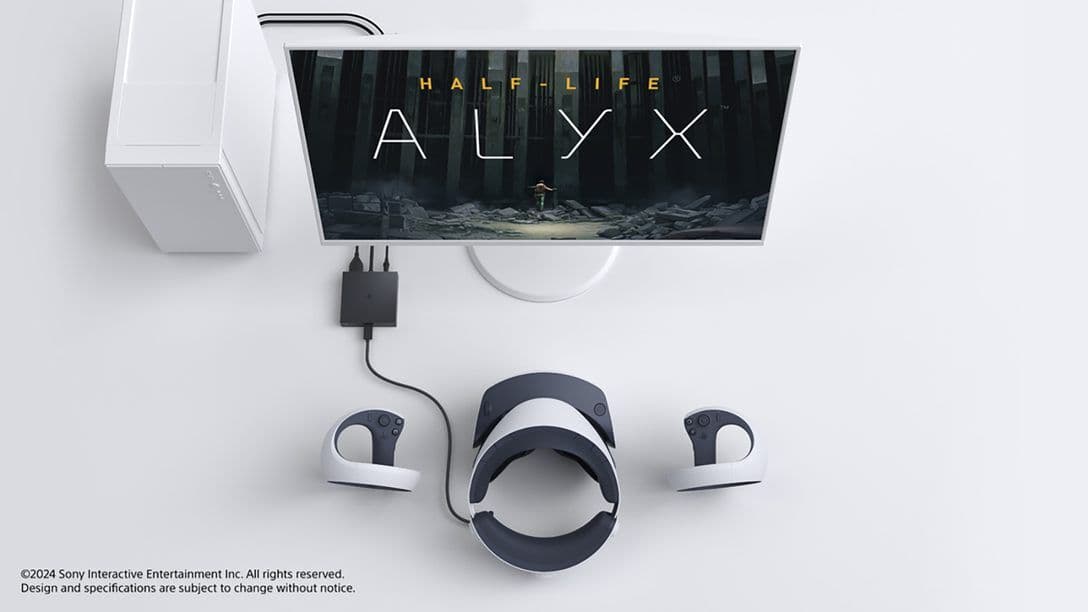
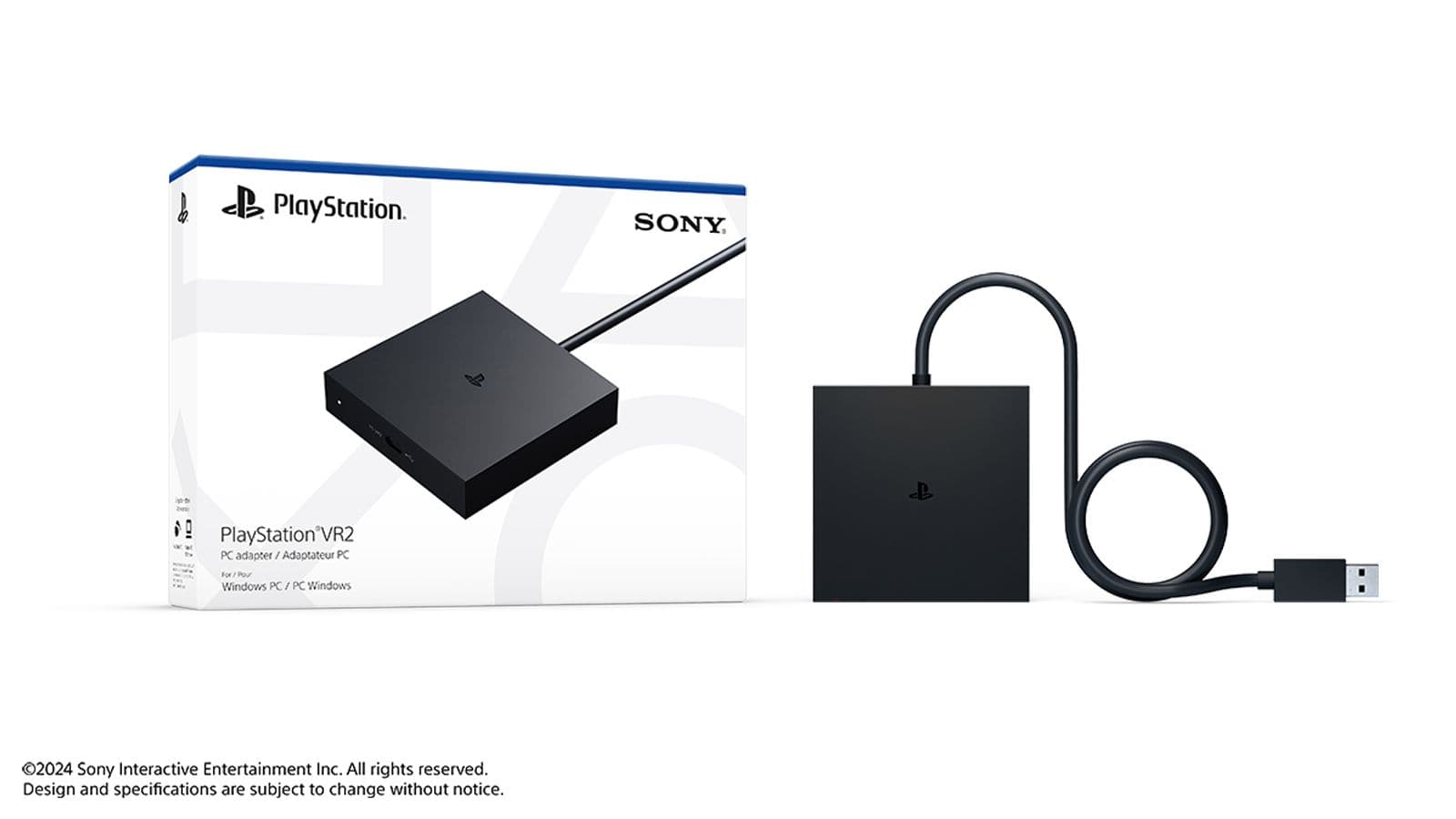
Sony also extended the headset beyond PS5 through a PC adapter. That increased access to SteamVR software, although several PS5-specific features—including HDR, eye tracking and headset feedback—are unavailable in the PC mode.
For PS6 owners, the unresolved issue is compatibility. A future console using familiar AMD architecture could still require new drivers, tracking support and system software before PS VR2 works. As our PS6 backward-compatibility guide notes, game compatibility should never be assumed to include cameras, headsets or specialist accessories.
Three Credible Paths for PlayStation VR
The first path is no dedicated PS6 headset. Sony could continue supporting PS VR2 selectively while putting its main hardware investment into PS6, Portal-style streaming and a possible native handheld. That would reduce platform fragmentation and the need to fund expensive VR-only software.
The second path is a partner-led headset. PlayStation could provide software, store integration or console compatibility while another hardware company supplies more of the optics, tracking and manufacturing. The patent sale does not establish such a partnership, but Sony’s broader hardware strategy makes the model plausible.
The third path is a later, more flexible successor that works across PS6 and PC. Shared support could give developers a larger addressable market than a console-only headset, while eye-tracked rendering and the machine-learning work described in our PS6 graphics guide could reduce the rendering cost of high-resolution VR.
Each route has major trade-offs. Console-only hardware offers tight integration but a smaller market; cross-platform hardware gains software reach but weakens exclusivity; leaving dedicated VR would save investment but surrender a distinctive PlayStation experience.
What Evidence Would Confirm Sony’s Direction
The next decisive evidence would be a Sony Interactive Entertainment patent assignment, a formal PS VR2 lifecycle statement, a future-headset job listing, developer documentation, component orders or an executive comment that directly addresses PlayStation VR after PS5.
Software support matters just as much as hardware. A credible PS6 VR plan would need first-party projects, third-party development tools, clear compatibility rules and a commercial reason for studios to build expensive immersive games.
Until those signals appear, the patent transaction should be treated as a strategic indicator rather than a product announcement. It increases uncertainty around PS6-era VR, but it neither confirms a PS VR3 nor proves that PlayStation has left the category.
For current owners, nothing in the assignment disables PS VR2, changes existing purchases or removes PC-adapter support. For prospective PS6 buyers, the correct conclusion is simpler: do not assume today’s headset will carry forward, and do not assume Sony has abandoned VR until SIE says so.