PS6 Price May Hit $1000 But Innovation Offers Hope
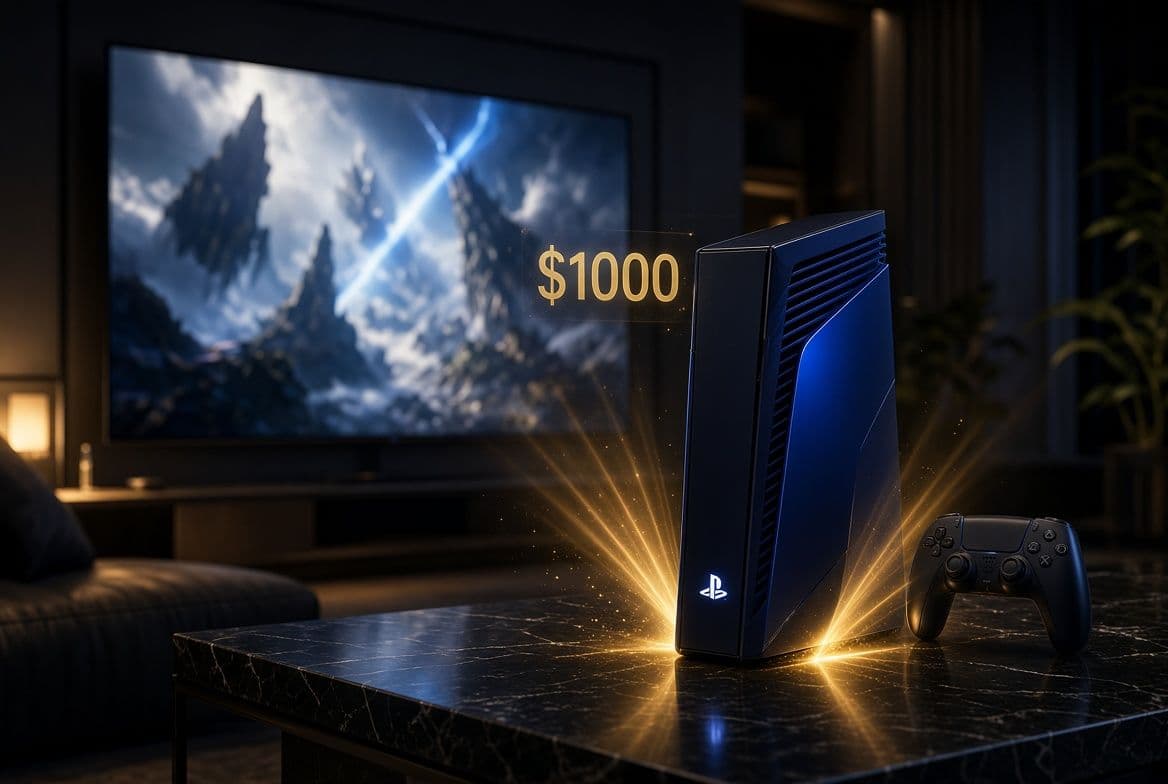
PlayStation LifeStyle has highlighted a sobering new projection from Ampere Analysis that could reshape expectations for the next generation of living-room hardware. According to the research firm, rising component costs mean machines such as the PlayStation 6 risk launching at one thousand dollars, a figure that would mark a dramatic departure from recent console pricing norms. The study warns that such a premium could shrink the addressable audience and cut five-year adoption by as much as thirty-eight percent compared with the current generation, forcing Sony and its rivals to confront a fundamentally altered economic landscape before the first units even leave the factory.
Research director Piers Harding-Rolls stresses that the old formula of simply delivering higher frame rates and sharper textures no longer guarantees mass-market success when the price tag climbs so steeply. Ampere’s modelling shows that a more restrained seven-hundred-dollar launch would preserve far healthier sales volumes and keep the next wave of systems within reach of the broad gaming public. The report does not paint an entirely bleak picture, however; it outlines several realistic escape routes, including strategic delays, targeted subsidies and, most intriguingly, genuine hardware innovation that prioritises fresh form factors and everyday use cases over pure graphical horsepower alone.
The Thousand-Dollar Threat and Its Adoption Cost
Ampere Analysis places the potential one-thousand-dollar price point at the centre of its warning because component inflation has accelerated faster than most industry observers anticipated. Memory, advanced process nodes and specialised silicon have all become markedly more expensive, eroding the traditional ability of console makers to absorb costs in pursuit of aggressive launch pricing. If left unchecked, that pressure could push the PlayStation 6 and its contemporaries into territory previously reserved for high-end personal computers, fundamentally altering who can afford to participate in the next generation of blockbuster entertainment and multiplayer ecosystems.
The thirty-eight percent reduction in five-year adoption is not a vague forecast but a modelled outcome that assumes conventional performance-led marketing continues unchanged. Harding-Rolls notes that the addressable audience simply contracts when households confront a four-figure outlay for a single entertainment device. Families that once upgraded every cycle may skip a generation entirely, while younger or more price-sensitive players migrate toward cloud streaming or mobile alternatives. The cumulative effect would leave platform holders with smaller installed bases, weaker network effects and reduced leverage when negotiating with third-party publishers over exclusivity and timed windows.
PlayStation Console Launch Prices (USD)
| Console | Launch Year | Launch Price (USD) |
|---|---|---|
| PS1 | 1995 | $299 |
| PS2 | 2000 | $299 |
| PS3 | 2006 | $499 / $599 |
| PS4 | 2013 | $399 |
| PS5 | 2020 | $499 |
| PS6 | Projected | $700–$1000 (Estimated) |
Why a Seven-Hundred-Dollar Target Changes Everything
Ampere’s research draws a clear contrast between the thousand-dollar scenario and a more disciplined seven-hundred-dollar launch price. At the lower figure the firm expects adoption curves to remain far closer to those enjoyed by the PlayStation 5 and Xbox Series X, preserving the broad demographic reach that has underpinned console dominance for three decades. Seven hundred dollars still represents a premium over the current generation’s opening prices, yet it stays within a psychological band that many households can justify through savings, trade-ins or staggered purchase decisions across a calendar year.
Maintaining that lower entry point would also protect the secondary market and the vital flow of used hardware that introduces new players to each generation. A thousand-dollar sticker price risks freezing that ecosystem, because fewer original owners means fewer discounted units circulating two or three years later. Publishers would feel the pinch through slower attach rates for full-priced software, while subscription services could struggle to convert free-to-play audiences into paying members when the underlying hardware itself feels unattainable. In short, the seven-hundred-dollar threshold is presented not merely as preferable but as strategically essential for long-term platform health.
Three Realistic Paths Away From the Price Cliff
The Ampere report refuses to treat the thousand-dollar outcome as inevitable and instead sketches three concrete levers that manufacturers can pull. The first is simply to delay the next generation until component costs ease or new fabrication efficiencies arrive, buying time without abandoning the traditional console model. The second involves direct or indirect subsidies, whether through first-party software attach commitments, partnership deals with silicon vendors, or temporary margin sacrifices designed to seed a larger installed base that later monetises through services and digital storefronts.
The third and most forward-looking route centres on genuine hardware innovation that redefines what a console is for. Rather than chasing ever-higher polygon counts and ray-tracing fidelity alone, Ampere suggests that new form factors and everyday use cases could justify premium pricing to a wider audience. Think modular living-room hubs that double as media servers, always-on creative tools, or devices that blur the line between traditional gaming and spatial computing. By expanding the value proposition beyond pure entertainment horsepower, platform holders might persuade households to accept higher price tags because the machine solves more problems than its predecessors ever attempted.
Industry Stakes and the Risk of a Smaller Pie
If next-generation hardware launches at extreme prices without accompanying innovation, the entire games business faces a structural contraction. A thirty-eight percent drop in adoption does not merely slow hardware revenue; it shrinks the total addressable market for blockbuster titles, competitive multiplayer seasons and high-margin digital add-ons. Independent studios that rely on broad platform reach could find themselves squeezed between rising development costs and a smaller pool of potential customers, while larger publishers might retreat further into live-service models that prioritise retention over acquisition.
Harding-Rolls’ warning therefore lands at a moment when the industry already grapples with ballooning production budgets and uncertain returns. A contraction in console ownership would accelerate the shift toward multi-platform releases and cloud delivery, potentially eroding the unique value of exclusive hardware ecosystems that Sony and Microsoft have cultivated for decades. The report effectively argues that the next console cycle cannot be business as usual; either the economics improve through cost control and creative design, or the living-room gaming category itself risks becoming a smaller, more exclusive club than anyone currently intends.
What This Means for PS6
For PlayStation 6 specifically, Ampere’s findings crystallise the central strategic choice Sony now faces. Chasing raw graphical supremacy at any cost could price the system out of the mass market and forfeit the very audience that made the PlayStation brand dominant. Conversely, a disciplined focus on a seven-hundred-dollar target, combined with inventive new form factors or hybrid use cases, offers a credible route to both healthy margins and broad cultural relevance. The window for those decisions is already open, and the difference between a thousand-dollar warning and a successful next generation may ultimately rest on how boldly Sony reimagines what a console can be rather than simply how many teraflops it can boast.