PS6 2027 Launch On Track Despite Memory Costs
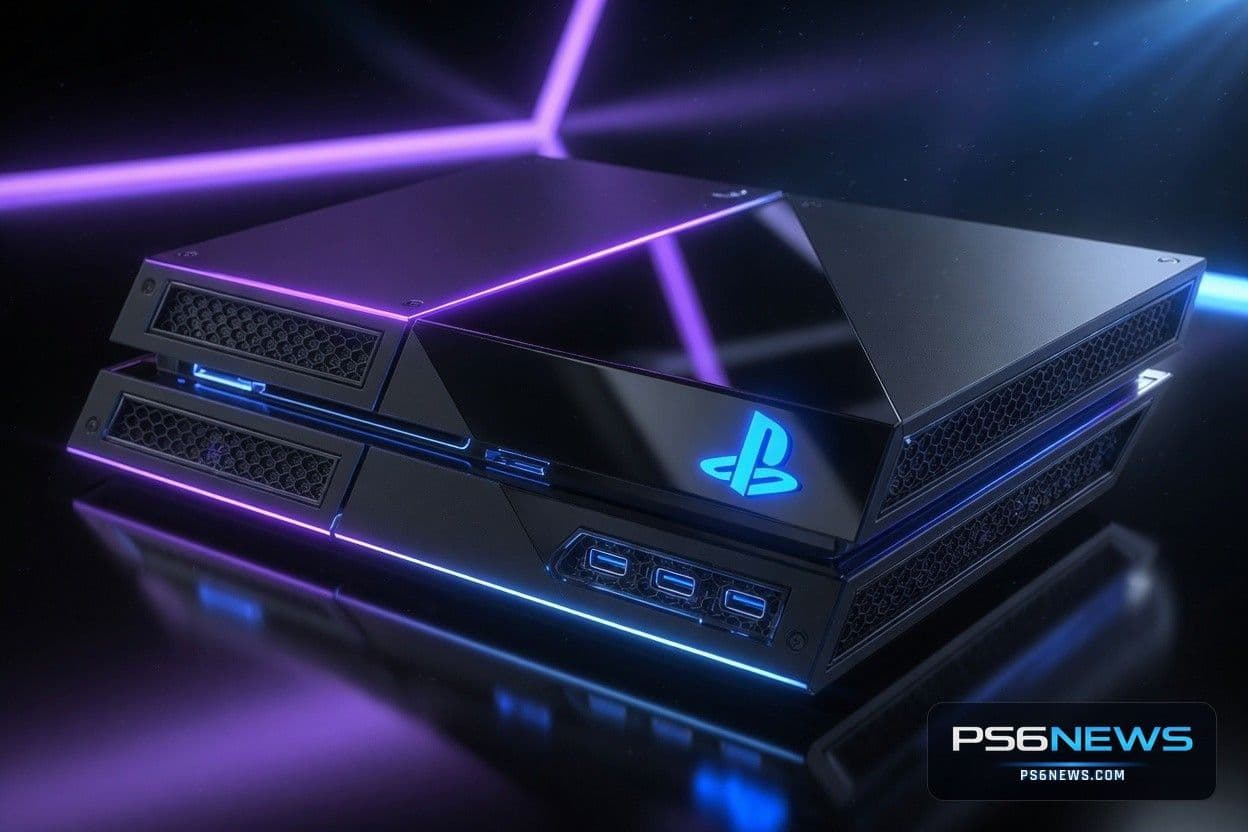
According to reporting from El Output, fresh leaks from Moore’s Law Is Dead and several supply-chain contacts indicate that Sony remains firmly committed to a late 2027 launch for the PlayStation 6. Speculation that component inflation might force a rethink has not shifted the calendar. Production of the console’s custom 3nm AMD accelerated processing unit is still scheduled to begin in the second quarter of 2027 under existing TSMC contracts. For players and industry watchers the signal is unambiguous: the next generation is advancing on schedule, and Sony shows little interest in another extended wait between hardware cycles.
Elevated memory prices have dominated hardware discussions throughout 2026, yet the latest intelligence insists those costs will not trigger a major postponement. Walking away from locked foundry agreements with TSMC would prove far more expensive than simply absorbing a higher bill for DRAM and related silicon. A modest slip into early 2028 remains conceivable if Sony decides it needs deeper launch inventory rather than risking empty shelves. The company appears determined to protect the traditional generational rhythm instead of redesigning the chip or freezing the entire cycle while waiting for cheaper parts to arrive.
Silicon Timeline and Manufacturing Commitments
The manufacturing roadmap centres on TSMC’s advanced 3nm process node, which will host the custom AMD APU powering the PS6. Beginning wafer production in the second quarter of 2027 leaves Sony roughly half a year to assemble, validate and distribute finished consoles ahead of a festive late-2027 window. That cadence mirrors historical PlayStation launches that have repeatedly targeted the holiday shopping season for maximum impact. Supply-chain sources stress that the foundry bookings are already secured, giving Sony contractual certainty even while broader semiconductor markets remain volatile and competitive capacity stays scarce.
Keeping the schedule intact also protects developer roadmaps that have already started tilting toward next-generation feature sets. Studios require firm hardware targets years in advance, and a sudden redesign driven by memory pricing would scramble multi-year production pipelines across first-party and third-party teams. Sony’s preference for absorbing higher component costs therefore doubles as a stability signal to creative partners. The alternative of postponing the entire generational cycle would hand Microsoft a clearer runway for Xbox Project Helix and risk ceding the early-adopter mindshare that has long defined console competition.
PlayStation Console Launch Dates
| Console | Launch Year | Typical Launch Window | Status |
|---|---|---|---|
| PS1 | 1994/1995 | Winter / Autumn | Released |
| PS2 | 2000 | Spring / Autumn | Released |
| PS3 | 2006 | November | Released |
| PS4 | 2013 | November | Released |
| PS5 | 2020 | November | Released |
| PS6 | 2027 (Projected) | Late 2027 | On track; early 2028 slip possible |
Performance Targets and Technical Ambitions
On the performance front the PS6 is expected to pursue 4K resolution at a sustained 120 frames per second, paired with markedly improved ray tracing. Sony’s proprietary PSSR upscaling technology and expanded machine-learning capabilities should help the hardware deliver sharper images and smarter reconstruction than raw transistor counts alone would suggest. These ambitions place the machine squarely in the same competitive window as Microsoft’s Xbox Project Helix, setting up a direct head-to-head launch cycle. Gamers who skipped mid-generation refreshes finally have a concrete horizon against which to plan their next living-room upgrade.
Ray-tracing gains matter because current-generation titles still force painful trade-offs between lighting fidelity and fluid frame rates. A stronger dedicated hardware path, combined with machine-learning reconstruction, could finally make cinematic lighting the default presentation rather than a special-mode novelty reserved for showcases. PSSR is tipped to mature into a more robust upscaler that recovers fine detail without the shimmer and instability that undermined earlier temporal techniques. Together these pillars form the emerging technical identity of the new console, even while complete specification sheets remain firmly under wraps ahead of official disclosure.
Why Memory Costs Will Not Break the Calendar
Memory pricing spikes have become a recurring headache for every hardware manufacturer, yet Sony’s internal calculus remains straightforward according to the leaks. Foundry capacity on bleeding-edge nodes is scarce and booked years ahead; abandoning TSMC commitments would forfeit both money and the physical silicon required to hit any launch date at all. Paying more for DRAM and related components, painful as it becomes on the bill of materials, still looks cheaper than a wholesale redesign or a multi-quarter delay that would strand marketing spend and freeze developer investments already underway across the ecosystem.
That stance still leaves open a narrow contingency. If component availability threatens launch-day volume, Sony could elect to slide into early 2028 purely to assemble healthier inventory levels. Such a move would count as a soft landing rather than a cancelled generation, and it would leave the underlying hardware architecture unchanged. Observers watching the supply chain note that inventory discipline has become as critical as peak performance after the constrained first year of the PS5. A slightly later but better-stocked debut may ultimately serve retailers and players more effectively than a flashy yet barren holiday window.
The Xbox Project Helix Factor
Competition sharpens every calendar decision Sony now faces. Xbox Project Helix is expected to arrive inside the same late-2027-to-early-2028 corridor, guaranteeing a direct clash for living-room attention, retail floor space and developer priorities. Sony’s refusal to blink on timing therefore carries strategic weight beyond mere component ledgers. Landing first, or at least simultaneously, lets PlayStation claim the narrative of next-generation leadership and lock in exclusive showcases before rival hardware steals the headlines. History repeatedly shows that early momentum often translates into multi-year software advantages neither giant can afford to gift away.
For third-party publishers the overlapping windows create both opportunity and pressure in equal measure. Engines must target two powerful yet distinct architectures, while global marketing budgets stretch across twin launch seasons that may sit only months apart. A firm PS6 date helps those partners allocate engineering and promotional resources with greater confidence, even if final silicon details continue to emerge only gradually. The resulting ecosystem race should ultimately benefit players through richer launch line-ups and faster feature parity, provided both companies ship enough units to satisfy the demand their marketing will inevitably create.
What This Means for PS6
For the PlayStation audience the headline remains simple and encouraging: plan for a late 2027 living-room upgrade rather than an indefinite holding pattern. The combination of 4K120 targets, stronger ray tracing, PSSR upscaling and machine learning paints a clear evolutionary step beyond the current PS5 family, while the manufacturing schedule looks robust enough to survive today’s memory inflation. Only a deliberate choice to deepen launch stock would push the debut into early 2028, and even that scenario keeps the architecture and feature set intact. The next PlayStation generation has moved from rumour into a production commitment racing toward silicon.
Retailers, accessory makers and game studios can now align their own calendars with greater certainty, knowing Sony prefers cost absorption over cycle disruption. That stability should translate into earlier development kits, firmer exclusive announcements and a more orderly pre-order season once marketing campaigns begin in earnest. Whether the final street date lands in the final months of 2027 or slips a few weeks into the following year, the strategic intent is unmistakable. Protect the generational heartbeat, absorb the component pain, and meet Xbox Project Helix head-on with a fully realised next-generation platform.