Xbox Brings Original Xbox Backward Compatibility to PC
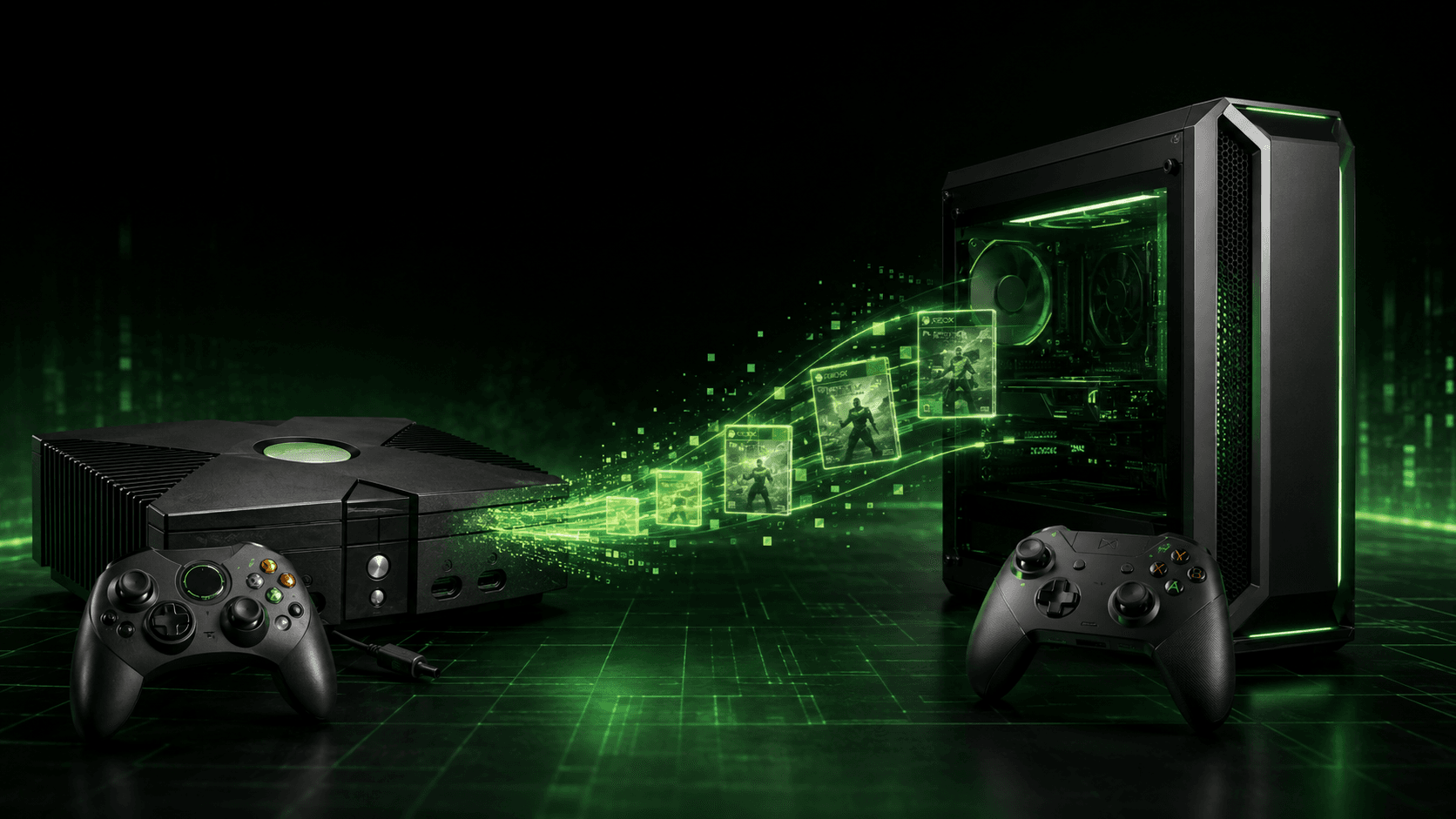
Xbox has officially begun bringing its backward compatibility programme to PC, starting with four original Xbox games that can now run on Windows PCs and supported handhelds. Confirmed by Xbox Wire on 22 July 2026, the early release covers BLiNX: The Time Sweeper, Conker: Live and Reloaded, Crimson Skies: High Road to Revenge and Fuzion Frenzy. It is a significant move because Microsoft is no longer treating older Xbox games as a console-only benefit: the company is turning ownership and access into a wider, device-spanning proposition.
The headline feature is not merely that four retro games have reached a new storefront. Players who already own digital console licences for these titles can access them on PC and compatible handhelds without buying them again, while all four are included with every Xbox Game Pass plan. Xbox says the games can now be played across console, cloud, PC and handheld through its Play Anywhere and cloud infrastructure, making this an early but tangible test of its unified-library strategy.
Four Classics Open the Door
This initial selection is deliberately varied. BLiNX represents the original Xbox era’s appetite for ambitious platform mascots, Crimson Skies remains one of the platform’s most fondly remembered airborne action games, Fuzion Frenzy brings local multiplayer chaos, and Conker offers a more mature cult favourite. None of these games alone will redefine the current PC release calendar. Together, however, they demonstrate that Xbox is prepared to tackle different genres, original Xbox-era software and titles with complicated technical histories rather than limiting the programme to a single safe showcase.
Xbox has also gone further than a simple emulation-style re-release. On PC, the four games offer adjustable graphics settings including resolution upscaling of up to four times, VSync, windowed and full-screen modes, anisotropic filtering and enhanced anti-aliasing. The company says it aims to preserve the original gameplay while making the software more comfortable to use on modern displays and hardware. That balance matters: preservation is far more valuable when old games remain accessible without feeling needlessly trapped in the technical limits of their launch era.
A Library Strategy, Not a Retro Side Project
The important part is Microsoft’s stated intent to add more games over time. Backward compatibility has often been treated as a convenient extra during console transitions, but Xbox is positioning it as an ongoing preservation programme. That reframes classic releases as part of a living catalogue rather than occasional nostalgia drops. A player’s history with the platform can increasingly follow their account, whether they are using an Xbox console in the living room, streaming through the cloud, sitting at a desktop PC or travelling with a handheld.
There are sensible caveats to that promise. Bringing an older title forward still involves licensing, rights clearances, technical testing and work to make the game behave properly with contemporary operating systems and display setups. Microsoft has not published a full schedule of future additions, nor has it committed to every legacy Xbox game. Yet this launch creates a more meaningful precedent than a typical remaster announcement: it establishes that the PC version of the Xbox ecosystem can inherit software history that was previously confined to console compatibility.
What This Means for PS6
PS6 has not launched, and Sony has not announced a consumer PlayStation 6 product. Even so, Xbox’s move sharpens the standard that Sony will be judged against whenever it details its next hardware generation. PlayStation 5 already offers strong PlayStation 4 compatibility, with thousands of PS4 games playable on current hardware and selected titles benefiting from Game Boost. The competitive question for Sony’s eventual successor is whether that continuity will simply mean playing PS5 purchases on another box, or whether it will become a broader account-led library that reaches more screens.
Microsoft’s advantage is increasingly about reducing the friction between platforms. If a classic game purchase appears automatically on console, PC and handheld, it feels less like an old licence stranded on obsolete hardware and more like a durable part of a personal collection. PlayStation has valuable legacy catalogues across every generation, but its approach has been more fragmented between native compatibility, remasters, subscription streaming and individual digital reissues. For PS6, a cleaner promise around purchased games, saves, peripherals and cross-device access could matter as much as raw graphical gains.
Physical Ownership Will Make Compatibility More Important
The timing also gives the discussion extra weight. PlayStation’s current PS5 messaging says newly released games will move to digital-only sales from January 2028, while previously released disc games can continue to be played on compatible hardware. As the market moves further towards digital libraries, players will reasonably expect purchases to survive hardware changes without restrictive repurchasing policies. Xbox’s new PC programme is not a complete answer to preservation, especially for people with physical collections, but it is a forceful argument for treating digital ownership as something that should travel.
For developers, the upside is an additional audience for older work without requiring a ground-up remake. For players, it creates a realistic way to revisit games that might otherwise be tied to ageing consoles, while modern display options improve the practical experience. Microsoft still has to prove the rollout can expand beyond four games at a convincing pace, and Sony has plenty of time to define its own next-generation response. But on 22 July 2026, Xbox has made one thing clear: backward compatibility is becoming a battle over where a game library is allowed to live.
What We Know
- Xbox Backward Compatibility on PC launched in early release on 22 July 2026, according to Xbox Wire.
- The launch catalogue contains BLiNX: The Time Sweeper, Conker: Live and Reloaded, Crimson Skies: High Road to Revenge and Fuzion Frenzy.
- Existing digital console licences for the four launch games carry over to PC and supported handhelds.
- All four games are included with every Xbox Game Pass plan and support play across console, cloud, PC and handheld.
- The PC releases offer modern options including up to 4x resolution upscaling, VSync, display modes, anisotropic filtering and enhanced anti-aliasing.
- Xbox says achievements will be added to the first four early-release games in the coming months.
What Remains Unclear
- Xbox has not announced a full roadmap, release cadence or complete list of legacy games planned for PC backward compatibility.
- It is not yet clear how licensing restrictions and technical requirements will affect the breadth of future original Xbox and later-generation additions.
- Sony has not announced PS6 hardware, its backward compatibility policy or its plans for PlayStation library access beyond the PS5 generation.